The 2025 NBA Draft is in the books, with the latest class of rookies finding their new professional homes and ready to create their legacies. Location and opportunity are sometimes more important to expectations than talent when evaluating a fantasy basketball outlook. This article dives into which upcoming rookies have the best dynasty outlook with their NBA pathways now decided.
Join a league right now in the DraftKings lobby.
2025-26 NBA Rookie Rankings for Dynasty League:
- Cooper Flagg – Dallas Mavericks
- Ace Bailey – Utah Jazz
- Derik Queen – New Orleans Pelicans
- Tre Johnson – Washington Wizards
- Egor Demin – Brooklyn Nets
- Dylan Harper – San Antonio Spurs
- Kon Knueppel – Charlotte Hornets
- VJ Edgecombe – Philadelphia 76ers
- Kasparas Jakucionis – Miami Heat
- Cedric Coward – Memphis Grizzlies
- Khaman Maluach – Phoenix Suns
- Ryan Kalkbrenner – Charlotte Hornets
- Jeremiah Fears – New Orleans Pelicans
- Walter Clayton Jr. – Utah Jazz
- Collin Murray-Boyles – Toronto Raptors
Tier 1:
1. Cooper Flagg – Dallas Mavericks
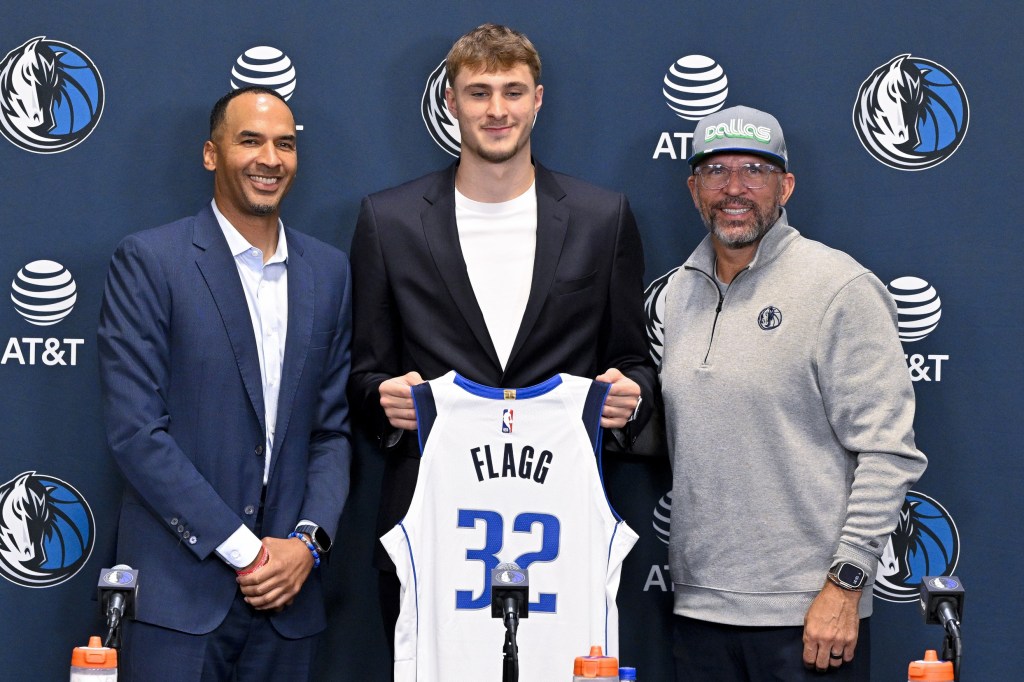
The clear-cut number one pick in this draft since before it was known who would be making the selection, Cooper Flagg is in a class of his own for the rookies. Unlike many number one picks, Flagg plays a style of basketball that can fit with any four players around him. He can scale his usage and role up and down depending on what is asked. Flagg can do it all on the basketball floor and should have a clear path to day-one fantasy impact. While the Mavericks surround him with better talent than the typical first pick, the expectation is for Flagg to become the face of the franchise. There are not quite as many shots available as you would hope, but count on the 18-year-old making a day-one impact on the court, across the box score, and in fantasy leagues.
Tier 2:
2. Ace Bailey – Utah Jazz
Ace Bailey made himself a bit of a wild card in the pre-draft process, as his management controversially sought to steer the Rutgers star to his desired destination. This ultimately proved unsuccessful, as the Utah Jazz selected Bailey with the fifth overall pick. While Utah may not have been on his desired list, it checks all the boxes Bailey was seemingly searching for. The youthful squad will have plenty of shot opportunities, and they are still searching for a talent capable of being the face of this rebuild. Bailey has a chance to take this role if his play backs it up. There are some shot selection and playmaking concerns to clean up, but Bailey should see plenty of opportunity right away, which should translate to fantasy basketball production.
3. Derik Queen – New Orleans Pelicans
The New Orleans Pelicans selected Derik Queen with the 13th overall pick only after trading an unprotected first-round pick in next year’s draft to move up 10 spots to make the pick. It was a shocking move at the time and has not aged much better. But if Queen can perform to the level that the Pelicans hope, the steep price point will be tolerable. The Maryland product has already turned 20 and was on the older side of the freshman class. There are plenty of questions surrounding the future direction for New Orleans, but a team doesn’t make this level of trade without the intention of utilizing the player. With Zion Williamson’s track record of injuries, don’t be shocked if Queen makes a quiet Rookie of the Year case and fills up the stat sheet in a way that is very beneficial to his fantasy basketball outlook. He impacts the game in a variety of ways in a way that should be very friendly from a fantasy standpoint.
4. Tre Johnson – Washington Wizards
The Washington Wizards have collected plenty of high-level defenders but have lacked the necessary offensive firepower. Tre Johnson can provide exactly that, coming off of a one-and-done season in which he averaged an SEC-best 19.9 points per game. While there are some fair concerns that he has limited fantasy appeal because of his score-first approach, he demonstrated some encouraging playmaking flashes and untapped potential in his lone year at Texas. The clear opportunity for minutes and fit with the Wizards makes me optimistic about his immediate impact. Count on him being in the mix to be the team’s leading scorer while impacting the game in other ways as well.
5. Egor Demin – Brooklyn Nets
The Brooklyn Nets took one of the more interesting draft approaches, making five first-round pick selections and bringing in players with some overlapping skillsets. But Egor Demin headlines this draft class after being picked with the eighth overall pick. The Russian and BYU product is still raw, but when it clicks, it looks impressive. Demin averaged 10.6 points, 5.5 assists, and 3.9 rebounds across his lone season in college. Standing six-foot-nine, Demin has a case as the best passer in the class, and Brooklyn will be willing to let him play through his mistakes. Though I’m personally skeptical of Demin, this is a pretty ideal situation for the rookie, and selecting him with the eighth pick indicates he will get the first crack at making an impact.
6. Dylan Harper – San Antonio Spurs
If he had landed on another team, there would have been a case for Dylan Harper in Tier 1. But expectations should be a bit tempered in the short term, with reigning Rookie of the Year Stephon Castle and All-Star guard De’Aaron Fox also on the Spurs’ roster. Harper has a mature feel for the game and is capable of running an offense when tasked, but with San Antonio attempting to leap into contention and deep at the guard spot, it’s prioritizing his long-term future. Harper showed some encouraging off-ball flashes when he was asked at Rutgers, but is at his best with the ball in his hands. It will be an interesting balancing act with the Spurs, but he is still a caliber of talent worth taking a chance on early in dynasty drafts.
Tier 3:
7. Kon Knueppel – Charlotte Hornets
His ceiling is not as high as some of the other names in these rankings, but Kon Kneuppel is as NBA-ready as a prospect will come and can fit on any roster. Charlotte is still figuring out exactly what they have with LaMelo Ball and Brandon Miller, but Knueppel is a great complementary piece who showed his ability to scale up when Flagg was sidelined during his lone season at Duke. The 19-year-old measures in at roughly 6-foot-6 and is a solid rebounder while connecting on over 40% of his three-point attempts in college. Except him to feast off catch-and-shoot looks from Ball as he develops other aspects of his game throughout the season.
8. VJ Edgecombe – Philadelphia 76ers
The Philadelphia 76ers are in an interesting spot as a franchise. They have over $100 million committed annually to Joel Embiid and Paul George over each of the next three seasons, but have quietly started a youth movement headlined by Tyrese Maxey and Jared McCain. They selected VJ Edgecombe with the third overall pick, hoping that he can provide an immediate impact and grow into a part of their young core. While their guard depth is a bit of a concern, Edgecombe’s defensive impact and high-level athleticism give him a different outlook compared to what they previously had. The Baylor product fits Nick Nurse’s defensive system and should be able to make his impact in a variety of areas. His situation clouds his outlook a bit, but the 19-year-old is a caliber of talent that cannot be passed up on.
9. Kasparas Jakucionis
One of the potential steals of the draft, Kasparas Jakucionis slid to the 20th pick in the draft before being selected by the Miami Heat. They will enter the first full season without Jimmy Butler and still have some big-picture questions to answer with the roster. But Jakucionis is one of the best passers in this class, and there is a pathway to him regularly serving as a primary playmaker for the Heat. The Illinois product averaged 15.0 points, 5.7 rebounds, and 4.7 assists per game during his sole season at Illinois. The opportunity for minutes is there if Jakucionis can earn them, which means he could outperform his draft slot in a significant way beginning in his rookie season.
10. Cedric Coward – Memphis Grizzlies
The Memphis Grizzlies made a significant roster shakeup by trading away Desmond Bane in a deal with the Orlando Magic, and they’ll need to replace the 19.2 points, 6.1 rebounds, and 5.3 assists that Bane provided last season. Memphis selected Cedric Coward with the 11th overall pick in this year’s draft after he became the biggest riser during the pre-draft process. While the leap in competition is a concern for Coward, an Eastern Washington and Washington State product, he has a case as the most legitimate wing player that Ja Morant has played with. Standing 6-foot-6 with a nearly 7-foot-2 wingspan, expect Coward to play a role in making up for Bane’s absence and producing at a solid rate from a fantasy basketball perspective. There will be a learning curve for the 21-year-old, but he is a high-IQ player worth taking a chance on.
Tier 4:
11. Khaman Maluach – Phoenix Suns
The Phoenix Suns had a desperate need for production at the center position and helped address this by selecting Khaman Maluach with the 10th overall pick. If there had not been a trade for Mark Williams within minutes of the selection, Maluach would have been higher on this list. The Duke product is still raw, with only a few years of basketball experience under his belt, but standing seven-foot-two with a seven-foot-five wingspan, Maluach combines an NBA-ready body with some encouraging instincts. Maluach is more of a long-term investment for Phoenix, but he still should be playable from a fantasy basketball perspective in year one, depending on what kind of rotation Jordan Ott opts for.
12. Ryan Kalbrenner – Charlotte Hornets
The first second-round selection to crack this list, the Hornets selected Ryan Kalkbrenner with the 34th pick in this year’s draft. A five-year standout at Creighton, Kalkbrenner averaged 19.2 points, 8.7 rebounds, and 2.7 blocks per game last season. The 23-year-old’s skill set is NBA-ready, and he should have plenty of opportunity for minutes with Nick Richards and Mark Williams off the roster. Kalkbrenner is comfortable playing within his skill set and should have no problem controlling the boards, blocking shots, and catching lobs. There is not much untapped potential, but the player Kalkbrenner is right now is a competent NBA center and should produce as such.
13. Jeremiah Fears – New Orleans Pelicans
There is plenty of reason to believe in Jeremiah Fears, but fantasy managers and the Pelicans will each have to be patient in his development. Fears is not set to turn 19 until October and averaged 17.1 points, 4.1 rebounds, and 4.1 assists during his one-and-done season at Oklahoma. However, he shot just 28.4% from beyond the three-point arc and turned the ball over 3.4 times per game. He also logged the highest usage rate of any freshman in the country. Standing shy of six-foot-three, his shooting and decision-making will need to improve if he wants to have a clear role. The Pelicans showed their belief in Fears by selecting him with the seventh overall pick, but it is difficult to see him slotting into a low-usage role, and he likely will not be ready to run an NBA offense from day one. Keep expectations limited for his rookie season, but Fears is still worth keeping from a dynasty perspective with true All-Star potential if he can hit his ceiling.
14. Walter Clayton Jr. – Utah Jazz
Unlike Fears, Walter Clayton Jr. enters with four years of collegiate experience and is already 22 years old. He is one of the best bucket-getters in the class and is coming off a National Championship season at Florida in which he averaged 18.3 points, 4.2 assists, and 3.7 rebounds per game while shooting 38.6% from deep. Utah needs scoring, and while Isaiah Collier and Keyonte George showed some encouraging signs last season, the guard minutes are still up for grabs. There are some concerns with what exactly Clayton’s NBA role will be, but the Jazz will welcome the short-term scoring boost he provides. Expect him to step in ready to play from day one and have some nice fantasy outputs in both the short and long term.
15. Collin Murray-Boyles – Toronto Raptors
In some regards, Collin Murray-Boyles is a perfect fit in Toronto, as the franchise has successfully developed players of his archetype in the past. On the other hand, his skill set overlaps with players like Scottie Barnes and Brandon Ingram. Murray-Boyles is a limited shooter, with just 39 total three-point attempts across his two seasons in college, but he plays with impressive effort, is a high-level defender and rebounder, and has demonstrated some encouraging playmaking flashes. The Raptors are also in a strange spot as a franchise, with significant money invested in this current team and not much to show for at this point. It is worth holding onto some Murray-Boyles stock in the long run, but his opportunities may be a bit limited in his rookie year.