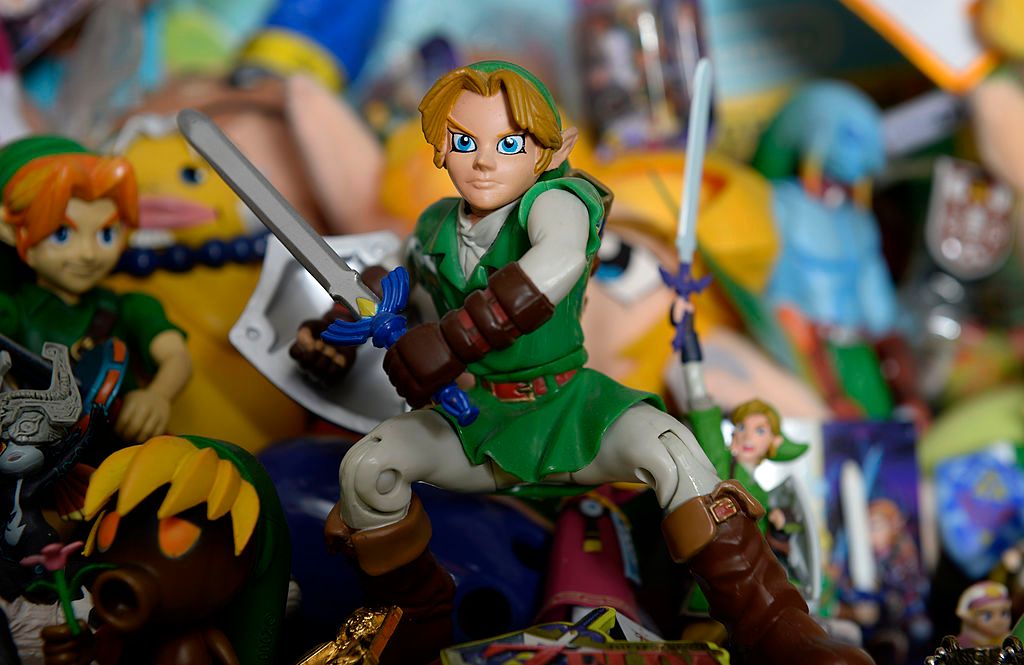
February 21, 1986 is when The Legend of Zelda showed up and quietly rewired what a videogame could feel like, and many gamers still carry that jolt in their hands. Over the decades, the series kept re-delivering that same voltage of elemental discovery by changing what exploration even meant: Koholint turned wandering into a dream you slowly realize you might be breaking, Termina turned every errand into a race against the clock, Wind Waker made the empty horizon itself the adventure, and Breath of the Wild turned the entire landscape into a promise that almost nothing is off-limits. And now, here we are, 40 years later—damn near to the day.
This fortieth anniversary lands quite clean in 2026, when so much of culture feels like scroll fatigue and algorithm churn. Zelda is and always has charged us with expending the opposite energy. It wrote the language of adventure, then kept reinventing itself before comfort could calcify into routine. It was where I learned the world is bigger when you are brave enough to simply poke at it. Maybe you’re like me.
So, indeed, the anniversary shows up in a familiar Zelda mood—half holy day, half rumor mill: equal parts reverence and restless speculation, with fans treating every Nintendo Direct announcement window, trademark filing, and stray film producer or game developer quote like a coded message, refreshing the horizon for a surprise beat. Even the most diligent scouts have little to report, however—even about the live-action movie. For the collectors and builders, there’s a wonderful Great Deku Tree LEGO set forthcoming, but that’s about it. Check the FAQ below for more info there.
Meanwhile, the series itself keeps quietly metabolizing its own past by remixing old ideas into new toolkits and sandboxes—Zelda as a canon has indeed helped establish the grammar and syntax of gaming as we know it—and new worlds, instead of simply replaying the hits. How else can one sword, one faerie light, one tree, one princess—how else could such a tight ensemble establish a legacy that’s spanned, now, four decades?
Top ten Legend of Zelda games, ranked
So! In the spirit of revisiting the franchise, I’ve ranked my top-ten of all 35+ hallowed installments of this borderline phenomenologically-important series. Consider it my candle-lighting, equal parts reverent and a little feral. Consider this my curated top ten, built around the stuff that’s made this franchise linger in my soul: atmosphere that feels weathered and tactile, puzzle design that plays like a conversation, worlds that reward curiosity instead of compliance, and that specific brand of Nintendo weirdness that turns a small island or a doomed town into a place that feels haunted in the best way.
Some picks lean dense and handheld, some sprawl into modern open-air wonder, and a few will be great to laugh at in barber-shops—because an anniversary list should both recount history and argue for what still feels alive in the hands right now.
And so, I give you, my top-ten Legend of Zelda games of all time.
Metacritic’s consensus rankings, by the way, can be found here; it is the list against which I curated mine.
10) The Legend of Zelda: Twilight Princess (2006; Wii)
A game that can be incredible in flashes and stubborn in its pacing. Twilight Princess is Zelda leaning into shadow and seriousness, chasing a more grounded epic tone, and it works! Especially when the dungeons open up and start doing their best work. When Twilight Princess is in motion, it is confident. There are setpieces that still feel huge, design moments that show the team understood how to build spectacle out of puzzle logic.
But it sits at ten because it asks for patience. The opening stretch can feel like the game insisting on chores before it hands over the adventure. That slow ramp through the initial stages is not without intention, but it is still a tax. My list values Zeldas that get to the good stuff through density or freedom, not Zeldas that make the player wait for permission. Occasionally, I felt gatekept during Twilight Princess.
Twilight Princess makes the cut because Midna is more than a Cortana-esque helper icon with tips, she is a co-lead with sharp edges. She starts as a problem. She is smug, wounded, funny in a way that feels slightly dangerous, and she keeps the game from collapsing into pure solemn fantasy posturing. Her arc gives the story actual contour: trust earned, motives clarified, vulnerability revealed in flashes, and a sense that the stakes are as personal, as they are cosmic. She is the rare companion who feels like she has her own agenda, and that agenda changes the temperature of every scene she is in.
It also makes the cut because, once the opening finally lets go of your ankle, Twilight Princess becomes one of the series’ most satisfying dungeon-forward Zeldas. The best dungeons feel like places with a grammar. They teach you how to read them, then start speaking faster. A room is not just a room, it is a sentence. A locked door is a comma. A new tool is a resurrection stone which suddenly turns dead architecture into possibility. You stop navigating and start interpreting. That is the classic Zelda high: the moment the dungeon’s logic clicks and the whole space becomes legible, like learning a new dialect and realizing you can finally understand the jokes.
9) The Legend of Zelda: Tears of the Kingdom (2023; Switch)
Love is not the same thing as ranking. Tears of the Kingdom is incredible. It is also, at times, exhausting in a way the best Zelda games are not.
The sandbox is the biggest achievement, because Ultrahand and the whole Zonai toybox turn Hyrule into an arts-and-crafts fever dream where a stupid idea can become a real plan if you believe in it hard enough. You feel it every time the game rewards the weird impulse: slapping fans onto a plank, brute-forcing a bridge out of whatever junk is nearby, building a hot-air contraption that has no business working and then watching it lift anyway. Tiny problems feel like invention, and it turns the world into something you collaborate with. A partner.
The result is a steady run of moments where Hyrule feels alive, indifferent, and responsive all at once, where weather and physics and enemies do not politely wait for the player to finish thinking, and the main quest can still snap into that mythic register when it chooses. It even tightens a few structural screws from Breath of the Wild, with temples that read more like distinct places, bosses that feel less interchangeable, and payoffs that land with cleaner punctuation than the older shrine-and-divine-beast repetition.
So why all the way up here? Because the game occasionally overengineers the act of solving. Too many puzzles drift from aha! into assembly. What should be a clean spatial riddle becomes an Ikea afternoon, all parts and angles and tiny adjustments, and the wonder gets swallowed by workflow. The construction toybox is thrilling, but it sometimes crowds out atmosphere, turning adventure into project-management.
There is just a cohesion problem that keeps nagging at the edges. The story has real setup, but the emotional follow-through can feel light, and the central villain underwhelms. That gap matters in a series where vibe is often the point. Tears is a genius sequel with a busy mind. Call it a messy masterpiece: a creative kingdom that sometimes forgets to let the magic breathe.
8) The Legend of Zelda: A Link to the Past (1991; SNES)
A Link to the Past is the blueprint that still feels like it could be printed and handed to any designer who wants to understand Zelda’s core rhythm. This is the game that defined and locked in the classic loop: explore, find a dungeon, earn a tool, reinterpret the world through that tool, then repeat until the map feels like it belongs to the player. It is so structurally clean that even the surprises feel inevitable, like the game is fulfilling a promise it made without saying it out loud.
It lands here, not higher, because I value the series when it bends and mutates more than when it perfects the old form. But it still needs to be in the here, because it is arguably the most complete version of traditional overhead Zelda. The Dark World twist is still one of the smartest structural moves the franchise has ever pulled. It doubles the meaning of geography. It turns familiarity into danger. It gives backtracking a narrative excuse and a mechanical payoff.
A Link to the Past is ranked beneath games that feel more emotionally strange or mechanically permissive, but it is the control group. It is Zelda as a machine that runs beautifully. When the franchise gets too obsessed with spectacle, this one remains a reminder that the best magic trick is still a locked door, a new key, and the sudden realization that the entire world has been quietly waiting for that key all along.
7) The Legend of Zelda: Echoes of Wisdom (2024; Switch)
My first massive break from consensus, and this one’s so dear to my heart. Loving Echoes of Wisdom this much is not new-age fandom brain, it is classic Zelda brain recognizing the same old thrill—the moment the world stops being scenery and starts being a toolbox—just dressed in a newer, stranger set of systems.
Echoes of Wisdom feels like the first top-down Zelda in a long time that isn’t apologizing for being top-down. It has the old cadence people miss when they talk about Zelda like it was a religion in fourth grade: towns that feel inhabited, dungeons that teach one idea and then keep tightening the screws, and that clean map grammar where a locked door is deep foreshadowing. But it is not a nostalgia diorama—it’s still a mutation. It takes that familiar rhythm and gives it a modern spine, where the game is less interested in asking for the correct answer than it is in watching the player build an answer that works.
The echo system is why it belongs this high. It turns the world into a toybox that remembers, a catalog of stuff that stops being background texture the second it becomes a tool. The best moments come when a thing copied ten minutes ago suddenly clicks into place, not because the game taught it, but because the game gave the space to try it. That is classic Zelda thinking with a new kind of freedom, the brain doing the item-work, the solution arriving as a little burst of improv instead of a checklist. It makes exploration feel practical again, because side-path curiosities are everywhere.
That is the case for ranking it higher than consensus. This is Zelda built for this anniversary moment in the most literal way: it respects the old puzzle craft, but it refuses to play like a museum piece, and putting Princess Zelda at the center of the whole shabang makes the whole thing feel like the series is still moving forward instead of just polishing its Link amiibo.
And, yes, the irritants are myriad, which is why not even my noisy heart can put it higher on this list. Movement can feel a half-beat too slow for how fast the brain wants to iterate. Echo management can turn a great idea into menu rummaging at the exact wrong time. The swordfighter mode is a handy release valve, but it can also flatten the ecosystem when it becomes the easy button, quietly undercutting the game’s best invention. Still, the core lands: a modern top-down Zelda that treats creativity like a legitimate solution.
6) The Legend of Zelda: Majora’s Mask (2000; N64)
Zelda’s horror game in everything but the label! The one where the dread takes the form of the weather! The moon is far, far from just set dressing. It is a face in the sky that keeps getting closer, a permanent reminder that time is a predator. Every errand has a shadow. Every conversation feels like it is happening under a deadline nobody wants to say out loud. Clock Town looks cozy until it starts to feel like a terrarium, a little glass box full of routines and denial, and the game’s meanest trick is how quickly it convinces you these people are real before it lets the world end anyway.
That is why the language changes around it. This is, unlike all the others on this list, a conquest Zelda. It is an inhabitation Zelda. The map is geography and schedule both. The puzzle is not always a block you push, it is a person you meet at the right time on the right day, a tiny life you learn well enough to stop it from breaking. And then the three-day cycle snaps shut and resets everything like a nightmare that restarts the second you wake up, leaving you with the awful knowledge that you remember and the world does not. The dread is systemic. It is baked into the design,. A recursive cycle in which the game eats itself. See? Horror.
The masks are the emotional weapon, because they are don’t function as mere costumes or power-ups. They are identities you borrow, grief you carry, lives you step into long enough to feel the weight of what is missing. The side stories are where the horror becomes human, where the scariest thing is not the apocalypse but the ordinary sadness of people failing each other in small, fixable ways. Even the funny moments have teeth, like the game is letting you laugh because it knows the timer is still running.
It sits outside the very top because it demands a certain kind of stamina. The pressure is real. The structure is intentionally stressful. But that is also why it belongs in the top tier at all. Few Zeldas are this weird, this mournful, this oppressive, and still this alive, a game that turns the act of caring into a mechanic and makes the end of the world feel personal.
5) The Legend of Zelda: Oracle of Ages (2001; GameBoyColor) & Oracle of Seasons (2001; GameBoyColor)
The polite lie in Zelda discourse is that the handheld games are a side hallway, a cute little annex off the main cathedral. The Oracle games are the cathedral. They are full-scale Zelda adventures that just happen to fit in a pocket, and that pocket size is hardly a limitation, it is the weapon. Everything is compressed into density. There is no dead air. You take ten steps and the world is already asking you a question. A character says something strange. A screen hides a trick. A puzzle dares you to remember it later. The games feel pressurized, like the cartridge is trying to contain more ideas than it should physically hold.
That is why they outrank chunks of the bigger 3D canon on this list. Plenty of Zelda games can hand you a gorgeous horizon and ask you to admire it. The Oracle games don’ waste your time with long walks between the good parts, because the good parts are basically everywhere. Traveling is the whole game. Every tiny transition is another chance to discover a shortcut, bump into a weird little side story, or see a familiar space become something new because you have learned how to read it differently.
Seasons is the one we lead with because its central gimmick defines the whole game. The seasons rod turns the overworld into a living puzzle box, a place that responds to your hands. Winter becomes a bridge you can manifest. Summer becomes a door you can burn open. Autumn turns the world into a trap. Spring resets the rules and dares you to see the map again. The whole game is built on the pleasure of making the environment legible through change. It is Zelda as active manipulation, and it feels incredible because it is immediate.
Ages is the brainier twin, and it earns that reputation. The harp is time travel as a tool, divorced from narrative in this case, and the result is cause-and-effect turned into geography. You end up solving versions of the same place. The overworld becomes a layered memory test where the solution is often understanding how the world used to be and what it became. It has dungeons that feel like they were designed to pick at the edges of what Zelda puzzles can do, especially on hardware this small, and they keep escalating without losing clarity.
Together, they are two different arguments for why top-down Zelda still rules: Seasons is action-and-flow with the world itself as the toy, and Ages is logic-and-structure with time as the lockpick. Both are weird, fast, packed, and constantly rewarding, and they prove something modern sprawl sometimes forgets—adventure is hardly about space at all; adventure is momentum within space.
4) The Legend of Zelda: The Wind Waker (2002; GameCube)
Wind Waker at four, here, is a vote for atmosphere as the actual level design. This is Zelda as a sea shanty you can steer, a game that understands the ocean can be pacing. Those long sails between islands are the inhale, the part where the music drifts, the sky shifts a shade, and the horizon keeps pretending it has secrets just over the curve. The art style is timeless, refuses aging entirely, because it was never chasing realism in the first place. It was chasing expression. Faces stretch. Eyes widen. The world emotes. It still feels alive because it was built to move.
It ranks this high because it remembers something the series sometimes forgets when it gets obsessed with systems and scope: adventure is a feeling before it is a checklist. The map is scattered, sure, but the scatter is the point. Every island is a little storybook with its own rules, its own tiny mystery, its own weird personality, and the game keeps making you feel like you found it rather than being directed to it. And then, underneath all that bright color and cartoon confidence, there is the melancholy. This is a cheerful game haunted by what is under the water, a world built on the idea that the past did more (just less?) than disappear—it sank. It is cute without being soft, because the stakes are more than just saving the world. They are living with what the world lost.
In that way, I regard Wind Waker as the Zelda franchise’s love letter to humanity.
True enough, it still doesn’t crack the top-three, where it very well could have been. For, unfortunately, there is some undeniable padding. There is a stretch where the game sandbags its own momentum with errands that feel like chores.
But even that cannot erase what Wind Waker does better than almost any other Zelda: it makes heroism feel like like it can be a quality not defined entirely by deliberate bravery. It can also be buoyed by wind, pushed out into an empty blue, and merely trusting that the next speck on the horizon might contain a whole new story.
3) The Legend of Zelda: Ocarina of Time (1998; N64)
Here we are at the hinge, the moment Zelda stepped into 3D and somehow did not fall on its face. Ocarina of Time is not perfect, but it is foundational in a way that still feels a little spooky, like you can see the blueprint lines of an entire genre shining through the walls. So much of what action-adventure games treat as obvious now—how to frame a fight, how to read a room, how to understand where to look and what matters—traces back to the way this game teaches spatial literacy. Camera, movement, puzzle readability—the whole thing is Zelda saying, here is how to live in this dimension without getting lost for the wrong reasons.
The ranking is a nod to the fact that later games are smoother and bigger and more flexible, but none of them had to invent the 3D adventure grammar in public the way this one did. Ocarina taught a whole generation how to read space: how Z-targeting turns a chaotic camera into a conversation, how dungeon rooms telegraph their own logic, how a locked door and a weird eye switch and a suspicious ledge are all part of the same sentence. The dungeons still feel like classic Zelda turned physical, places that introduce a tool, teach you its first clean use, then start mixing it with timing, combat pressure, and spatial trickery until the lesson snaps into your hands. It is Forest Temple mood and spatial looping, Fire Temple verticality, Water Temple friction that still sparks arguments, all of it building that sense that you are not just solving puzzles, you are learning a language.
And then the time jump lands like a structural gut-punch. It is more than just Link getting older; it is the world shifting under your feet. You walk back into the same geography and it is heavier now, reshaped by consequence, familiar spaces haunted by what they became, and that tonal darkening does real mechanical work because it changes how you move through Hyrule and what you expect to find there.
It earns this spot because it has the nerve to be clean. It doesn’t bury the player under systems or busywork. It commits to a clear adventure line, walks it with authority, and leaves behind a template the series—and basically everyone else—has been remixing, refining, and arguing with ever since.
2) The Legend of Zelda: Link’s Awakening (1993; GameBoy | 2019; Switch)
Zelda doesn’t need acreage to feel enormous, it needs density, rhythm, and a world that keeps winking back. Link’s Awakening is small the way a perfect mechanism is small, every gear doing work, every screen hiding a hinge that clicks the whole island into a new shape. Koholint’s magic is how fast it makes the weird feel like home. A talking owl. A chain chomp on a leash. A goomba wandering into the wrong franchise like it missed a turn. A trading quest that starts as a cute errand and turns into a whole wandering-life comedy. And then, underneath the jokes and the bright little melodies, that slow, creeping realization that the sweetness has teeth, that the island’s charm is the first layer of something more unsettling. It is a dream you can walk around inside, and the dream keeps leaving fingerprints.
The Switch remake is why this installment sits as the next-to-best with conviction. It takes the original’s compact genius and frames it like a handcrafted diorama, all soft edges and toy-box shine, a look that reads adorable until it starts to feel uncanny, like a music box you cannot quite turn off. More importantly, it frees the game from the old hardware’s button-economy misery. The original always had that little friction tax, that constant item shuffle that pulled you out of the moment. The remake cuts that tax down to almost nothing. Sword and shield stop being menu chores. Momentum stops getting punctured. The island becomes something you can inhabit without constantly managing your hands, and that makes the whole experience feel faster, cleaner, more alive. It is the rare remake that does looks even better, and plays like it finally fits the body.
It is not flawless. The optional Chamber Dungeons mode is the rare add-on that feels like an obligation, a stripped-down remix that confuses repetition with creativity and never really earns the time it asks for. But the core is untouchable: a compact adventure that hits like a full meal, stuffed with puzzles and personality, and then it ends with a soft, devastating twist that lands like a foretold lament.
1) The Legend of Zelda: Breath of the Wild (2017; Switch)
Breath of the Wild accomplishes the rarest Zelda trick: it makes the world feel like it is listening. Not listening to dialogue trees or quest markers or the polite fiction that the player is following a designer’s breadcrumb trail, but listening to intent. In most open worlds, a cliff is scenery. Here it is an invitation. A thunderstorm is far more than just mood lighting; it is a genuine problem with survival-game consequences. A cold night is a physical condition you have to outthink. Breath of the Wild is Zelda returning to the series’ original fantasy of getting dropped into danger with nothing but curiosity, except this time the game has the confidence to let curiosity be the progression system. It trusts wandering more than it trusts winning, and that trust changes the emotional texture of, quite literally, everything.
It is also the Zelda that finally makes exploration feel like a strategy. You read landscape the way you read a puzzle. A ridge line is a question. A plume of smoke, a suspicious gap in the rain—these are clues. The game keeps turning the player into the investigator, and it does it without shouting. That is the real magic. It creates a world that rewards attention more than obedience, and it does it so consistently that you start to forget other games ever did it differently.
What keeps it above everything else is how cleanly it turns friction into feeling. Weapons breaking is the constant low-level tension that makes every encounter feel slightly improvised. Power is temporary. You adapt. Cooking isn’t a crafting chore, like many survival games—it is a campfire ritual. The small domestic act that turns survival into something almost cozy.
Even the UI of the world has atmosphere. The quiet spaces between shrines and regions are breathing room, a chance for Hyrule’s ruin to read like discoverable history instead of set dressing. You feel the world’s age in the way stone is reclaimed by moss, in the way broken guardians sit like carcasses in fields, in the way the wind sounds lonely on a plateau. It is a post-apocalypse that isn’t obsessed with despair so much as recovery, the idea that beauty can survive catastrophe in small, stubborn ways.
The shrines themselves are a brilliant compromise, not because each one is unforgettable, but because they function as punctuation. They are quick bursts of logic that keep the journey from dissolving into pure wandering, little moments of clarity that reset the brain before you go back out into the wild. And the runes are the most important item set Zelda has had in decades, because they are not keys to specific locks, they are general-purpose play-tools. Magnesis, bombs, stasis, cryonis: tools that make the world legible in a dozen different ways, which is why this is the Zelda where the player’s brain becomes the item. The solution is almost always a thought experiment first and a button press second.
No other Zelda makes discovery feel this physical. You climb until your stamina is a prayer. You surf a shield down a mountain because it is faster and stupid and the game lets it be smart. You set grass on fire to ride an updraft because you noticed the wind. The best moments are totally unscripted. They happen because a plan goes sideways and the game shrugs and lets it count.
That is why it is No. 1. It is far more than just an excellent Zelda. It is Zelda remembering and making an immersive experience out of the franchise’s spiritual essence at its best: a world that says yes to curiosity, then makes you feel so very, very brave for following it.
Legend of Zelda 40th Anniversary: FAQ
When is the 40th anniversary, exactly?
February 21, 2026. The original The Legend of Zelda released in Japan on February 21, 1986 for the Family Computer Disk System.
What anniversary celebrations are already out there?
The biggest physical centerpiece is LEGO’s Great Deku Tree 2-in-1 set, listed at $299.99 on LEGO.com and currently showing a ship-by date of March 6, 2026. Not much beyond that.
Any recent Zelda releases or updates tied to the moment?
There are fresh patch notes floating around for Breath of the Wild and Tears of the Kingdom in mid-February 2026, which is the kind of low-key upkeep that often accompanies anniversary replays.
Is the live-action Zelda movie part of the anniversary conversation?
It is part of the wider brand chatter. Multiple outlets report the Legend of Zelda live-action film is in production and currently dated for May 7, 2027.