Subbing in once more for today, this time for some NRFI (No Run First Inning) bets today for Bryan Armetta. For a bit of a shortened Sunday slate, here are my two favorite NRFI bets below.
Ahead of Saturday’s MLB action, here are two NRFI bets worth placing on DraftKings Sportsbook.
Rockies vs. Cubs (+105)
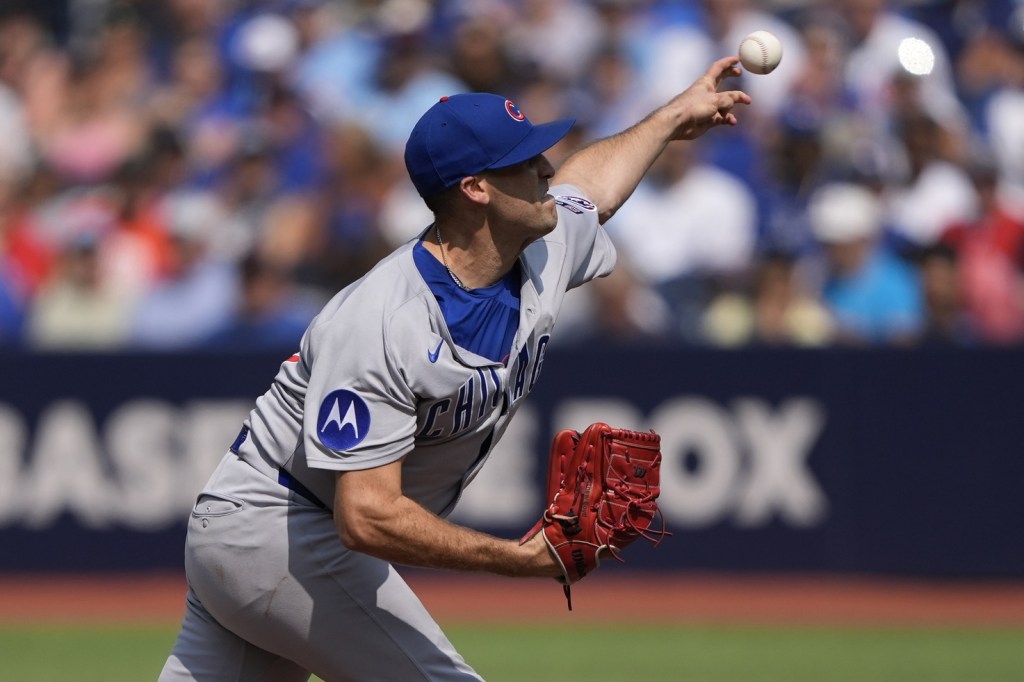
The pitching profile beats the park for six outs. Matthew Boyd has stabilized the Cubs’ first innings all year with command and soft contact. Across 2025 he sits at 2.82 ERA and 1.06 WHIP, numbers that translate cleanly to a quiet opening frame. Statcast backs the shape: .278 opponent wOBA, .296 xwOBA, 88.3 mph average exit velocity, and a 38.2% hard-hit rate allowed. That profile snuffs ambush swings and keeps free passes off the table, exactly what an NRFI needs out of the gate.
Tanner Gordon’s surface line is competitive enough to hold his side of the bargain, and his recent rhythm matters. His last three starts: at HOU 5.2 IP, 3ER; vs LAD 5.0 IP, 1 ER; at ARI 4.2 IP, 3ER. He’s worked into the fifth in all three while trimming traffic, an indicator of cleaner first innings as he’s settled in. The fastball/change separation has looked tighter on video, and the pitch-to-contact approach fits an NRFI when the top of the order leans patient.
Offense and context tilt our way early. Colorado’s season on-base percentage is .295 with the league’s fewest walks, and their strikeout volume spikes when behind, limiting early baserunners. Chicago travels well, but their recent road trend leans Under early, and their own approach often stretches counts in the first rather than hunting first-pitch damage. Pair that with Boyd’s contact suppression and Gordon’s steadier first pass, and the calculus is simple: fewer balls squared, fewer immediate scoring threats. Six outs, no sweat.
Giants vs. Orioles (-115)
I’m back on NRFI in San Francisco because both starters project strike-one, contact control, and quick outs in a run-dampening yard. Oracle trims power to the gaps and punishes top-spin liners, so sequencing usually beats slug in the opening exchanges. Justin Verlander still wins early counts with vertical ride and front-door breaking balls, and his veteran patterning remains tailor-made for a clean first: elevate for a look, land the breaker for a strike, finish beneath barrels. He just banked his first home win with the Giants earlier this week and carried that same template into the late innings, a strong tell that the first six pitches today arrive on time.
On the other side, Tomoyuki Sugano brings command as the headline. His career has always been about strike efficiency more than chase, and those profiles translate immediately to NRFI value. He lives around the zone, neutralizes platoon leverage by steering the slider to the back foot, and avoids the free baserunner that kills an NRFI. The Orioles’ order can punish mistakes, but mistake frequency drops sharply when a pitcher’s plan is fill-it-up, change speeds, repeat. That’s Sugano.
Team forms align with the script. San Francisco’s 2025 run environment trends modest overall, with a .308 OBP and .377 SLG on the season, and their first frames often feature one patient plate appearance that flips counts without forcing damage. Baltimore’s best punch comes later, after looks; the first time through against command arms, their swing decisions skew toward scouting the menu. Layer the marine layer and spacious alleys, and the long ball—the usual NRFI killer—stays suppressed.
I want strike one, low traffic, and keep-the-ball-in-the-park traits in both dugouts. This matchup checks those boxes, and Oracle’s geometry gives us a silent runway.