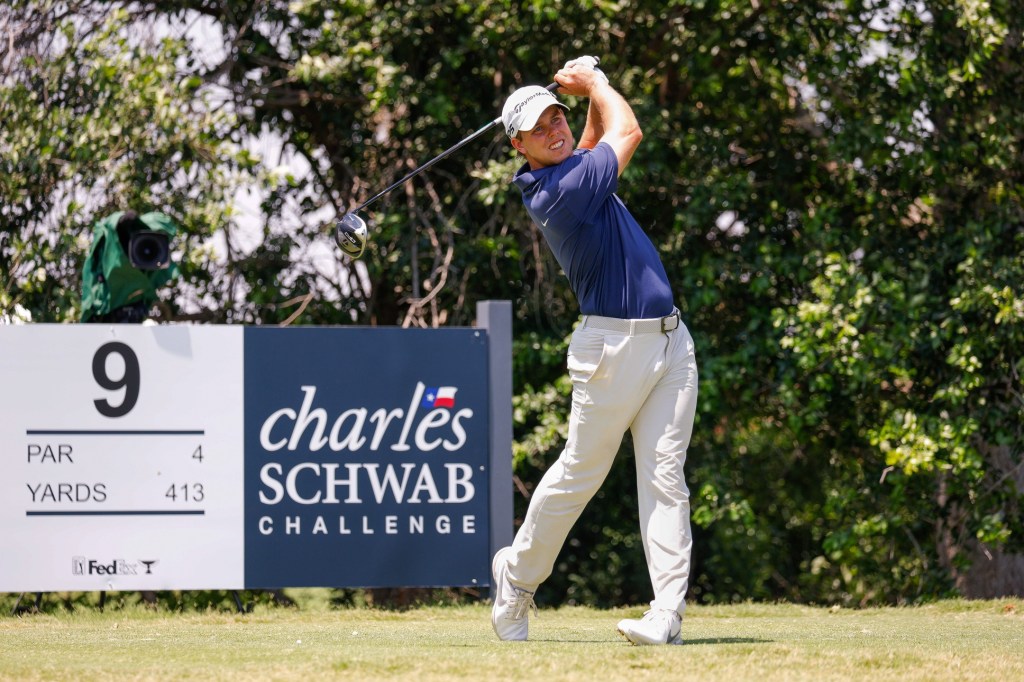
After wrapping up the second major championship of the season, the PGA TOUR heads back to Texas for the Charles Schwab Challenge. This week’s event takes place at Colonial Country Club in Fort Worth, Texas. Colonial is a long-time PGA TOUR stop but still draws a strong field to this venue, even though it’s the week after a major. Let’s take a look at the history of the event and the overall course layout this week.
The History of the Event
Charles Schwab has been the title sponsor of this event since 2019, but Colonial Country Club has been hosting this event since 1946. It is one of five invitational tournaments on the PGA TOUR calendar each year and the longest-running event at the same venue.
As an invitational, it has a slightly smaller field but is still a Full-Field event with 120+ golfers starting the week and a cut after the second round that reduces the field to the top 65 and ties.
The tournament is often linked with Ben Hogan, who lived in the Fort Worth area and won this tournament five times during his storied PGA TOUR career. Last year, Davis Riley won this event last year by five strokes, even though he only shot an even-par in the Final Round. Scottie Scheffler and Keegan Bradley tied for second at -9. Collin Morikawa finished solo fourth and was the only golfer to finish every round under par.
Although it isn’t a Signature Event, the purse this week is still significant at $9.5 million, while the winner will claim a $1.71 million payday.
A Closer Look at the Course
Colonial Country Club is a par-70 layout that is very familiar for most of the field, but this year will be just the second year after Gil Hanse’s ambitious $25-million restoration. During the restoration, crews relocated greens, removed bunkers, lowered elevated greens and improved sight lines for many shots.
Here’s a re-introduction to the course from last season:
After the renovation, the course still played very tough as a tree-lined, shot-makers’ course that features numerous doglegs and small greens. It’s a “less than driver” course that doesn’t necessarily require length of the tee but does reward accuracy on approach.
The landing areas are the third-smallest in the regular course rotation for the PGA TOUR with narrow fairways and undersized greens. The greens are pure Bentgrass, giving players who perform well on that surface an extra boost this week.
Since Colonial is one of the toughest courses to make birdies, Bogey Avoidance is one key stat to consider this week. Stroked Gained: Approach is still my top metric, with Strokes Gained: Par 4, Strokes Gained: Putting (Bentgrass), Good Drive%, and Scrambling also strong indicators for success.
This will be the PGA TOUR’s final stop in Texas this season, and it also makes sense to look at players who have had success on similar shorter, more technical tracks like this as well as those that excel in Texas’ conditions.