

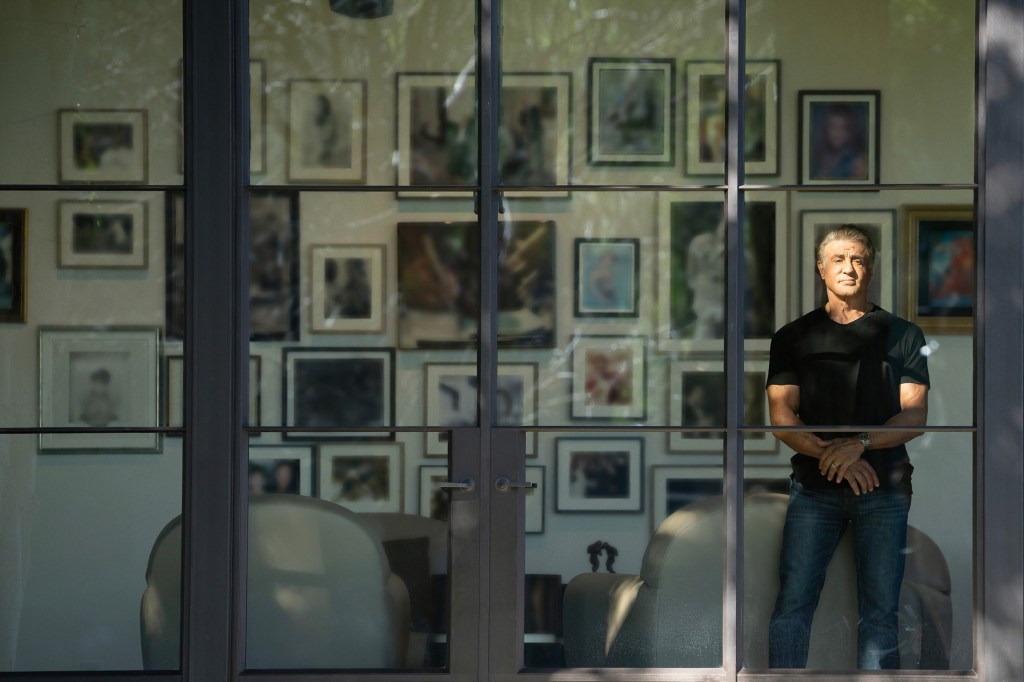
“I’m in the hope business, and I just hate sad endings,” Sylvester Stallone proclaims at the end of his Netflix documentary, Sly. It’s the underdog spirit that has been a consistent driver throughout Stallone’s storied career. When he wasn’t getting cast in roles that he wanted, Stallone wrote them. Much of what we see in the Rocky and Rambo franchises are some of Stallone’s own DNA – especially when it comes to the rugged fighter from Philadelphia who came out of nowhere to become heavyweight champion.
Stallone is very much in the business of telling the stories of heroes triumphing over their impediments and obstacles. It’s the prominent thing director Thom Zimny manages to get across in this new documentary that only allows for the audience to travel down specific paths in the actor/writer’s life. Earlier this year, Stallone’s 80s action star rival Arnold Schwarzenegger had a Netflix documentary of his own, and there exists some overlap (other than the replayed montage displaying how they tried to outgun and muscle one another). It’s the push of moving forward. For Schwarzenegger. the mantra of always being useful exists. In Stallone’s case, it’s the pull of time and his insistence on staying on the go that moves him through the regretful periods.
Both men had fathers whom they had complicated relationships with. Sly speaks to the fact that Frank Sr. was in a constant mode of competition with this son to the point where he even wrote his own Rocky script after Sylvester found success. It was that adversarial nature, both chronicled by Sly and his brother Frank, that served as both motivation and a scar that he carries. At one point, Stallone speaks to a polo match he had playing against his father and a situation that led him never to play again. But the documentary doesn’t allow itself to languish in despair or potential criticisms (if any) for too long. Towards the end, Stallone points out the end of Rambo: Last Blood, where he couldn’t bring himself to kill him off. The rocking chair moving indicates that he is still alive – if you look at it, it’s a metaphor for why he revisits these characters so often.
:format(webp):no_upscale()/cdn.vox-cdn.com/uploads/chorus_asset/file/25055688/Sly_01_02_59_09.png)
Sly takes on the energy of Survivor’s “Eye of the Tiger,” always looking to show the better side of things. If you wanted to know more about the thought processes Stallone put into creating his most beloved characters like Rocky and Rambo, this would be the story you want to see. People like Talia Shire, Quentin Tarantino, and Wesley Morris are there to speak from different viewpoints about Stallone’s career, from longtime co-workers, admirers, and cultural critics. There were physical costs in bringing these roles to life – Dolph Lundgren puts Stallone in the hospital during Rocky IV, and he goes on to state he has still yet to fully recover from the wear and tear the first Expendables film put on him physically, mentally, and emotionally.
It’s all for the need to make a legacy – something that still goes on with the Creed films that’s not mentioned here. Neither is the current battle against Irvin Winkler over the ownership of the Rocky character. Perhaps it was too thorny of a subject for Stallone to want to include, but it would have also brought his creator aura and fighting spirit into a fuller view. For a man who looked to the public’s gaze for love and admiration, it at least feels like he’s finding that at 77, living within the moment.