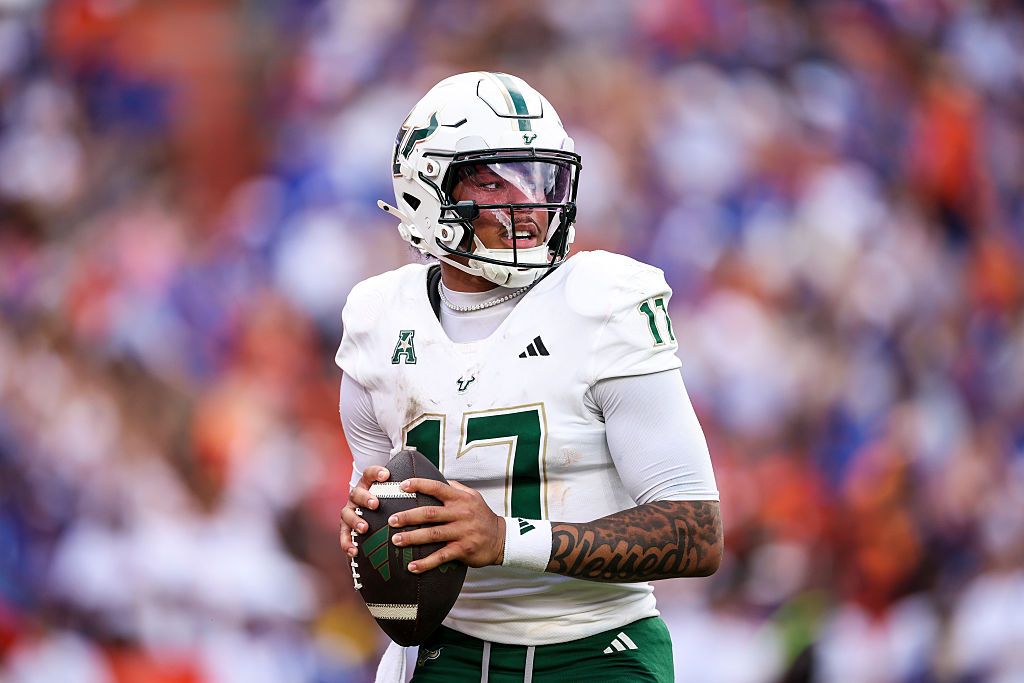
Raymond James will hum tonight, Tampa air sticky and loud, as ranked South Florida hosts surging UTSA. The Bulls’ return to the poll reframes November; the AAC lane and the Group-of-Five ticket feel live. UTSA lands with swagger after blasting Rice and toppling Tulane, riding Owen McCown’s heater and a healthier receiver room. South Florida’s buzz centers on Byrum Brown’s dual-threat gravity and a defense steady enough to let tempo breathe. It reads like pace versus patience, with fourth-down math, quarterback keepers, and explosive answers deciding who survives the window. Below is my prediction for CFB Week 11’s Thursday night football game between the South Florida Bulls and the UTSA Roadrunnres.
Here’s how I’ll play it. I’ll be pumping out these predictions for individual games all season, with plenty of coverage here on DraftKings Network. Follow my handle @dansby_edits for more betting plays.
South Florida vs. UTSA prediction, preview
USF’s offense is built to stack sustainable stress. They average 37.1 points on 6.3 yards per play and convert 48.7% on third down. The split is balanced, about 261 passing yards and 225 rushing yards per game, which yanks safeties into bad leverage. Brown pilots the whole thing with 1,964 passing yards and seventeen touchdowns, plus 596 rushing yards and eight more scores. That dual share lets Alex Golesh empty the keeper drawer and turn run fits into throws that feel like layups. When the Bulls hit their groove, the spacing sharpens and their RPO menu steals cheap first downs. They rarely live behind the sticks because early-down efficiency keeps the call sheet wide. Red-zone designs fold orbit motion and split-flow action into easy pitch-and-catch targets for Chas Nimrod. The effect is cumulative pressure that shows up as clean pockets and two-way answers on second and medium. Against a defense that misses tackles in the alley, Brown’s glide turns small creases into six-yard wins.
UTSA carries real counterpunch. The Roadrunners are sitting around 32 points per game with workable efficiency markers. Owen McCown just authored a near-perfect performance, hitting 31 of 33 for 370 and four scores. That’s not smoke; his rhythm throwing pairs with a line that’s allowed only ten sacks. They protect the football well too, sitting at plus four in turnover margin, which buys them extra possessions. Robert Henry Jr. controls the heartbeat with 955 rushing yards and sturdy downhill angles. Devin McCuin and David Amador create honest horizontal stress with slants, speed-outs, and slot fades. The passing game isn’t all verticals; it’s rhythmic and built on high-percentage throws that punish sloppy leverage. UTSA’s tempo sits near sixty-six snaps, which reads deliberate more than frantic. They’ll live in shotgun runs and quick game, fishing for second-and-five before opening up the glance game. When that structure holds, the offense hums and long fields feel short.
USF’s defense decides whether those long fields stay long. The Bulls give up 5.2 yards per play, a number that sits in the sturdy middle. They’re not a shutdown outfit, but they compress explosives and tackle well enough to force drives. Early-down stops are the quiet key because they funnel opponents into third-and-seven. There, the Bulls can bring simulated pressure and spin late rotation to erase glance windows. The edge group doesn’t always win fast, yet they close on patient pockets and rally to the ball. It is a bend-without-breaking shape that fits their offense’s pace. They don’t need havoc spikes on every series; they need two timely stops each half. If they get those stops, Brown’s offense cashes the separation.
The UTSA defense brings the biggest question. They’re allowing 31.7 points per game, and the explosives have arrived at bad times. That’s the tape that lingers from the Texas State rock fight and the early slide. Recent weeks looked better, with havoc against Rice and clutch takeaways against Tulane. But this is a different assignment because USF doesn’t throw you easy gifts. The Bulls’ rushing layer forces the front to narrow, and the quick-game menu punishes cushion. UTSA must win on first down and steal second-and-longs with run blitz timing. If they chase the game and the nickel widens, Brown’s designed keepers will punish man rules. The Roadrunners can survive field goals; they cannot survive red-zone touchdowns. That is the spread math when you’re catching near two touchdowns on the road.
UTSA vs. South Florida pick, best bet
UTSA’s last two games flashed ceiling with 109 points and a +70 margin, plus McCown’s 31-of-33 for 370 and 4 touchdowns. Momentum matters in November, and the receiver room finally looks healthy after that Tulane win. USF’s harsh step-up at Miami finished 49–12 and still reminds you they can be bullied by elite athletes. The hook at −13.5 is the lamest number in the stadium when special-teams variance bites; one tipped ball or a missed extra point can invite the backdoor. If McCown stays that hot and Henry keeps them ahead of the sticks, the underdog path is real. A +2 turnover day flips this market on its head.
The spread sits at −13.5 with a total of 67.5, a number that hints at efficiency rather than chaos. Overs at that altitude invite thin margins when drives stall, and USF’s defense at 5.2 yards per play allowed is just sound enough to produce stalls. Laying the points asks for two clean stretches and one short field. USF owns the tools for both: quarterback legs on third down and a plus special-teams profile that wins hidden yardage. If you prefer derivative angles, first-half −7 makes sense against a UTSA tempo near 66 snaps that starts deliberate. I won’t overextend there, but the script points that way.
I still favor USF because their strengths live in repeatable edges. Third-down conversion isn’t random for an offense with quarterback run equity and 48.7% conversions. Their balanced split stretches a defense horizontally before vertical shots ever arrive: ~261 passing yards and ~225 rushing yards per game. Brown’s poise on money downs keeps Golesh aggressive on fourth-and-short near midfield. That aggression compounds drives, and their red-zone package consistently hides the ball and manufactures leverage. UTSA’s defense has improved, but its worst leak—intermediate windows—aligns with USF’s favorite answers. That overlap decides tight sequences and turns 14 into 21 before the fourth quarter breathes.
The intangibles lean Bulls too. A ranked badge at home in November sharpens the building and the sideline. Fourth-down conviction spreads through the roster and keeps the gas down. UTSA’s surge earns respect, yet this is a weight class that rewards depth in the second half. USF’s run volume and quarterback keepers grind water from defenses that chase for 50 minutes. Fatigue breaks tackles, and fatigue shortens angles on the perimeter.
Projected score: South Florida 41, UTSA 24.
Best bet: USF -13.5 (-110) vs. UTSA
Tail it with me in the DKN Betting Group here!