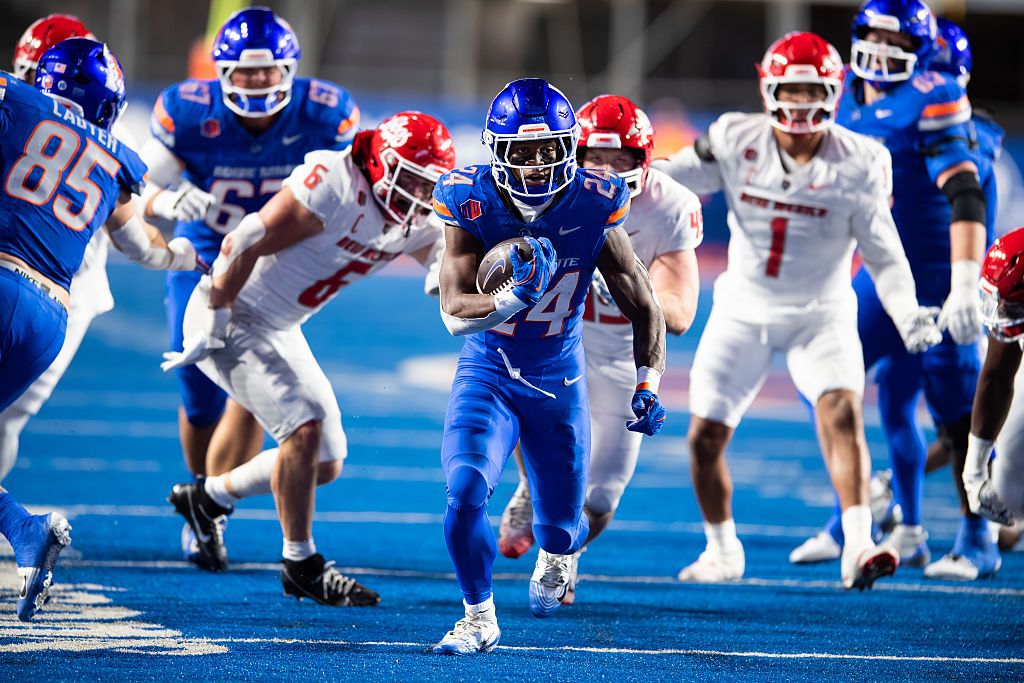
Reno takes the late-window stage as Boise State rolls in for a Friday showcase, a crisp desert night built for velocity, nerve, and quick strikes. Kickoff lands at 10:00 p.m. ET on a national spotlight that turns every third down into potential morning highlight. The Broncos bring a balanced machine that leans on tempo pockets and field-position leverage; the Wolf Pack answer with resolve, special-teams spark, and a defense desperate to buy their offense extra snaps. Expect the soundtrack to swing from drumline thump to held-breath silence as red-zone decisions stack, clocks get milked, and a couple of deep shots test tired legs. This window often rewards aggression, so fourth-down calculus and scripted openers should arrive sharpened and ambitious, with adjustments humming after the first two series. Below are my top college football player props to consider for the Week 9 matchup between the Boise State Broncos and the Nevada Wolf Pack.
Here’s how I’ll play it. I’ll be pumping out these predictions for individual games all season, with plenty of coverage here on DraftKings Network. Follow my handle @dansby_edits for more betting plays.
Nevada vs. Boise State best prop bets
Dylan Riley 100+ rush yards (-105)
Boise State wants to lean on rhythm and rupture, and Dylan Riley supplies both in heavy doses. He rides into Reno with 695 yards at 8.1 yards per carry and six touchdowns, fresh off a 201-yard detonation on just 15 attempts against UNLV. That explosion didn’t happen in a vacuum; the Broncos average 205.6 rushing yards per game, and their line carves creases with clock-eating malice. Nevada’s front offers the exact kind of leverage Boise loves. The Wolf Pack have struggled to reset the line of scrimmage and have invited sustained body blows between the guards. Riley’s one-cut torque turns those invitations into gashes. The macro picture tilts toward volume. Boise operates with a 33-minute possession heartbeat and a 47.1% third-down conversion engine, so carries stack, and a back with Riley’s burst converts touches into chunk plays. The micro picture tilts too. When Boise’s play-action threatens space, safeties rock forward and edges squeeze, which only widens the B-gap runway for Riley’s inside footwork. He doesn’t need 25 totes to crest 100; efficiency can carry him there by the middle of the third quarter. Momentum matters as well. Boise just hung 56 on UNLV and looked like a program that found its October groove, a sequence that fuels confidence in the run call sheet. The last time out, the Broncos dropped 28 straight second-half points; that script feeds a closer’s game for the tailback. Expect the pile to move, the chains to clack, and Riley to clear the century mark with room to breathe.
Chris Marshall 70+ receiving yards (+120)
Boise’s passing game doesn’t chase fireworks; it manufactures them with pace and placement. Chris Marshall sits at the center of that geometry. He averages north of 60 yards per game this season and just tagged UNLV for 96 on three grabs, a stat line that screams downfield menace and post-catch violence. The Broncos’ passing profile helps him crest 70 without strain. They average 273.0 yards through the air, and play-action bites because Dylan Riley hammers first contact five yards deep at 8.1 yards per carry. Corners open their hips early, safeties shade late, and Marshall feasts on those missteps with vertical stems and bend-in breakers.The matchup amplifies the edge. Nevada has been sturdier against the pass than the run, but that’s part of the angle; the Wolf Pack must overcommit bodies to the box to stem Boise’s ground heartbeat. That stress pulls help from Marshall’s windows and converts 50–50 looks into 60–40 leverage. Game state also sweetens the math. Boise’s offense hums at 36.9 points per game and strings drives with a 47.1% third-down rate, which means snaps and targets keep arriving. Marshall doesn’t require volume bloat to cash this number. He wins with air yards and splits safeties when Boise moves the launch point.One early shot can put this ticket on the lip; two routine intermediate throws finish the pour. The recent form offers clean corroboration. In the 56–31 win, Boise’s quarterbacks averaged 11.0 yards per attempt, and Marshall turned limited targets into field-tilting returns. In the Reno night air, that profile should translate again.
Caleb Ramseur 40+ rush yards (-110)
The Wolf Pack need a stabilizer, and Caleb Ramseur profiles as their metronome. He leads Nevada with 310 rushing yards on 70 carries and owns the red-zone trust that survived the quarterback change. Last week in Albuquerque, he found the end zone twice and logged 14 attempts, the kind of workload that keeps Nevada within its script even while chasing. Carter Jones brought accuracy to the offense with 23 completions on 29 throws for 202 yards, but the identity play remains Ramseur’s interior grind, especially on early downs to prevent third-and-long traps. Boise’s defense has been stingier against the pass than the run this season, and that split matters. The Broncos’ front has bled rushing yardage in pockets, which gives Nevada a rational path to 12–16 carries for its lead back. At Ramseur’s season clip of 4.4 yards per attempt, 40 yards sits well within reach even without an explosive pop. The math doesn’t require a breakout; it requires patience, trench clarity, and a few clean doubles at the point of attack. Nevada’s staff showed commitment to him near the paint, but the better signal is his between-the-20s usage in Jones’ third start. If Nevada steals an extra series via special teams or turnover luck, Ramseur’s carry count ticks toward the sweet spot. He doesn’t need to rewrite the game to cash; he needs to burrow, reset the sticks twice, and clip a pair of seven-yarders when Boise lightens the box. In a rivalry game that rewards grit, expect Ramseur to shoulder enough volume to push past 40.