

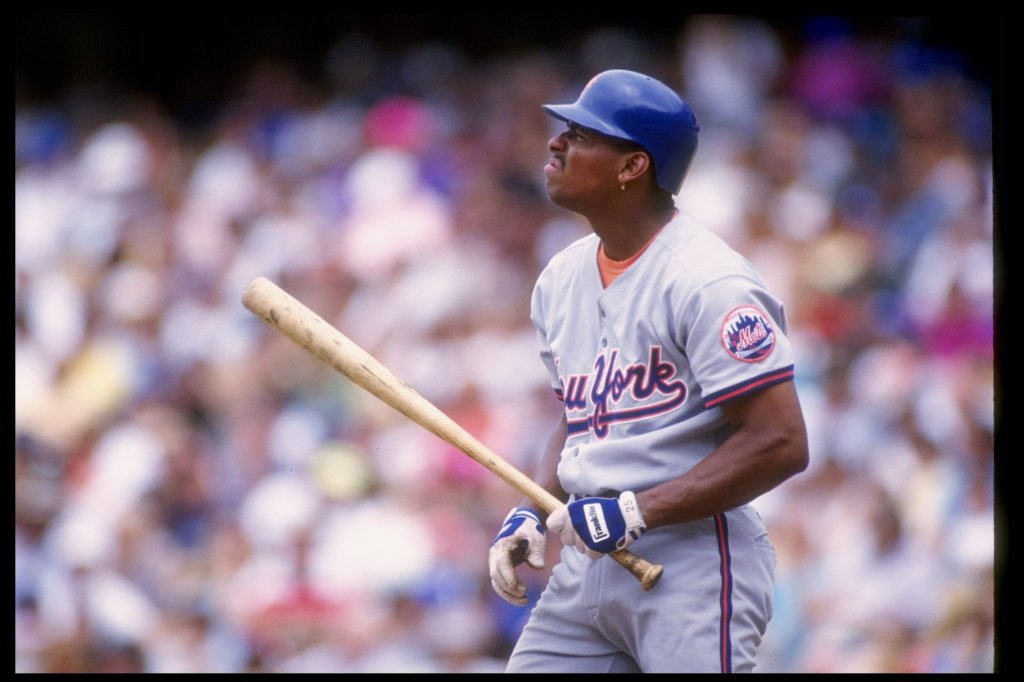
For most of us, July 1 symbolizes trips to the beach, finally conquering that new grill and getting to dip out of work for a long holiday weekend. (Or, if you’re into this sort of thing: it’s Cancer season, baby.) For a slew of current and former MLB players, however, the beginning of the month means something else entirely: It means pay day.
To help ease the payroll burden of particularly large contracts, many Major League teams will load them up with salary deferrals, turning an enormous one-time expense into a series of more manageable payments. (For example: the last $75 million of a contract may be paid out in $7.5-million installments over the course of a decade, offering a lot more near-term flexibility than having to pay $37.5 million a year over two years.)
Today happens to be the day that most of those deferred signing bonuses and salary payments are paid out every year. It’s become a relatively common strategy around the league, but one former player remains the face of the July 1 direct deposit bonanza: Former All-Star Bobby Bonilla. As part of a deferred salary arrangement, the New York Mets have paid Bonilla a little bit more than $1.19 million ($1,193,248.20 to be exact) on July 1 each year since 2011. Even wilder: Those annual payments will continue until 2035. Bonilla, now 60, will be 72 when the payments end. Not a bad retirement plan!
Happy Bobby Bonilla Day!@DarrenRovell sat down with Bonilla as he discusses his famous contract with the Mets for the first time EVER
— Action Network (@ActionNetworkHQ) July 1, 2022
In the late 1980s, Bonilla was one of baseball’s most fearsome sluggers, teaming up with fellow outfielders Barry Bonds and Andy Van Slyke to turn the Pittsburgh Pirates into perennial contenders. After putting up a combined slash line of .287/.358/.492 from 1987 to 1991, he became the game’s most coveted free agent — and the Mets, looking for a spark after their first losing season in eight years, were determined to bring the Bronx native home.
New York signed Bonilla to a five-year contract worth $29 million in 1991, at the time the richest contract in team sports. Of course, the Mets being the Mets, it didn’t exactly work out: He would up spending the first three-and-a-half seasons of that contract in Queens before being traded away to the Baltimore Orioles. Bonilla would go to win a World Series with the Marlins in 1997 and was later traded back to the Mets as part of Florida’s post-championship fire sale.
With the slugger clearly on the decline at age 36, New York released Bonilla in January 2000 — but they were still on the hook for his $5.9 million salary that season. Believing they were poised for a significant windfall through their investments with Bernie Madoff, Mets ownership instead agreed to defer that remaining salary with 8% interest, spreading the payments across 25 years from 2011-35.
You can probably see where this is going. Madoff’s Ponzi scheme fell apart, and interest turned the initial $5.9 million the team owed Bonilla into $29.8 million by 2011. That $29.8 million, divided by 25 years, equals the annual $1.19 million payment.
As Mets fans suffered through the financial shenanigans — and often outright cheapness — of the Wilpon family over the last two decades, Bobby Bonilla Day grew into a tidy metaphor for everything wrong with the franchise, a team hamstrung into overpaying for aging stars due to its own incompetence. Billionaire Steve Cohen’s purchase of the team in 2020 seemed to signal the dawn of a new day in Queens, and he’s tried to have some fun with the situation recently, suggesting the team could have an annual Bobby Bonilla celebration at Citi Field (complete with a novelty oversized check). That plan has not yet come to fruition, though the Mets will be home on Saturday against the San Francisco Giants.
Bonilla’s deferment is easily baseball’s most famous, but for as much as Mets fans wring their hands, it’s far from the only money changing hands on July 1. In fact, it’s not the only money being sent to Bonilla: He has a second deferred salary agreement with the Baltimore Orioles, who still owe him $500,000 a year from 2004-28.
Here are a few other notable deferred salary payment plans:
- The Cincinnati Reds have paid Ken Griffey Jr. roughly $3.6 million each year since 2009. He will receive his final payment in 2024.
- The Boston Red Sox have paid Manny Ramirez approximately $2 million each year since 2011 and will continue to do so through 2026.
- The St. Louis Cardinals began paying Matt Holliday his deferred salary in 2020. He gets $1.5 million a year until 2029.
- Beginning this year, the Orioles will pay Chris Davis $3.5 million annually through 2032. He then gets $1.7 million a year from 2033-37.
- The Mets have paid Bret Saberhagen $250,000 each year since 2004 and will continue to do so through 2028.
- The Boston Red Sox will pay Rafael Devers $7.5 million annually from 2034 to 2043, thanks to his 11-year, $331 million contract that included a $75 million deferment.
- The Washington Nationals owe Max Scherzer, who now pitches for the NL East rival Mets, $15 million a year from 2022-28, while Stephen Strasburg has approximately $114 million in deferred salary coming to him through 2029.
