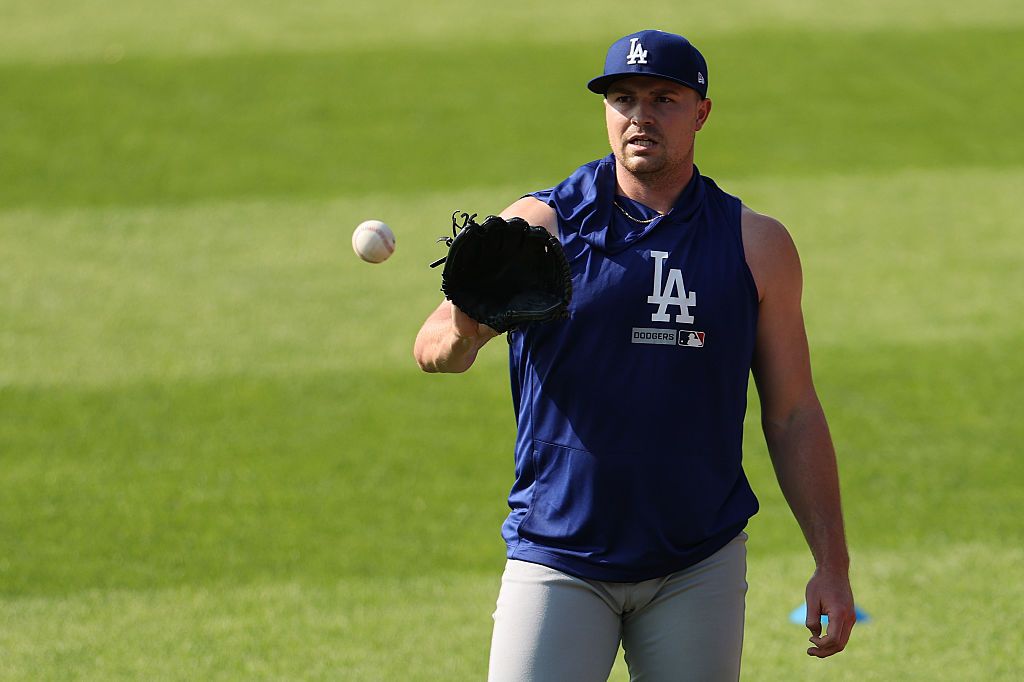
Tarik Skubal heads the top MLB free agents for 2027, with Michael King, Freddy Peralta, Seiya Suzuki, Randy Arozarena and Brandon Lowe among the other marquee names. This early look at the 2026-27 MLB free-agent class ranks the best available players, breaks down the market by position with 2026 stats and WAR, and examines which teams have the most notable contracts potentially coming off the books.
Starting pitching is the strength of the 2027 MLB free-agent class, led by Skubal, King and Peralta, while the outfield and second-base groups offer several impact everyday bats. The market also arrives with a major complication: MLB’s collective bargaining agreement expires on December 1, 2026, raising the possibility of a lockout that could accelerate early-offseason signings.
Those moves will help shape next season’s contenders, alongside the opening odds for the 2027 World Series.
Published October 29, 2026. Stats are from the 2026 regular season. Ages are players’ 2027 baseball ages. Player availability remains subject to contract options and opt-out decisions.
Top MLB free agents for 2027
| Rank | Player | Pos. | 2026 team | Age | 2026 regular-season snapshot | Status |
|---|---|---|---|---|---|---|
| 1 | Tarik Skubal | SP | Los Angeles Dodgers | 30 | 2.72 ERA, 158 2/3 IP, 186 K | UFA |
| 2 | Michael King | SP | San Diego Padres | 32 | 3.21 ERA in 32 starts | Can opt out |
| 3 | Freddy Peralta | SP | Tampa Bay Rays | 30 | 4.42 ERA, 169 IP, 156 K; 3.25 ERA in 10 Rays starts | Pending club-option decision |
| 4 | Seiya Suzuki | OF | Chicago Cubs | 32 | .270/.368/.473, 26 HR, 86 RBI | UFA |
| 5 | Randy Arozarena | OF | Seattle Mariners | 32 | .281/.381/.484, 26 HR, 26 SB | UFA |
| 6 | Brandon Lowe | 2B | Pittsburgh Pirates | 32 | .260/.331/.493, 35 HR, 96 RBI | UFA |
| 7 | Clay Holmes | SP | Chicago Cubs | 34 | 3.29 ERA in 18 starts | Can opt out |
| 8 | Adrián Morejón | RP | San Diego Padres | 28 | 2.83 ERA, 86 IP, 107 K | UFA |
| 9 | Trevor Rogers | SP | Baltimore Orioles | 29 | 4.03 ERA, 169 2/3 IP, 157 K | UFA |
| 10 | Sonny Gray | SP | Boston Red Sox | 37 | 18-5, 2.72 ERA, 169 IP, 149 K | Mutual option unlikely to be exercised |
- Best free agents by position
- How a potential lockout could affect free agency
- Teams with the most money coming off the books
Just outside the top 10: Jake Bauers, Jazz Chisholm Jr., Ryan Jeffers, Luis Arraez, David Bednar, Ty France, Kevin Gausman and Ian Happ. Japanese slugger Teruaki Sato is a separate high-upside wild card if he is posted by the Hanshin Tigers; he is not included in the MLB free-agent ranking above.
Best 2027 MLB free agents by position
WAR below is each player’s 2026 Baseball-Reference WAR. The 2026 line in each table is regular-season production; wOBA is included for select hitters to add context beyond batting average and OPS.
Methodology: Rankings weigh 2026 production, age, position scarcity, projected market value and contract status. WAR figures are Baseball-Reference WAR; offensive context includes traditional production and select wOBA figures.
Starting pitchers
| Player | 2026 stats | 2026 WAR | Why he matters |
|---|---|---|---|
| Tarik Skubal, Dodgers | 2.72 ERA, 158 2/3 IP, 186 K, 26 GS | 4.6 | The market’s clear No. 1 player and a potential record-setting free-agent pitcher. He has won the past two AL Cy Young Awards and remained elite despite missing six weeks after early-season elbow surgery. |
| Michael King, Padres | 3.21 ERA, 185 IP, 159 K, 32 GS | 4.3 | His opt-out is one of free agency’s biggest dominoes. King can decline his 2027 player option and seek a longer deal after a healthy, durable season. |
| Freddy Peralta, Rays | 4.42 ERA, 169 IP, 156 K, 32 GS; 3.25 ERA in 10 Rays starts | 0.7 | His overall season was uneven after a rough Mets stint, but his turnaround following a midseason trade to Tampa Bay restored much of his appeal. His availability depends on the Rays’ 2027 club-option decision. |
Relief pitchers
| Player | 2026 stats | 2026 WAR | Why he matters |
|---|---|---|---|
| Adrián Morejón, Padres | 2.83 ERA, 1.08 WHIP, 86 IP, 107 K | 1.9 | Young, left-handed and capable of working more than one inning. He is the highest-upside relief arm in the class. |
| David Bednar, Yankees | 2.47 ERA, 1.04 WHIP, 35 SV, 76 K | 1.9 | A proven closer who regained premium form in New York. |
| Bryan Abreu, Astros | 3.73 ERA, 62 2/3 IP, 80 K | 1.0 | The 2026 results were uneven, but his strikeout stuff and 2.82 career ERA make him an upside late-inning target. |
Catchers
| Player | 2026 stats | 2026 WAR | Why he matters |
|---|---|---|---|
| Ryan Jeffers, Twins | .256/.353/.461, 14 HR, 56 RBI | 2.8 | Right-handed power and on-base ability are scarce at catcher. A hamate injury interrupted his season but did not erase his market. |
| Tyler Stephenson, Reds | .241/.323/.404, 15 HR, 54 RBI | 2.5 | Still has a plausible everyday-catcher ceiling entering his age-30 season. |
| Austin Hedges, Guardians | .247/.325/.377, 6 HR, 25 RBI | 0.9 | Not an offensive upside play, but one of the most trusted defensive catchers and game planners available. |
First basemen
| Player | 2026 stats | 2026 WAR | Why he matters |
|---|---|---|---|
| Jake Bauers, Brewers | .266/.389/.484, 26 HR, 86 RBI | 3.3 | A true breakout at age 30, with corner-outfield flexibility adding to the appeal. |
| Ty France, Padres | .295/.363/.502, 21 HR, 72 RBI | 4.5 | One of the year’s best value signings, with a 4.5-WAR rebound and strong all-around play at first base. |
| Paul Goldschmidt, Yankees | .252/.313/.452, 18 HR, 52 RBI | 1.3 | A short-term veteran fit rather than a foundational signing, but still an accomplished right-handed bat. |
Second basemen
| Player | 2026 stats | 2026 WAR | Why he matters |
|---|---|---|---|
| Brandon Lowe, Pirates | .260/.331/.493, 35 HR, 96 RBI | 5.4 | Impact left-handed power at second base, plus a major defensive improvement in Pittsburgh. |
| Jazz Chisholm Jr., Yankees | .231/.312/.399, 19 HR, 41 SB | 1.7 | His 2026 offense fell back from 2025, but his age, elite defense and power-speed ceiling are rare in this class. |
| Luis Arraez, Phillies | .310 AVG, 185 H, .764 OPS | 3.0 | The high-contact profile returned, and the improved second-base defense broadens his appeal. |
Third basemen
This group could change if Mets infielder Bo Bichette declines the two player options remaining on his deal. That appears unlikely after a down 2026 season, but an opt-out would make him one of the most intriguing infielders on the market.
| Player | 2026 stats | 2026 WAR | Why he matters |
|---|---|---|---|
| Eugenio Suárez, Reds | 26 HR, 74 RBI, .740 OPS | 0.6 | A volatile power bet after his 49-homer 2025, but the thin position could help his market. His mutual option still requires resolution. |
| Alec Bohm, Phillies | .249/.315/.383, 15 HR, 88 RBI | -0.2 | Right-handed run production with first- and third-base flexibility. |
| Edmundo Sosa, Phillies | .247/.283/.429, 9 HR, 44 RBI | 1.0 | A strong utility fit who can cover the left side of the infield rather than a primary third baseman. |
Shortstops
Shortstop is the thinnest infield market. That scarcity could make the few legitimate middle-infield options more valuable than their 2026 lines suggest.
| Player | 2026 stats | 2026 WAR | Why he matters |
|---|---|---|---|
| Mauricio Dubón, Braves | .276/.321/.399, 12 HR, 73 RBI, 10 SB | 2.7 | Defensive versatility across the infield and outfield gives him an everyday floor. |
| J.P. Crawford, Mariners | .221 AVG, .335 OBP, 14 HR | 0.9 | One of the few players with a full-time shortstop track record, despite a down 2026 batting average. |
| Ha-Seong Kim, Braves | .116/.219/.140 in 129 AB | -0.8 | An injury-affected year will suppress his price, but his previous defensive value makes him a change-of-scenery candidate. |
Outfielders
| Player | 2026 stats | 2026 WAR | Why he matters |
|---|---|---|---|
| Seiya Suzuki, Cubs | .270/.368/.473, 26 HR, 86 RBI, .366 wOBA | 5.1 | Right-handed power, a strong arm and career-best overall value make him one of free agency’s most coveted position players. |
| Randy Arozarena, Mariners | .281/.381/.484, 26 HR, 26 SB, 113 R, .379 wOBA | 5.7 | One of the American League’s most valuable hitters in 2026, with power, speed and an established postseason résumé. |
| Ian Happ, Cubs | .218/.326/.412, 24 HR, 68 RBI | 2.9 | The surface line dipped, but his walk rate, defense and durability give him a high floor. |
Designated hitters
| Player | 2026 stats | 2026 WAR | Why he matters |
|---|---|---|---|
| George Springer, Blue Jays | .249/.321/.405, 15 HR, 54 RBI, 12 SB | 0.6 | The 2026 production was down, but he remains a credible short-term veteran addition with postseason experience. |
| Joc Pederson, Rangers | .235/.329/.487, 26 HR, .816 OPS | 1.7 | A direct fit for a club seeking left-handed DH power. |
| Marcell Ozuna, Pirates | .203/.286/.327, 8 HR, 29 RBI | -1.0 | Not a premium option after a major decline, but his prior middle-of-the-order production could create a low-risk bounceback market. |
How a potential MLB lockout could affect 2027 free agency
MLB’s current collective bargaining agreement expires at 11:59 p.m. ET on December 1, 2026. A new deal could still be reached before then, but a lockout would freeze most major-league business: clubs would not be able to negotiate with or sign players on 40-man rosters, and trades would also stop.
That possibility could create a faster-than-normal early market. Before the 2021-22 lockout, several major free agents signed before Thanksgiving rather than waiting through the winter. The same pressure could push clubs to complete extensions, opt-out decisions and major signings before December 1, particularly in a market with an ace like Skubal and multiple high-end starting-pitching options.
It is important not to treat a lockout as certain. Until MLB and the Players Association either reach a new agreement or fail to do so by the deadline, it remains a possibility rather than a completed transaction freeze.
Which teams have the most notable money coming off the books?
Expiring money is not the same as cap space, MLB has no hard salary cap under the current agreement, and clubs must account for arbitration raises, extensions, buyouts and other guaranteed commitments. Still, the table below shows clubs with the largest clusters of notable expiring major-league deals. The expiring totals are based only on the named players, so they are a conservative snapshot rather than a full offseason payroll projection.
| Team | Notable pending free agents / option cases | Named contracts potentially expiring | Approx. 2027 commitments | What it means |
|---|---|---|---|---|
| Cubs | Seiya Suzuki, Ian Happ, Kevin Gausman, Shota Imanaga | 4 players; about $81.3M in prior AAV | $141M | Chicago has the largest concentration of top-end talent about to hit the market, and retaining even one or two would be a major decision. |
| Braves | Ha-Seong Kim, Raisel Iglesias, Tyler Mahle, Mauricio Dubón | 4 players; about $52.1M | $188M | Several useful veterans are coming off the roster, though Atlanta still carries sizable long-term commitments. |
| Blue Jays | George Springer, Jameson Taillon, Shane Bieber | 3 players; about $52.6M | $238M | Toronto can move on from major veteran salaries, though its 2027 payroll remains among the game’s highest. |
| Tigers | Gleyber Torres, Jack Flaherty, Kenley Jansen | 3 players; about $50.5M | $131M | Detroit’s commitments drop meaningfully, creating room to replace departing veterans or add around its younger core. |
| Dodgers | Tarik Skubal, Evan Phillips, Miguel Rojas, Eric Lauer | 4 players; about $48.4M | $435M | Skubal is the headline, but expiring deals do not automatically equal new spending room for a club with the sport’s largest projected commitments. |
| Mariners | Randy Arozarena, Taylor Ward, J.P. Crawford, Rob Refsnyder, Mitch Garver | 5 players; about $46.5M | $124M | Seattle has a real chance to reshape its lineup, beginning with a decision on whether to retain Arozarena. |
| Yankees | Trent Grisham, Jazz Chisholm Jr., David Bednar, Paul Goldschmidt | 4 players; about $45.2M | $253M | New York has meaningful money expiring, but several costly commitments remain on the books. |
| Rays | Freddy Peralta and other short-term veterans | Peralta’s prior AAV: about $8M | $63M | Tampa Bay’s projected obligations are low, though its spending history means the bigger question is how aggressively it chooses to participate. |
Payroll context: Projected 2027 commitments are estimates from FanGraphs RosterResource and will change with arbitration decisions, extensions, options and signings.
What the 2027 MLB free-agent class could mean
Skubal is the prize, but the depth of the 2026-27 class gives teams several ways to improve: a club seeking an ace can chase the top of the starting-pitcher board, a lineup can add impact through the Suzuki-Arozarena-Lowe tier, and contenders needing shorter-term help will have experienced options at nearly every position. See how that offseason movement could change the contender picture in our 2027 World Series odds tracker.
The biggest variable is timing. With a potential December transaction freeze looming, the first weeks of free agency could determine where the market goes and whether the next major signing happens before baseball’s labor situation is resolved.
2027 MLB free-agent FAQ
Who is the best MLB free agent in 2027?
Tarik Skubal ranks as the top MLB free agent for 2027. The left-handed ace is followed by starting pitchers Michael King and Freddy Peralta, plus position-player standouts Seiya Suzuki, Randy Arozarena and Brandon Lowe.
Which positions are strongest in the 2027 MLB free-agent class?
Starting pitcher is the deepest premium position, with Skubal, King, Peralta and Trevor Rogers among the notable names. Outfield is also a strength, led by Suzuki and Arozarena, while second base offers power, speed and contact options in Lowe, Jazz Chisholm Jr. and Luis Arraez.
When does 2027 MLB free agency begin?
Eligible players become free agents the day after the 2026 World Series ends. Their former teams then have a five-day exclusive negotiating window before those players can sign with another club.
Could an MLB lockout affect 2027 free agency?
Yes. MLB’s current collective bargaining agreement is set to expire on December 1, 2026. If the league and MLB Players Association do not reach a new agreement, a lockout could pause major-league transactions, including free-agent signings and trades involving players on 40-man rosters.
Which MLB teams have the most money coming off the books in 2027?
The Cubs, Braves, Blue Jays, Tigers, Dodgers, Mariners and Yankees have several notable veteran contracts potentially expiring after 2026. Expiring contracts do not guarantee spending, but they can give clubs more flexibility to re-sign key players or pursue outside free agents.