Baseball has rounded into August, but the post-break power drought still shapes every betting card. Hard contact continues without the usual reward. Barrels die on warning tracks, line drives settle for doubles, and several favorable matchups never produce the home runs their underlying swings deserve.
Wednesday’s board attacks that uneven environment through 2+ total bases. Each selection carries several winning routes: one home run, one double, or two singles. The strongest cases combine recent contact quality, favorable pitch shapes, prominent lineup positions, and pitchers allowing sustained damage. In a league producing loud contact without enough home runs, total bases offer the cleaner way to trust the swings.
Here’s how I’ll play it. I’ll be pumping out props and predictions for individual games all season, with plenty of coverage here on DraftKings Network. Follow my handle @dansby_edits for more betting plays.
Best MLB player prop bets today
| Player prop pick | Odds | Why I like it |
|---|---|---|
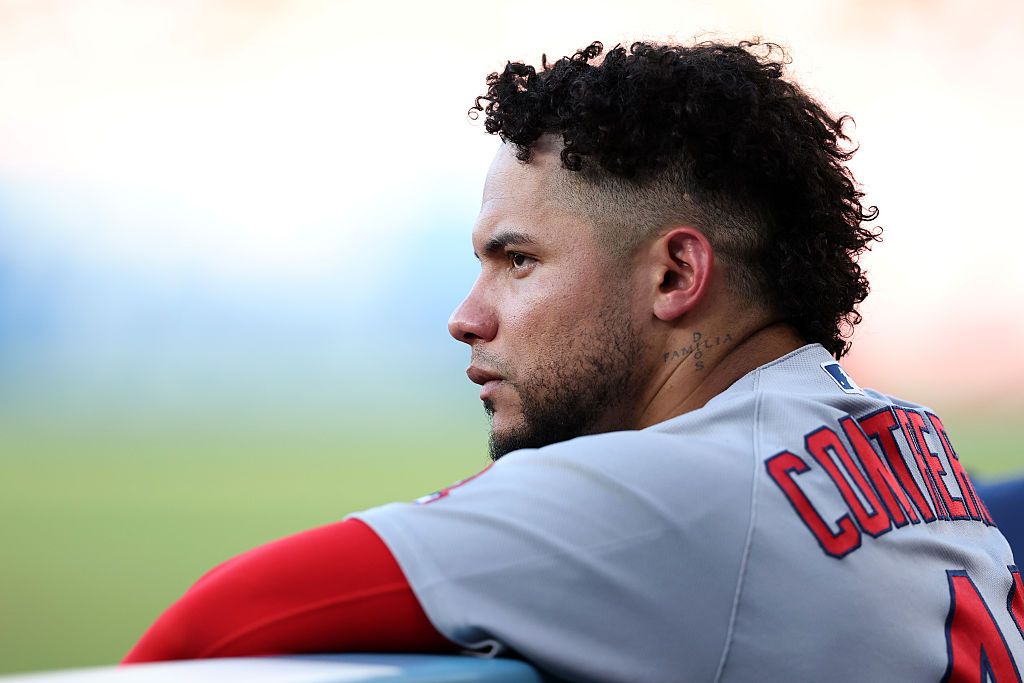
| Willson Contreras 2+ total bases | +130 | Contreras brings a .286/.393/.539 line, 23 homers, a .932 OPS, seven homers across 30 games, 46.3% hard hits, 14.6% barrels, a .827 slugging percentage against sinkers, cleanup volume, and Burke’s .475 sinker xSLG despite the right-hander’s dominant recent form. |
| Tyler O’Neill 2+ total bases | +150 | O’Neill’s surge includes a .282/.341/.603 line across 30 games, six homers, 70% hard hits, 20% barrels, and 60% fly balls against left-handed four-seamers, while Detmers throws that pitch 45.2% and has allowed a .433 xSLG with 49.7% hard contact. |
| Dalton Varsho 2+ total bases | +135 | Varsho’s 2+ total-bases case combines 50% hard hits, 40% blasts, 20% barrels, 70% fly balls against right-handed four-seamers, 19 doubles, cleanup duty, Taillon’s 5.92 ERA, 6.73 FIP, 25 homers allowed, .743 four-seam slugging allowed, and Toronto’s taxed bullpen. |
| Colson Montgomery 2+ total bases | +135 | Montgomery pairs 25 homers, 114.4 mph maximum exit velocity, 12.6% barrels, a .333 average, .867 slugging percentage, .847 xSLG, and 52.2% hard hits against cutters with Gray’s vulnerable cutter, although recent cold form and a 32.3% strikeout rate raise the price requirement. |
| Esmerlyn Valdez 2+ total bases | +170 | Valdez offers a 92.4 mph average exit velocity, 50.6% hard hits, 24.1% barrels, a .574 slugging percentage against four-seamers, and three homers across 10 relevant batted balls, while Harrison throws 57.9% four-seamers but directly attacks Valdez’s 36.1% strikeout rate. |
In-depth analysis below.
Prop bet analysis
Willson Contreras 2+ total bases (+130)
Willson Contreras owns the strongest complete hitting profile among these five candidates. He enters batting .286 with a .393 on-base percentage, .539 slugging percentage, 23 home runs, and a .932 OPS. His last 30 games produced a .299/.433/.577 line, seven homers, 24 RBI, and 18 walks.
The recent contact remains equally convincing. Contreras has produced 50% hard contact, 40% blasts, 30% barrels, and 20% pulled barrels against right-handed sinkers. His full-season results against that pitch provide even stronger support. Contreras has hit .420 and slugged .827 against sinkers, generating a .547 wOBA and .730 xSLG.
Sean Burke’s sinker has allowed a .268 average, .465 slugging percentage, and .475 expected slugging percentage. The pitch creates only an 11.7% whiff rate, giving Contreras an excellent contact route. That matters because 2+ total bases can arrive through one double or two singles.
Burke presents a serious challenge beyond that pitch. He has posted a 1.45 ERA, 0.88 WHIP, and 59 strikeouts across his last seven appearances. His primary four-seamer has driven that run, while his sinker usage sits near 15%. Contreras may receive only one ideal pitch during his first two plate appearances.
Boston’s lineup and game environment keep the wager attractive. The Red Sox have won six straight and 15 of 18 since the break. They have hit four home runs in consecutive games, with Contreras holding the cleanup assignment. Warm Fenway conditions also support carry toward the gaps and Green Monster.
Burke’s current form limits the margin for error. Contreras still combines elite recent production, exceptional sinker results, and multiple winning paths.
Tyler O’Neill 2+ total bases (+150)
Tyler O’Neill’s season line hides a meaningful recent power correction. He has hit .282/.341/.603 with six home runs across his last 30 games. His last 15 produced a .289 average, .579 slugging percentage, and three homers. O’Neill has also slugged .625 with two home runs over his last seven.
That improvement aligns with his recent work against left-handed four-seamers. O’Neill’s last 10 relevant batted balls include seven hard hits, three blasts, two barrels, six fly balls, and two homers. The 60% fly-ball rate creates a strong one-swing path toward clearing this market.
Reid Detmers should provide repeated access to that pitch. He throws his four-seamer 45.2%, making it the foundation of his arsenal. Opponents have slugged .432 against it, with a .433 xSLG and 49.7% hard-hit rate. Detmers’ slider remains his better weapon, making early-count fastball aggression important for O’Neill.
The pitcher’s recent form supplies the strongest counterargument. Detmers has allowed four earned runs across his last 16⅓ innings. He collected 22 strikeouts against only three walks during that span. His broader seven-start line remains more volatile, carrying a 4.86 ERA and 1.30 WHIP.
O’Neill’s season-long four-seam results also require context. He has hit only .176 against the pitch, despite producing a 51.3% hard-hit rate. Loud contact has not consistently translated into results. His recent surge suggests that conversion may finally be improving.
Baltimore’s offense has scored only three runs across three games, lowering the fifth-plate-appearance ceiling. O’Neill still owns one of the slate’s cleanest fastball collisions. Detmers’ usage guarantees opportunity, while the recent contact provides enough authority.
Daulton Varsho 2+ total bases (+135)
Daulton Varsho draws the weakest opposing starter on this board, creating several paths toward 2+ total bases. Jameson Taillon enters with a 5.92 ERA, 1.36 WHIP, 6.73 FIP, and 25 home runs allowed. His last seven starts produced an 8.90 ERA, 1.68 WHIP, and 40 hits across 30⅓ innings. Taillon has completed five innings once during that stretch, exposing an already taxed Toronto bullpen.
The pitch shapes fit Varsho’s recent contact. Taillon throws his four-seamer 27.9% and cutter 18.4%. Opponents have hit .329 and slugged .743 against the four-seamer. Its .717 expected slugging percentage confirms that damage. The cutter has also allowed a .681 slugging percentage with an even worse .756 xSLG.
Varsho’s recent sample against right-handed four-seamers includes 50% hard contact, 40% blasts, 20% barrels, and 70% fly balls. That contact has not produced a home run yet, but this market needs only one double. Varsho also owns 19 doubles, preserving an important path beyond home-run variance.
His broader form creates the wager’s main concern. Varsho has not homered across his last 30 games, posting a .247 slugging percentage. However, he has hit .273 across his last 15, with only eight strikeouts in 44 at-bats. The contact floor has begun recovering before this favorable matchup arrived.
Houston has placed Varsho fourth behind Jeremy Peña, Yordan Alvarez, and Isaac Paredes. That role should provide four plate appearances and strong run-production opportunities. Taillon’s deteriorating command, extreme barrel damage, and vulnerable hard pitches make Varsho the strongest opponent-driven play.
Colson Montgomery 2+ total bases (+135)
Colson Montgomery presents the board’s most specific pitch-family wager. His recent cutter sample includes 60% hard contact, 60% blasts, 30% barrels, 20% pulled barrels, and three home runs. Those results extend well beyond one isolated 10-ball stretch.
Montgomery has hit .333 and slugged .867 against cutters this season. He owns a .525 wOBA, .847 expected slugging percentage, and 52.2% hard-hit rate against the pitch. Few hitters on this board have produced stronger pitch-specific damage.
Sonny Gray’s cutter creates a legitimate opening. Opponents have hit above .300 against it, with a slugging percentage near .500. Gray uses the pitch roughly 20%, keeping it prominent enough to matter across multiple plate appearances.
The larger matchup still favors Gray. He carries a 2.93 ERA, 1.17 WHIP, and only 12 home runs allowed through 113⅔ innings. His deep arsenal includes a sinker, sweeper, four-seamer, and curveball. Gray can easily reduce cutter usage after identifying Montgomery’s preferred attack.
Montgomery’s recent form also lowers the floor. He has hit .107 with a .250 slugging percentage across his last seven games. His last 15 produced a .190/.262/.328 line. He has struck out 45 times across his last 30 games, weakening the two-hit route considerably.
The power remains undeniable. Montgomery owns 25 home runs, a 114.4 mph maximum exit velocity, and a 12.6% barrel rate. His elevated launch angle and pull-heavy approach can clear this market immediately when Gray misses.
This wager requires a generous price because Gray controls contact better than Taillon, Burke, or Detmers. Montgomery still offers a compelling upside play because his best pitch family meets Gray’s clearest vulnerability.
Esmerlyn Valdez 2+ total bases (+170)
Esmerlyn Valdez owns the slate’s loudest raw contact profile. He carries a 92.4 mph average exit velocity, 50.6% hard-hit rate, and extraordinary 24.1% barrel rate. His recent sample against left-handed four-seamers contains 70% hard contact, 60% blasts, 20% barrels, six fly balls, and three home runs.
The season-long fastball results confirm that damage. Valdez has slugged .574 against four-seamers, producing a .387 wOBA and 68.2% hard-hit rate. Any centered fastball can clear 2+ total bases immediately.
Kyle Harrison throws his four-seamer 57.9%, guaranteeing repeated exposure to Valdez’s preferred pitch family. However, the pitch also owns a 30.9% whiff rate and 34.2% strikeout rate. That profile directly attacks Valdez’s greatest weakness.
Valdez has struck out in 36.1% of his plate appearances. He owns one hit across his last 20 at-bats. His last seven games produced a .050/.310/.100 line with nine strikeouts. Across his last 15, Valdez has hit .133 with 21 strikeouts in 45 at-bats.
Those walks provide no help in this market. Valdez has reached base frequently enough to support his lineup role, but total bases require contact. His two-hit path is considerably weaker than those belonging to Contreras or Varsho.
Harrison enters with a 3.01 ERA, 1.08 WHIP, and 101 strikeouts across 83⅔ innings. He also returns from forearm tightness after throwing 68 pitches during his rehab start. A controlled workload could expose Valdez to Milwaukee’s bullpen by his third plate appearance.
Valdez remains a pure ceiling play. His barrel rate and four-seam damage are elite, but his contact floor remains dangerously low.