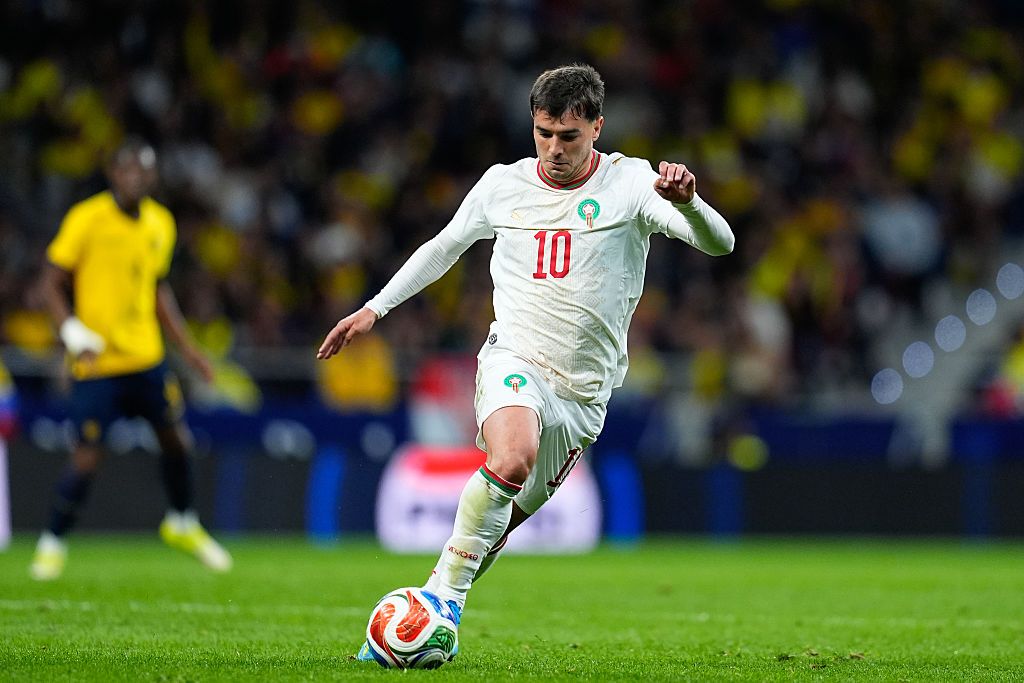
Four years ago, Morocco shocked the world in Qatar, advancing to the World Cup semifinals before falling 2-0 to France. In the process, the Atlas Lions became the first-ever African team to reach that stage of the world’s premier football competition. Morocco’s triumph represented a major bounce-back for the continent, as in 2018, every African representative was eliminated in the group stage for the first time since 1982.
Still, African football has arguably never been in a better place. Thanks to the tournament’s expansion from 32 to 48 teams, there will be 10 CAF participants in this summer’s World Cup, twice as many as there were in 2022 and four more than the all-time record, when South Africa’s role as host in 2010 meant there were six African representatives for the first time. Seeing an African semifinalist — or even finalist — wouldn’t be all that surprising.
In this five-part series, I’ve already predicted the best-performing nation from Europe, South America, and Asia, but today I’ll focus on Africa, the continent with the second-most teams.
First, I’ll break down which African countries are participating in this summer’s World Cup, sorted by their odds of lifting the trophy on July 19 at DraftKings Sportsbook.
List of African countries in the 2026 FIFA World Cup
Morocco (+5000)
Senegal (+11000)
Ivory Coast (+25000)
Ghana (+30000)
Egypt (+30000)
Algeria (+35000)
Tunisia (+50000)
DR Congo (+70000)
South Africa (+80000)
Cape Verde (+100000)
Which African country will advance the farthest? Pick, best bet
The Atlas Lions are the only team on the continent in the top 10 of the current FIFA World Rankings, sitting eighth after controversially winning the Africa Cup of Nations on their home soil this winter. Their status as the continental favorite makes sense: during World Cup qualifying, Morocco scored 22 goals while conceding just two, and it has the reigning African Footballer of the Year in captain Achraf Hakimi, who’s widely considered the world’s best right-back. The Atlas Lions’ results in friendlies have been a mixed bag, as they drew with No. 23 Ecuador, but it’s hard to read too much into friendlies, especially since neither their typical striker, Ayoub El Kaabi, did not play. The more pressing concern for Morocco is Hakimi’s health, as he suffered a thigh injury in the first leg of Paris Saint-Germain’s Champions League semifinal against Bayern Münich, but he could return as soon as Saturday’s Champions League final and is tracking to be close to 100% by the start of the World Cup.
The Atlas Lions will face their most difficult test at the start of the World Cup with a June 13 match against Brazil, so they’ll have to hope Hakimi is fit if they want to win that match. All in all, Morocco has a difficult group, as it’s been drawn into Group B alongside the Seleçao, Scotland, and Haiti. While Scotland and Haiti are widely expected to finish as the bottom two, either Brazil or the Atlas Lions could reasonably finish first, with the Seleçao -370 to win the group and Morocco +425. If they end up topping the group, the Atlas Lions will end up facing the runners-up in Group F (likely either Japan or the Netherlands) in the Round of 32 and the runner-up of either Group E or Group I in the Round of 16, which is likely to be one of Ecuador, Ivory Coast, Senegal, and Norway. Morocco might rather finish second, anyway; if it does so, it’ll likely face either Orange or the Blue Samurai in the Round of 32 and a much easier Round of 16 matchup against either the Group A or Group B runner-up. Those are considered to be two of the easier groups in the tournament, since hosts Mexico and Canada are the Pot 1 teams in the respective groups.
Besides the Atlas Lions, the Lions of Teranga are the only other African team with a real shot of winning it all. Senegal thought it had won AFCON when it out-lasted Morocco 1-0 in the final, and while the result was eventually overturned two months later when the federation ruled that the Lions of Teranga had walked off the pitch, they were the better team on the field that day. At 14th in the world, Senegal has just as much high-level talent as the Atlas Lions, from veteran leaders Sadio Mané, Kalidou Koulibaly, and Edouard Mendy to rising stars Lamine Camara, Ibrahim Mbaye, and El Hadji Malick Diouf, and its squad has the highest combined market value on the continent. The Lions of Teranga had nearly as strong a World Cup qualifying campaign as Morocco did, scoring 22 goals and conceding three in 10 matches, and they gave up just two goals throughout AFCON.
The issue is that Senegal has an extremely difficult group, as it’ll have to navigate Group I alongside World No. 1 France, Norway, and Iraq. Like the Atlas Lions, it’ll start its competition with its toughest match, opening against Les Bleus, who own -230 odds of topping the group to the Lions of Teranga’s +750. Still, if Senegal manages to win its group, it’ll have a pretty easy Round of 32 match against one of the eight best third-place sides, and if it wins that match, it’ll face either another third-place team or the winner of Group E (likely Germany) in the Round of 16. If the Lions of Teranga finish second, they’ll face the runner-up in Group E (likely either Ecuador or Ivory Coast) and then face either the winner of Group C (Brazil or Morocco) or the runner-up in Group F (Japan or the Netherlands). Either path would be difficult, but if they survive arguably the toughest group in the tournament, the Lions of Teranga are clearly strong enough to win both matches.
There are a few other talented teams on the continent, but none that inspire quite as much confidence as Senegal and Morocco. Egypt probably has the most doable group alongside Belgium, Iran, and New Zealand, but the Pharaohs haven’t shown enough quality in the back to pair with Mohamed Salah and Omar Marmoush. Algeria has a pretty easy group too, as it should be able to finish second behind reigning champions Argentina in Group J, but the Fennec Foxes are slated to come up against Spain in the Round of 32 if they finish second and La Roja wins Group H. The other African teams either don’t have enough talent to realistically make it past the Round of 32 (Cape Verde, Tunisia, and South Africa) or will have a difficult group (DR Congo, Ghana, and the Ivory Coast). In the end, I’ll make a chalky pick; the Atlas Lions should finish second in their group unless they upset Brazil, and the second-place path in Group C is very friendly. That’s a much easier path than the Lions of Teranga, who will likely face one of the world’s best defensive teams in the Round of 32 and a top-10 team in the Round of 16.