The 2026 Oscar nominations are officially out, and Best Director is where the Academy most plainly declares what it values. This isn’t “best effort” or “biggest movie.” It’s authorship—mise-en-scène, tempo, image-making, and the invisible logic that makes a film feel inevitable. When this category hits, it reads like a ballot on control: who shaped the chaos, who conducted the room, who made a hundred moving parts look like one idea.
The 98th Academy Awards will air live from the Dolby Theatre on Sunday, March 15, at 7 p.m. ET on ABC.
Find our predictions for other major 2026 Oscars categories here!
- Best Picture
- Best Actor
- Best Actress
- Best Supporting Actor
- Best Supporting Actress
- Best Director
- Best Adapted Screenplay
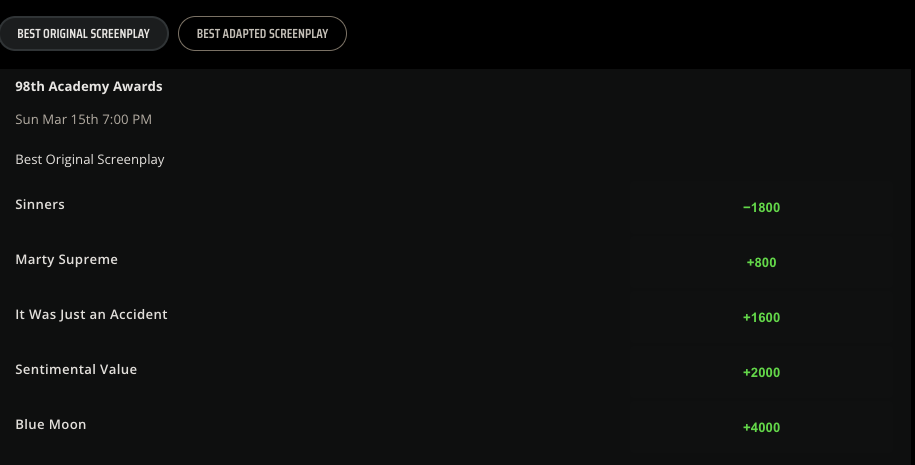
2026 Oscars Best Original Screenplay Nominees
Blue Moon
Robert Kaplow’s script for Blue Moon has the most old-school writerly premise in the field and knows it. Richard Linklater stages the whole thing around Lorenz Hart on the opening night of Oklahoma!, with Ethan Hawke’s Hart drinking, spiraling, needling, and eulogizing himself in real time as the culture moves on without him. That setup is catnip for dialogue people: one room, one ego in collapse, one showbiz mythology curdling into self-reckoning. Sony Pictures Classics is selling it exactly that way, as Hart confronting his shattered confidence in Sardi’s while Rodgers basks in triumph upstairs. The nomination makes perfect sense. Winning would require the Academy to prefer ornate verbal melancholy over the louder, more immediately canonical scripts in the race. That feels like a bridge too far, but as a writing nomination, this is as pure as it gets.
It Was Just an Accident
Jafar Panahi’s script is the category’s stealth knife. NEON frames It Was Just an Accident as a moral thriller: a mechanic believes he has stumbled across the prison torturer who brutalized him, then rounds up fellow ex-prisoners to confirm the man’s identity. But the screenplay’s real achievement is tonal. This is revenge, paranoia, memory, state violence, and bitter comedy all pushed into the same cramped vehicle without collapsing into thesis theater. The film won the Palme d’Or at Cannes, which helps explain why it showed up here despite being a smaller Oscar player overall. Still, Original Screenplay winners usually need either a full-industry wave or a very legible “reward the writing” narrative. Panahi has the critical prestige and the moral weight, but the category’s momentum seems to be gathering somewhere more expansive and more broadly populist. This feels like the nomination voters make when they want the lineup to keep its edge.
Marty Supreme
Ronald Bronstein and Josh Safdie got a screenplay nomination for turning obsession into slapstick poison, which feels correct. A24’s synopsis for Marty Supreme is almost comically spare—Marty Mauser goes to hell and back in pursuit of greatness—but that is basically the whole Safdie thesis anyway. Ambition is degrading, performance is identity, hustle is a sickness, and America remains weirdly committed to confusing compulsion for destiny. In screenplay terms, Marty Supreme is probably the field’s most abrasive pleasure: all propulsion, bravado, humiliation, and rat-a-tat self-mythology. That makes it easy to admire and harder to imagine as the consensus winner. Scripts like this tend to inspire fervent first-place love from people who like their cinema jittery and feral, but Oscar screenplay prizes still usually go to something that can also flatter the room a little. The nomination is the institution admitting that this kind of manic authorship belongs in the canon conversation.
Sentimental Value
Joachim Trier and Eskil Vogt are operating in their home register here: intimacy sharpened until it cuts. NEON’s synopsis for Sentimental Value is deliciously combustible—a once-famous director offers his daughter a role in his comeback film, she refuses, and an American actress gets dropped into the family’s unresolved wreckage—but the screenplay’s real draw is the precision with which Trier and Vogt map humiliation, inheritance, ego, and affection onto ordinary conversation. Cannes gave the film the Grand Prix, and the Academy clearly responded to it broadly, but screenplay is the place where its defenders will feel most justified. This is the kind of script people talk about in terms of calibration, architecture, emotional intelligence. It may even be the most classically admired piece of writing in the category. The problem is that admiration is not always momentum. It feels like the nominee writers and critics will remember longest, even if Oscar night goes elsewhere.
Sinners
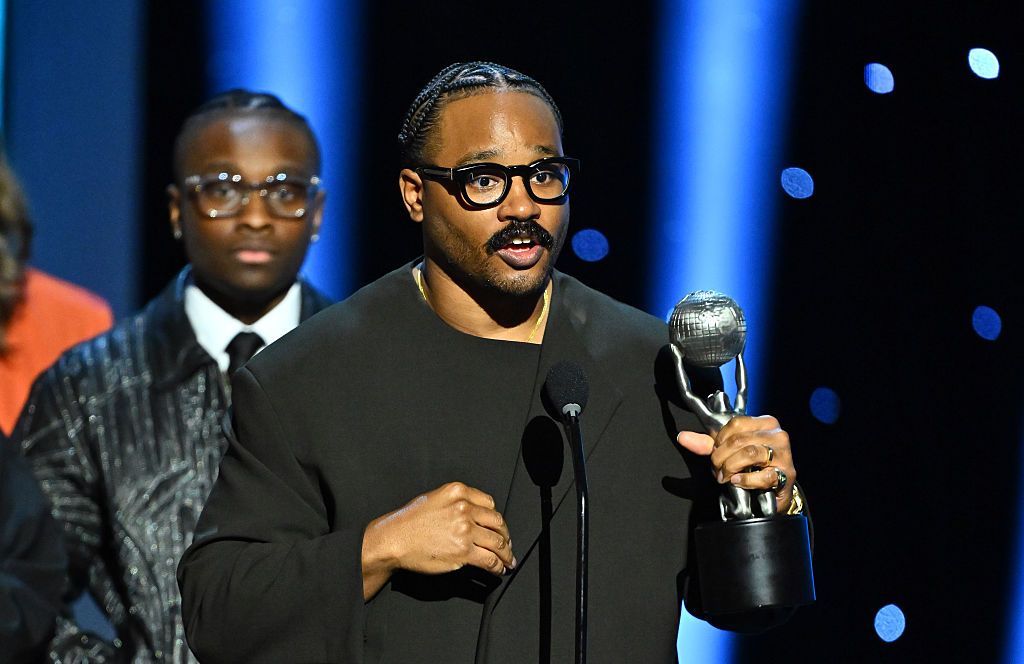
Ryan Coogler’s Sinners is the nominee that turned Original Screenplay into a real event instead of a side category. HBO Max reduces the plot to a clean hook—twin brothers return home and find an even greater evil waiting—but the script’s reputation is larger than premise. This is the movie that built an entire sensibility: Delta Gothic, blues cosmology, vampire movie, period nightmare, brother tragedy, populist banger. The Academy nominated it everywhere, and the screenplay case has only strengthened late. Coogler won the Critics Choice award for original screenplay, then the BAFTA for original screenplay, then the WGA prize, building the kind of three-body precursor run that usually means the category has chosen its center of gravity. Unlike some “important” Oscar scripts, this one also has scale and appetite; it feels authored, commercial, and culturally live all at once. That is a brutal combination to beat.
Prediction: Sinners
This looks much cleaner than Best Picture. The romantic alternative is Sentimental Value, which has the kind of meticulous, emotionally ruinous writing that screenplay voters love to claim they value most. The critical-purist alternative is It Was Just an Accident, whose moral-thriller structure and Panahi backstory give it real prestige weight. And Blue Moon is exactly the sort of dialogue showcase that can tempt a certain branch demographic. But prediction is about the actual trail, not the fantasy bracket, and the actual trail belongs to Coogler. Sinners has already won Best Original Screenplay at Critics Choice, BAFTA, and the Writers Guild, and Vogue’s final Oscar read calls him basically guaranteed here. That is not ironclad destiny, but it is close.
The deeper reason the pick makes sense is that Sinners solves the category’s hardest trick. It feels unmistakably original in the literal sense, but also complete in the grand old Hollywood sense: world-building, dialogue, mythology, genre control, and thematic ambition all humming inside one package. It is the screenplay voters can reward without caveat. Not the smallest script, not the most delicate script, not the most “writerly” in the workshop sense—the script that most convincingly became a movie-world people wanted to live in, fear, quote, and crown. That is usually enough.