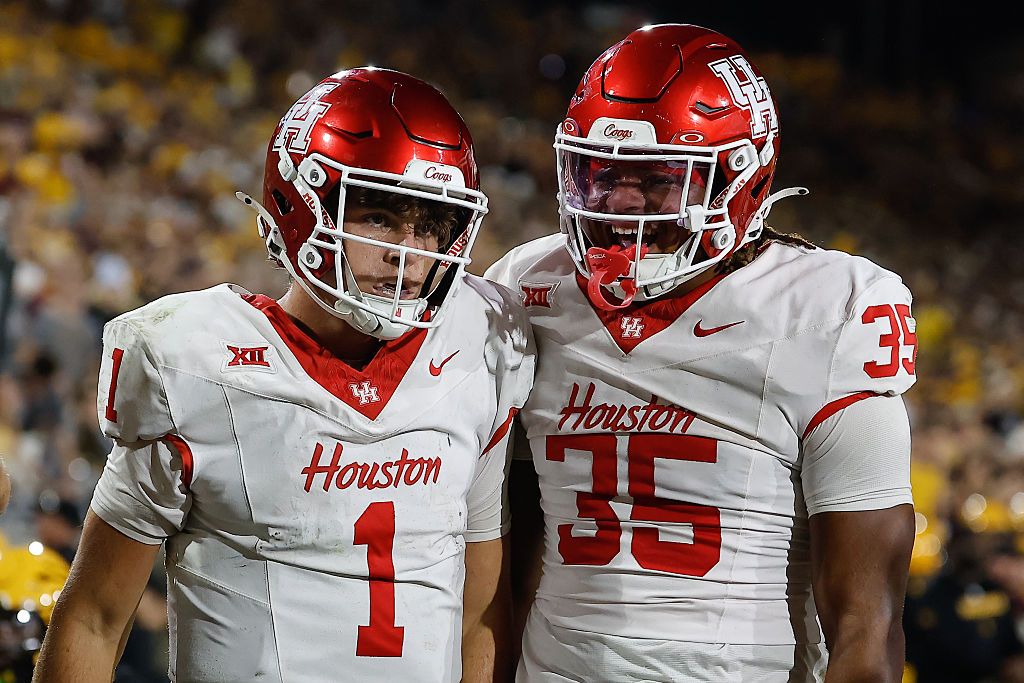
Friday in Orlando turns cosmic as UCF’s Space Game paints FBC Mortgage Stadium in silver trim and noise. Houston arrives ranked and urgent at seven–two, chasing Big 12 leverage while a bruised UCF guards bowl oxygen and a 4–1 home drumbeat. The market whispers coin-flip at −1.5 with a 47.5 lid, which sharpens every red-zone breath and fourth-down decision. Pageantry meets pragmatism: Houston’s quarterback legs and 93.5% red-zone finish crash into a defense built to cap explosives, while UCF’s ground tempo tries to smother rhythm. Expect crowd surges, compressed windows, and field position turning like a ratchet as the night tightens. Below are my top college football player props to consider for the Week 11 matchup between the Houston Cougars and the UCF Knights.
Here’s how I’ll play it. I’ll be pumping out these predictions for individual games all season, with plenty of coverage here on DraftKings Network. Follow my handle @dansby_edits for more betting plays.
UCF vs. Houston best prop bets
Conner Weigman to score a touchdown (-115)
Conner Weigman owns this prop because Houston engineers the low-red to feature him, not just the tailback. The nine rushing touchdowns aren’t noise; they’re design. Houston finishes 93.5% of red-zone trips, and that conversion engine tilts toward quarterback keepers, zone-read keeps, and scramble lanes when leverage widens. UCF concedes scores 87% of the time in the red area, which turns every Houston goal-to-go snap into a plus-EV moment for Weigman’s legs.
The broader shape reinforces it. Houston runs for 161.3 yards per game and lives on schedule; that rhythm drags safeties down and invites the quarterback pull. UCF protects its back end and allows 146.4 rush yards per game, which is the exact profile that yields crease, bluff, and boot at the pylon. Inside the ten, Weigman’s stop-start burst stresses unblocked edges; inside the five, his frame turns hesitation into six. Add Houston’s third-down edge—41%+ conversions— and you get extra red-zone volume without needing explosives to get there.
Game context pushes the same way. The spread sits short at −1.5, and the total sits 47.5, a mid-scoring lane that rewards scripted finishes over chunk-play roulette. UCF brings 19 sacks and real edge heat, but that aggression often vacates contain in condensed space. When rush lanes cross, Weigman tucks and punishes, which is how nine touchdowns happen before November’s second Friday. Penalties won’t sabotage many chances either; Houston averages 45.7 penalty yards, which keeps goal-line calls on schedule.
I’m on Weigman anytime TD (−115) and will ladder a sprinkle to 2+ TDs (+500). The thesis is structural, not hopeful: red-zone certainty at 93.5% meets a defense that allows 87% and a quarterback with nine on the ground. If Houston reaches three red-zone possessions, the math screams for one keeper to cash—and a second to live as a live add.
Dean Conners 80+ rushing yards (+105)
The script tilts to terra firma, and Dean Connors sits squarely in the lane. Houston averages 161.3 rushing yards per game and leans into balance that keeps boxes honest. UCF invites that choice by protecting its back end and allowing 146.4 rushing yards per game. Connors’ workload matches the geometry. He owns 657 rushing yards at 4.0 per carry, the exact profile that churns eight-yard first downs and sets second-and-manageable. Conner Weigman’s keeper threat, with 327 rushing yards and nine rushing touchdowns, widens the C-gap and freezes overhangs near the goal line and between the 20s. That stress creates soft edges and late-filled fits that Connors exploits.
Volume shouldn’t evaporate. Houston sustains at over 41% on third down and keeps flags light at 45.7 penalty yards per game. Those details buy snaps and keep the call sheet multiple. The market frames a one-score game, so Houston can stay stubborn with run volume rather than chase low-percentage shots into a top-yardage pass defense. Connors doesn’t need explosives; he needs steady rips that stack to eighty. If the Cougars reach three or four sustained drives before halftime, the pace points directly to this threshold. I’m on Connors 80+ rush yards (+107) and will ladder to 90+ if you want a plus-price swing that correlates with a Houston cover and shorter second halves.
Amari Thomas 60+ receiving yards (-115)
Amare Thomas owns 40 receptions for 634 yards and seven touchdowns, then detonated 10 for 99 with three scores last week. Conner Weigman delivers 65.3% completions with a 16–4 touchdown-to-interception line, and Houston throws for 222.0 yards per game. UCF’s pass defense limits deep yardage to under 162 per game, but that shell concedes the glance, whip, and hitch menu Weigman spams on money downs. Thomas lives there. He becomes the first read on third-and-medium, the hot against pressure, and the iso slant when splits condense.
Game shape helps. Houston’s red-zone engine at 93.5% forces UCF to squeeze late, which opens mid-field windows earlier in series. The Cougars avoid drive-killing flags at 45.7 penalty yards, which means more clean snaps and more targets routed through Thomas. You don’t need a fifty-yarder; you need eight catches for seven, ten, twelve at a time, stacked across four quarters. The Knights’ goal is to eliminate explosives; our goal is to harvest space they willingly spot. I’m on Thomas 60+ (−117) and will ladder to 70+ if you’re correlating with a Weigman anytime touchdown and a Houston script that leans sustained possessions over one-play haymakers.