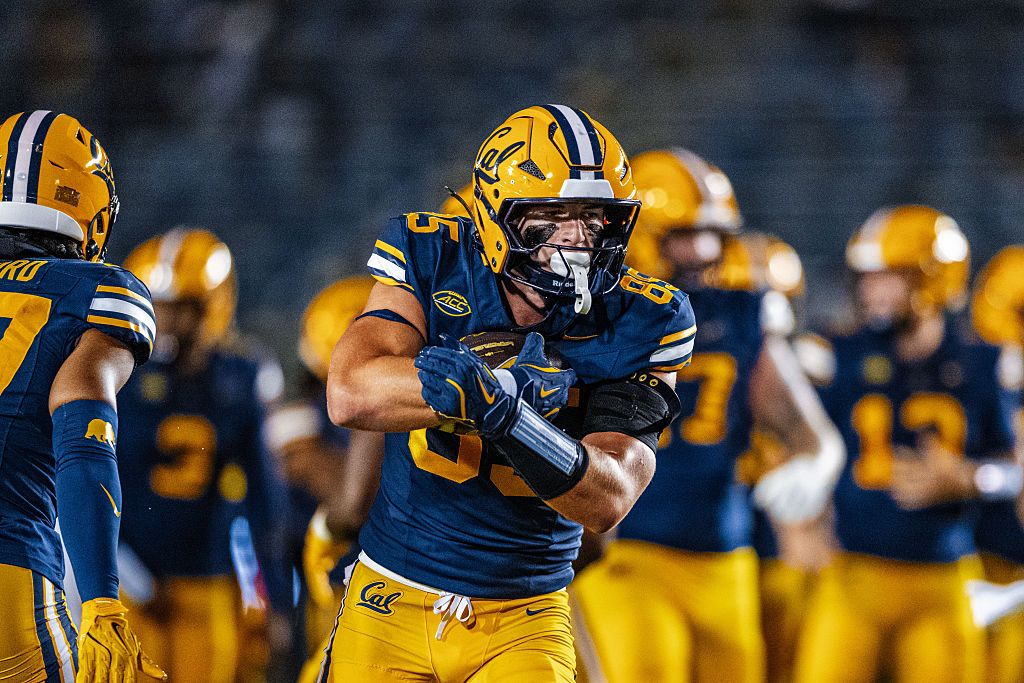
Lane Stadium gets the late-October spotlight as Virginia Tech hosts California under the Blacksburg lights—Friday, Oct. 24 at 7:30 p.m. ET, a primetime window built for noise, nerve, and swing plays. The air will bite and the sky should stay clear, the kind of crisp night that makes the ball whistle and crowds carry, with a cool, dry forecast framing the stage. California brings quarterback Jaron-Keawe Sagapolutele’s timing game and a coverage unit that squeezes windows; Virginia Tech counters with Kyron Drones’ dual-threat heartbeat and a home crowd that likes to lean on third down. The stakes feel tangible even beyond the standings: a Friday showcase that can tilt narratives and nudge bowl math, a venue where momentum tends to echo, a matchup where precision matters and hesitation gets punished. Expect tempo pockets, fourth-down decisions, and field-position gambits to lace through the script, because both staffs know the national window magnifies every seam. Below are my top college football player props to consider for the Week 9 matchup between the California Golden Bears and the Virginia Tech Hokies.
Here’s how I’ll play it. I’ll be pumping out these predictions for individual games all season, with plenty of coverage here on DraftKings Network. Follow my handle @dansby_edits for more betting plays.
Virginia Tech vs. Cal best prop bets
Jaron-Keawe Sagapolutele 2+ pass TDs (-110)
The matchup screams air damage because Virginia Tech leaves windows ajar and then wider by the snap. The Hokies have allowed 70.4% completions and 8.9 yards per attempt with a pass-defense EPA/dropback of +0.34, so layered throws become explosives rather than hopeful lobs. Sagapolutele has banked 1,696 yards at 60.9% with 10 touchdowns, and California’s passing offense sits at 241.7 yards per game. The Bears also cash 84.6% of red-zone trips, so play-action outs and seam benders inside the 20 should convert, not merely threaten. The structure tilts toward his arm because the run game lags at 81.2 yards per game (133rd), which nudges early-down calls toward quick rhythm throws. That bias keeps Virginia Tech in nickel, where it has bled spacing and leverage. The Hokies’ defense has allowed points on 100% of red-zone possessions, which turns every sustained march into a finish rather than a fade. Sagapolutele does not need perfection; he needs field position and two drives that end with a raised index finger. The forecast cooperates, too: dry, calm Blacksburg air under mostly clear skies steadies touch and keeps the ball spinning true. California’s +0.02 net EPA/play and 39.0% success rate sustain those chains long enough to stack red-zone snaps. Two touchdown throws fit the tape, the math, and the script. The market shaded his number modestly; the game state wants more.
Jacob De Jesus 7+ receptions (-115)
Volume follows structure, and structure here screams underneath punishment until the roof collapses. De Jesus has 47 catches for 406 yards with three scores, and he just posted 13 for 105 and a touchdown against North Carolina. California’s run game sits at 81.2 yards per game, so the Bears advance with option routes, whip cuts, and choice concepts that feed him on time. The Hokies invite it by allowing 70.4% completions and 8.9 yards per attempt with a pass-defense EPA/dropback of +0.34. Those numbers create a conveyor belt of high-percentage throws that become yards after the turn. Third-down math also plays his direction because California lives at 47.1% on the money down, and De Jesus owns trust bandwidth on those stick-and-pivot layers. The Bears score on 84.6% of red-zone trips, so chains keep clacking and routes keep stacking. Virginia Tech’s profile has not squeezed short area windows; linebackers drift, flats sag, and option angles reappear like echoes. The game state projects sustained possessions rather than three-and-outs, and that rhythm feeds a high-target slot. Dry, cool Blacksburg air removes grip variance and preserves timing on the quick game. Seven catches aren’t a ceiling; they look like the mean in this script. The price trails the usage, the usage trails the matchup, and the matchup tilts toward repetition. When cushions widen, the ball hisses to his chest, and the tally climbs.
Mason Mini to score a touchdown (+175)
The geometry down close favors him because Virginia Tech has surrendered points on 100% of opponent red-zone possessions. California converts 84.6% of its own red-zone trips, and Mini has carved a niche there with 27 catches for 287 yards and three touchdowns. Sagapolutele’s play-action efficiency spikes when Dylan Riley’s counterparts must honor run looks, and that hesitation unlocks seam-settle windows for the tight end. The Hokies’ pass defense has lived at a +0.34 EPA/dropback, so box defenders chase ghosts and then arrive late at the catch point. California’s pass lean is baked in by a run game parked at 81.2 yards per game, which funnels high-leverage throws to size and hands near the pylon. Mini’s route tree—leak, stick, nod—pressures flat defenders who already concede 70.4% completions. The Bears’ overall +0.02 Net EPA/play and 39.0% success rate keep the script measured, not frantic, so red-zone snaps accumulate rather than evaporate. In that phone booth, Mini boxes out, sets his frame, and secures the fade or the glance. Dry, steady conditions in Blacksburg remove the slick-ball variable and favor contested-catch specialists. The number pays like a coin flip; the matchup reads closer to a nudge. California should log multiple red-zone possessions, and one schemed shot to the tight end cashes the ticket. The sequence writes itself: shift, sell run, leak, plant, hands—and six.