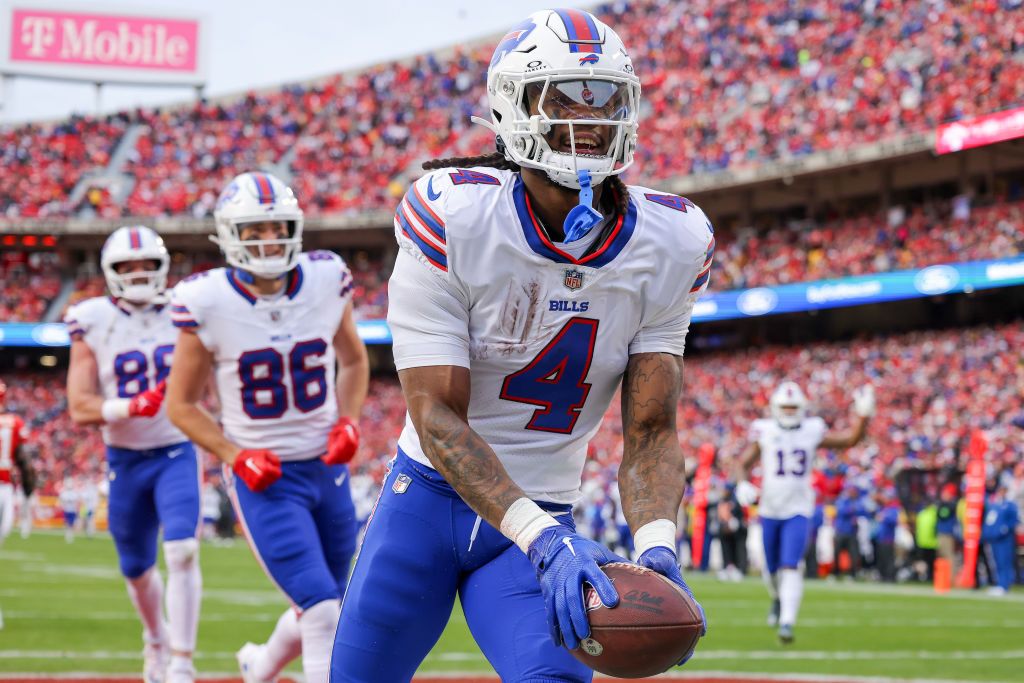
Buffalo will dictate pace against Atlanta with sustained, methodical drives, and that keeps the running back involved in both structure and scramble. The Falcons rush at 39.5% and sit in Cover-3 on 49.5% of snaps, a combo that pushes the ball to flats, angles, and screens when quarterbacks won’t hold it. That’s exactly where James Cook eats. Given the matchup, there’s plenty of prop value to be found in Cook’s market tonight.
To wit—below, check out one of my favorite James Cook props to consider from this Monday Night tilt.
Best James Cook prop bet for Falcons vs. Bills
James Cook o2.5 receptions + o13.5 receiving yards (+135)
Atlanta’s defensive blueprint gives us the angle. The Falcons’ shell has smothered tight ends this year (0 TDs allowed, 53.3% catch rate, 4.6 yards per target), so offenses have had to work outside and underneath the curl-flat defender rather than force seam balls. Josh Allen already punishes this structure (76.9% completions, 9.2 YPA, 0 INT vs Cover-3), and Buffalo’s tempo keeps the checkdowns coming—first in time of possession at 34:10 and scoring on 51.1% of drives. The numbers around pressure make the case for manufactured touches: when Allen is heated, efficiency craters (47.4% completions, 5.3 YPA under pressure) versus a pristine pocket (78.1% and 8.9 YPA), which is why the Bills lean on quick-game outlets, screens, and option routes to their back to neutralize rush. Atlanta also allows 7.7 yards per target to the outside, which forces corners and curl-flat defenders to widen; that spacing naturally leaks yards to the back on swings and choice routes. Meanwhile, Buffalo’s Cover-3 beaters—dagger, slot fades, play-action crossers—already command attention from those underneath defenders because Dalton Kincaid has drawn a 23.7% Cover-3 target share at 3.29 yards per route, and Khalil Shakir sits at 3.47 YPRR in those same windows. When those routes hold hook and flat help a tick longer, Cook becomes the clean outlet in Allen’s first two reads.
That game geometry supports both props. Over 2.5 receptions lands as the primary lean because the Bills will script touches to keep the rush honest and because sustained possessions generate repeat opportunities. Over 13.5 receiving yards follows as a correlated add—two designed touches can beat that number, and three routine checkdowns almost always do in this environment.
Locked in: Cook o2.5 receptions and o13.5 receiving yards on a little SGP for MNF, leveraging Atlanta’s 39.5% pressure rate, 49.5% Cover-3 usage, and Buffalo’s volume engine (34:10 TOP, 51.1% scoring rate per drive) to turn outlet throws into bankable yards.