With a new crop of rookie quarterbacks entering the league, Dan Orlovsky joins Ross Tucker to sort out the hype from the real upside on the latest episode of The Ross Tucker Football Podcast.
The number one overall quarterback for Orlovsky is Cam Ward. Orlovsky expressed that what surprised him the most about Ward is how much better he is inside the pocket than outside of it than he had anticipated. Orlovsky pointed out that Ward is hard to fool and that he has a strong ability to dissect what he sees on the field. Additionally, Orlovsky likes how the ball seems to jump out of Ward’s hands. Ward does not force the ball in tight windows and goes through his progressions efficiently, said Orlovsky. While Orlovsky sees plenty of upside, he did point out a few concerns. At 6’2″, Ward isn’t the biggest guy, and he’s not especially creative when plays break down. He also tends to take risks, and some of the concepts he ran at Miami felt a bit repetitive. One thing he’ll need to improve at the next level is reading and reacting to pressure, especially against blitz-heavy defenses.
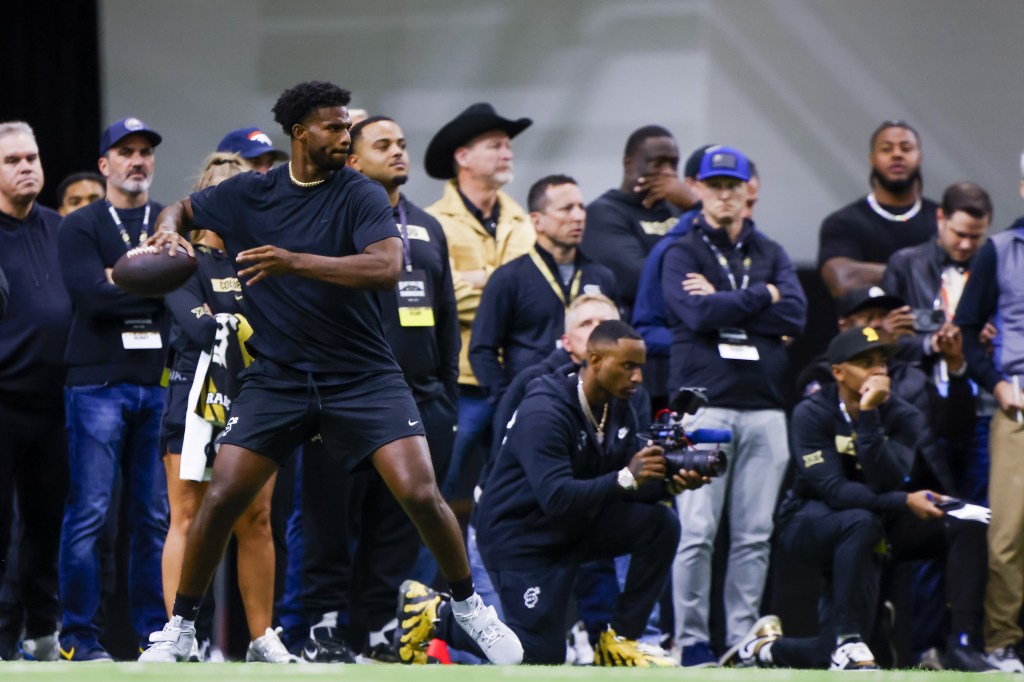
Shedeur Sanders comes in second on Orlovsky’s list, but he told Tucker the gap between Sanders and his No. 3 prospect is much smaller than the gap between either of them and the top spot. Orlovsky highlighted that he likes Sanders and puts some good things on film. Granted, it isn’t easy to find things that you are wowed by when you analyze his film. Sanders excels in rhythm, timing, and precise ball placement. They may not be elite traits, but they’re consistently outstanding. He is tough as nails. He can climb the pocket and navigate it when he wants to pretty well. The cons for Sanders are that many of his throws came from near the line of scrimmage, as he didn’t have great protection up front, and he tended to focus too much on his receivers, especially Travis Hunter, at times. Orlovsky didn’t put all the blame on Sanders, given the circumstances, but it’s still something he’ll need to clean up at the next level. Orlovsky added that the ball does not jump out of his hands the way it does for Ward. Which is not everything to him, but it is something. Orlovsky also pointed out how often Sanders rolls to his left, something you don’t see much at the NFL level. While it worked in college, he’s not sure that tendency will translate against faster, more disciplined defenses.
Jaxson Dart, the former Ole Miss standout, ranks third on Dan Orlovsky’s quarterback board. When Orlovsky watched Dart’s film, it reminded him of Bo Nix coming out of Oregon. He had fairly average expectations going in, but Dart’s tape, just like Nix’s, showed flashes that impressed him. Orlovsky stated that Dart made some athletic throws that wowed him and that he is a dynamic bull-like athlete. He believes that Dart goes through his quarterback progressions just as well as anyone in this class. Orlovsky added that Dart uses his legs when necessary. The offense that Dart ran at Ole Miss did not put limitations on him. He was able to drive the ball downfield and take risks. The one knock Orlovsky has is Dart’s tendency to become lazy with his footwork, which can disrupt his pocket awareness and accuracy. Nonetheless, he views this as a trait that can be coached up.
A quarterback that has been garnering much attention as we get closer to draft day is Louisville’s Tyler Shough. Shough didn’t crack Orlovsky’s top three, but he still sees value in what the Louisville quarterback brings to the table. Orlovsky liked that Shough had experience handling motions, protections, and shifts—things he’ll be asked to do in the NFL. That said, he felt Shough got a little sloppy with his eyes at times. However, he observed that his footwork and drops have been areas where he has shown improvement. The aspect of Shough’s outlook in the league that Orlovsky worries about is his age. Orlovsky makes the point that he will be 26 by next football season, and if you draft after two seasons, you may start to wonder if he has hit his ending stage of development at 28. Orlovsky is not saying he won’t be a starter in the NFL, but if you are a team considering him, you have to ask how much better can we get him?
Jalen Milroe and Quinn Ewers are the last two prospects on Orlovsky’s list. He describes Milroe as an absolute rocket ship with the ball in his hands, and he is tremendously athletic. His critique of Milroe is that in the red zone, he is inefficient. Orlovsky makes the point that you would think, with how athletic Milroe is, the red zone would be an area where he can thrive because of his threat to run. Furthermore, Orlovsky believes he needs to improve at being definitive when it comes to either throwing or running the ball, because at times, it was apparent on tape that he was conflicted in certain situations about whether to take off out of the pocket or throw the ball. Conversely with Ewers Orlovsky’s sticking point is that he is a talented thrower of the football and for someone with such a great arm you seldom see him rip the ball, he guides it, ultimatley Orlovsky believes Ewers is capable of doing it he just wants to know why he did not do enough of it in college.
Check out Ross’ full conversation with Orlovsky in the full video or podcast below. And make sure to tune into the Ross Tucker Podcast on DraftKings Network! See more about how to watch DraftKings Network here.
SHOW BREAKDOWN
Dan Orlovsky breaks down the 2025 rookie Quarterback class
VIDEO:
Check out the Ross Tucker YouTube page for more and subscribe to the show on Apple Podcasts, Spotify or wherever you get your podcasts. You can also follow the show on X at @rosstuckerpod and Ross at @rosstuckernfl.