

In 1961, two years after the extremely famous Barbie doll was made, Mattel gave the world Ken, named after founder Ruth Handler’s son, Kenneth. By the supposed natural order of things, Barbie and Ken were paired together (until their break up in 2004 and eventual reunion in 2011. Yes, I know this is weird talking about dolls). What if it wasn’t Barbie and Ken, but perhaps just platonic people/characters who weren’t forced together because “that’s how things have to be?”
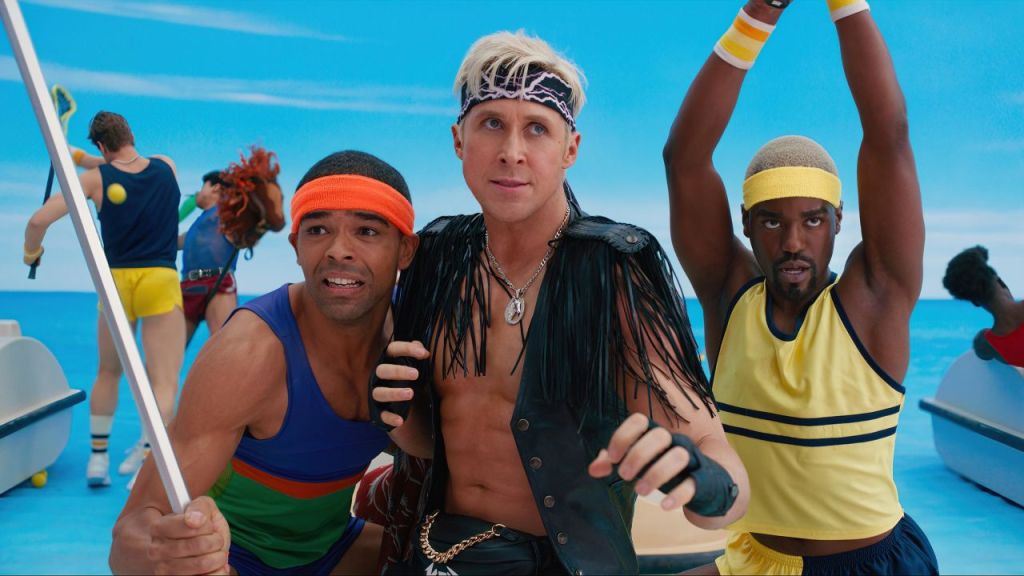
Co-writer/director Greta Gerwig’s Barbie speaks to the difficulties women face in the world and reckons with the somewhat unhealthy history the doll has imparted to young women. One of the film’s best themes is diving into Ken’s overall arc rooted in male entitlement and lack of identity. When we meet Ryan Gosling’s Ken on the beach, he’s incessantly calling to Stereotypical Barbie (Margot Robbie) in a “look at me fashion.” If anybody else catches her attention, he becomes territorial and even chauvinistic with Ken #1 (Simu Liu). Even as Barbie rebuffs his advances, makes it clear she looks at him as a friend and goes on a journey to discover her attachment to the real world, Ken somehow finds a way to make it about himself.
Yes, it can be jarring to realize the person you care a big deal for is not interested in reciprocating those thoughts. Barbie looks at this source of unhealthy devotion and shows that if you don’t have an identity outside that devotion, you will be bound to be enticed by some of the most dour ideologies imaginable. Ken is good-looking, in great shape, and believes this alone entitles him to Barbie’s company. This aligns with a prevalent line of thought in the real world. However, you can have all that and then some, but that still doesn’t give you the key to autonomy over a person’s romantic independence. In Barbie World, the Kens don’t have any power because they are among women who are accomplished and established outside of a relationship. Lacking the center of who he is, Ken gets blinded by the drug of patriarchy – for the first time, he feels respected and heard.
However, all of that is fleeting because it’s tucked inside the urge to get Barbie to notice him (cue “I’m Just Ken”). Ken’s insecurities spread like a virus when he preaches the supposed benefits of patriarchal rule. Barbie, who is already well on her journey of realizing what she means to people and deciding a life for herself, sees through it. This includes the Matchbox Twenty musical numbers and all the Kens singing at the Barbies’ rather than to them. Barbie does a clever flip on the outlook of social hierarchy and who benefits from it. At the film’s end, the Barbies agree to allow Kens to have some power – much like the real world where men provide crumbs to women.
As much as it was an emotional journey for Barbie, it was an eye-opener for Beach Ken. It started with a simple question, “Why can’t I just be Barbie and you be Ken?” Before getting into any relationship, you must anchor a sense of who you are. Males, in particular, tend to hitch their wagons on this one important thing – when it’s meant to be the sum of many parts of you. I know that a particular set of film watches immediately took an insult to this story as some “man-bashing,” but many can learn from it instead of retreating to defensiveness. Or perhaps much of what is happening in this fictional story hits too close to home.
The fact remains that you have to know that you’re “Kenough.” All the horses and machismo will not land you the dream girl – even if that’s what she likes. Rejection seems to be a sore spot masculinity can’t take – originating from the same place – stating men shouldn’t express their emotions or cry. The only thing you can control is being the best person you can be. If we focus on that, the world will be much better – then maybe we wouldn’t need media to remind us constantly.