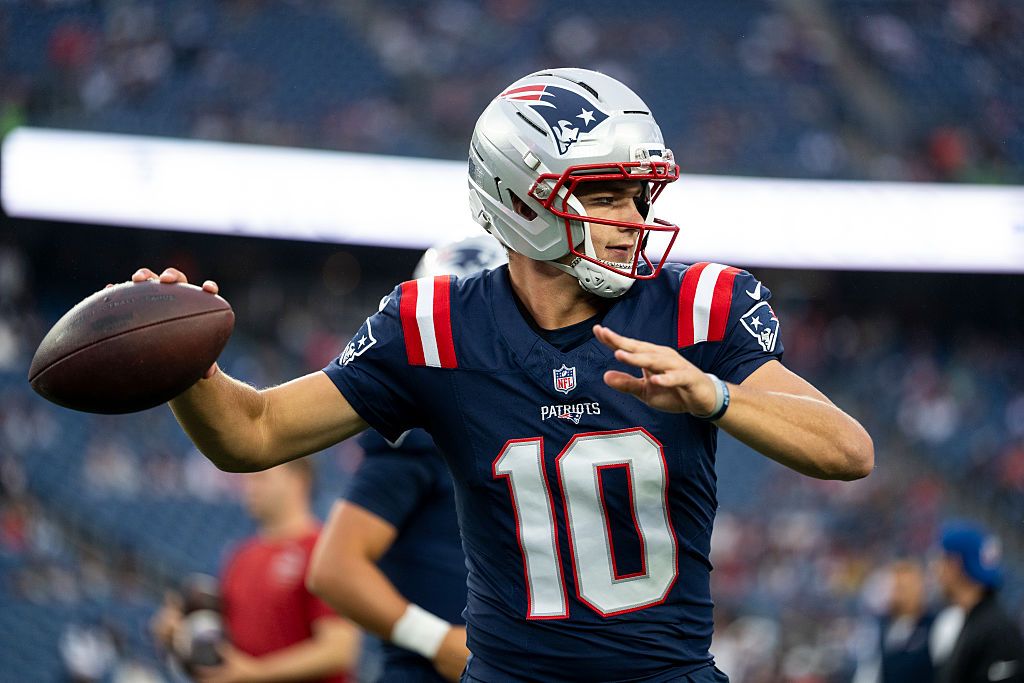
These top-16 quarterback rankings capture my complete draft board after a summer of injuries, recoveries, trades, schematic changes, and camp revelations. The rankings table is the fortress housing 16 command centers. Each profile enters one and maps the circuitry controlling decisions, efficiency, improvisation, and scoring. EPA per dropback, adjusted net yards, completion probability, rushing design, and scramble frequency reveal which systems can command an offense. The order fits one-quarterback leagues with four-point passing touchdowns, although the analysis travels across formats.
Before reading about these field generals, imagine a starship bridge when every alarm begins flashing. Protection fractures. Coverage rotates. A free rusher clears the edge. Eleven bodies move at combat speed, while one mind commands the response. Quarterbacks occupy that central nexus between architecture and chaos. They process the field, redirect the machinery, and decide whether every possession ascends or explodes. These are the 16 commanders I trust with the controls.
Follow my handle @dansby_edits for all preseason and fantasy draft kit content—as well as plenty of NFL betting goodies—all summer long.
Dan Johnson’s top 16 quarterbacks for 2026 fantasy football
UPDATE 8/27 7:00 PM
| QB Rank | Tier | Player | Team | Tag | Editorial Note |
|---|---|---|---|---|---|
| 1 | 1 | Josh Allen | BUF | Allen completed a career-high 69.4% of his passes while averaging 8.0 yards per attempt. He added 579 rushing yards and 14 touchdowns, raising his career rushing total to 79 scores. Buffalo has learned how to preserve his efficiency without extinguishing the weekly violence. That unmatched combination of passing growth, goal-line ownership, and open-field destruction keeps Allen alone at QB1. | |
| 2 | 2 | Drake Maye | NE | Maye erupted for 4,394 passing yards, 31 touchdowns, and a 72.0% completion rate during his sophomore masterpiece. His 8.9 yards per attempt led football, while 450 rushing yards and four scores fortified the fantasy ceiling. New England then added A.J. Brown, one of the league’s most ruthless man-coverage destroyers. Maye already owns elite accuracy, aggression, mobility, and processing. Brown gives that ascension a terrifying new endpoint. | |
| 3 | 2 | Lamar Jackson | BAL | EXTREME FADE | 8/28 Update: Zay Flowers’ recent absence has been described as minor, while rookie Ja’Kobi Lane continues earning rave reviews. Jackson still averaged 8.4 yards per attempt and posted a 103.8 passer rating last season. His rushing collapsed to 349 yards and two scores across 13 games. The passing brilliance preserves QB3. A career-low 26.8 rushing yards per game makes his expensive draft price dangerously dependent on athletic restoration. |
| 4 | 2 | Jayden Daniels | WAS | 8/28 Update: Laremy Tunsil’s torn triceps has pushed Washington toward an unsettled blind-side configuration. Daniels absorbed injuries throughout 2025, yet his seven complete starts still produced 278 rushing yards and two ground scores. That pace preserved the dual-threat foundation behind his extraordinary rookie season. Stefon Diggs strengthens the route-winning infrastructure. Tunsil’s absence introduces pressure, hit, and durability concerns around a quarterback whose fantasy ceiling still reaches the overall crown. | |
| 5 | 2 | Joe Burrow | CIN | 8/28 Update: Ja’Marr Chase hyperextended his left knee, then called the issue minor. He said he could have played immediately. Burrow threw 17 touchdowns across eight games last season, posting a 100.7 passer rating through another injury-shortened year. Chase and Tee Higgins remain football’s most oppressive receiving tandem. Burrow carries minimal rushing production. His surgical volume, elite protection against mistakes, and unmatched touchdown environment keep him fifth. | |
| 6 | 3 | Jalen Hurts | PHI | FADE | 8/28 Update: Hurts finished camp confident in Sean Mannion’s new offense after an unusual interception spike. He threw for 3,224 yards and 25 touchdowns last season, then added 421 rushing yards and eight scores. The rushing touchdowns fell from 14 to eight. A.J. Brown’s departure also removes a dominant isolation answer. Hurts remains a devastating fantasy weapon, although his current cost assumes another premium touchdown harvest. |
| 7 | 3 | Trevor Lawrence | JAX | EXTREME TARGET | 8/28 Update: Brian Thomas Jr.’s shoulder injury was deemed minor after a deep touchdown from Lawrence during joint practice. Lawrence finished 2025 with 4,007 passing yards, 29 touchdowns, 359 rushing yards, and nine ground scores. He averaged 27 fantasy points during the second half. Parker Washington, Thomas, and Jakobi Meyers give Liam Coen answers across every coverage. Lawrence owns the slate’s cleanest path from late-round price to elite weekly scoring. |
| 8 | 3 | Justin Herbert | LAC | TARGET | Herbert generated 3,727 passing yards and 26 touchdowns while adding nearly 500 rushing yards behind a battered line. Mike McDaniel now supplies movement, tempo, and route geometry tailored to Herbert’s enormous arm. Tyler Biadasz’s season-ending knee injury removes the veteran center signed to stabilize protection. Rashawn Slater’s return helps, while rookie Jake Slaughter inherits immense responsibility. Herbert’s passing talent and expanding mobility preserve a top-eight ceiling despite another offensive-line complication. |
| 9 | 4 | Caleb Williams | CHI | 8/28 Update: Williams capped camp with another red-zone touchdown against Tennessee’s starting defense. Ben Johnson praised his improved anticipation, timing, and willingness to attack tight windows. Williams climbed to 3,942 passing yards, 27 touchdowns, 383 rushing yards, and three ground scores last season. Rome Odunze, Luther Burden III, and Colston Loveland form a lavish young arsenal. Further pre-snap growth could turn last season’s 21 fantasy points per game into a genuine elite breakout. | |
| 10 | 4 | Dak Prescott | DAL | Prescott rebounded with 4,552 passing yards, 30 touchdowns, 10 interceptions, and a 99.5 passer rating. Dallas attempted 600 passes and supplied the concentrated volume that keeps pocket quarterbacks fantasy-relevant. CeeDee Lamb and George Pickens give Prescott two receivers capable of winning every route family. His rushing contribution has nearly vanished. The immense passing volume, explosive perimeter talent, and proven touchdown history still create a sturdy QB10. | |
| 11 | 4 | Jaxson Dart | NYG | 8/28 Update: Calvin Austin III’s torn ACL removes New York’s projected starting slot receiver. Braxton Berrios and Odell Beckham Jr. now compete for those routes. Dart delivered 2,272 passing yards, 15 touchdowns, 487 rushing yards, and nine ground scores across 14 rookie appearances. That rushing production carried him to 17.3 fantasy points per game. Malik Nabers’ recovery controls the passing ceiling. Dart’s legs preserve weekly upside while the receiving room reorganizes. | |
| 12 | 5 | Jordan Love | GB | EXTREME TARGET | 8/28 Update: Josh Jacobs now faces misdemeanor battery and property-damage charges, while the NFL continues monitoring the case. Any suspension would weaken Green Bay’s rushing certainty and push more offensive weight toward Love. He completed 66.3% of his passes for 3,381 yards, 23 touchdowns, and only six interceptions last season. Christian Watson’s recovery and Tucker Kraft’s return restore explosive targets. Love’s efficiency, weapons, and potential volume increase make QB12 a screaming value. |
| 13 | 5 | Jared Goff | DET | TARGET | 8/28 Update: Goff finished camp by directing a 99-yard drive and repeatedly finding Amon-Ra St. Brown during scoring work. He threw for 4,564 yards and 34 touchdowns last season, completing a fourth consecutive 4,000-yard campaign. Detroit still surrounds him with St. Brown, Jahmyr Gibbs, Jameson Williams, and Sam LaPorta. Goff supplies almost nothing as a runner. His accuracy, protection, volume, and outrageous supporting cast still manufacture weekly eruption games. |
| 14 | 5 | Brock Purdy | SF | TARGET | 8/28 Update: Mike Evans’ groin injury is considered minor, and San Francisco expects him back at practice next week. George Kittle is also preparing to increase his team workload. Purdy completed 69.4% of his passes and threw 20 touchdowns across nine injury-shortened games. He also added 147 rushing yards and three scores. Evans, Kittle, Christian McCaffrey, and Kyle Shanahan give Purdy pristine efficiency conditions whenever the lineup cooperates. |
| 15 | 5 | Patrick Mahomes II | KC | EXTREME FADE | 8/28 Update: Mahomes will sit through another preseason game, while Kansas City keeps his Week 1 status unresolved. He has practiced fully while completing an intensive rehabilitation program following December’s ACL tear. Mahomes threw for 3,587 yards and 22 touchdowns last season, adding 422 rushing yards and five scores. His improvisational genius still borders on sorcery. The uncertain opener, recent passing decline, and mobility questions make his familiar premium price impossible to endorse. |
| 16 | 5 | Matthew Stafford | LAR | FADE | 8/28 Update: Los Angeles reacquired Tutu Atwell while Puka Nacua faces psoas soreness and possible league discipline. The move gives Stafford another vertical outlet beside Davante Adams. Stafford authored an MVP season with 4,707 yards, 46 touchdowns, and only eight interceptions. He led fantasy quarterbacks in points per game despite contributing one rushing yard. Age, zero rushing insulation, and likely touchdown regression keep the reigning MVP at QB16. |
Full profiles
All stats in the subheadings are from 2025, and were provided by the glorious FantasyPoints Data Suite.
QB1. Josh Allen
Pass yards: 3,668 | Pass TDs: 25 | Rush yards: 579 | Rush TDs: 14 | FP/dropback: 0.68 | EPA/dropback: 0.18 | ANY/A: 6.8 | QB carries/game: 5.5 | Designed carries/game: 2.7 | Scramble rate: 9.4% | CPOE: +1.5%
Josh Allen produced fantasy’s fattest per-play return during an unusually modest passing season. His 3,668 yards and 25 touchdowns represented his lowest totals since 2019. He still completed 69.4% of his passes, averaged 8.0 yards per attempt, and generated 0.18 EPA per dropback. Buffalo extracted 374.5 fantasy points without requiring its quarterback to chase passing volume.
The glorious obscenity remains Allen’s rushing profile. He carried 94 times after removing kneel-downs, including 46 designed runs and 48 scrambles. Those opportunities became 579 yards and 14 touchdowns. His 0.68 fantasy points per dropback led this entire group. Allen has now scored 79 career rushing touchdowns, an outrageous total for any quarterback approaching his age-30 season.
Buffalo also added D.J. Moore, giving Allen a dangerous separator who can punish scrambled coverages after the play fractures. Khalil Shakir supplies underneath precision, while James Cook forces linebackers into exhausting conflict. Allen’s 9.4% scramble rate creates another source of defensive panic whenever the first picture dissolves.
I will keep drafting Allen as QB1 because his weekly paths to destruction are unrivaled. He can dominate through efficiency, designed power, improvisational violence, or concentrated goal-line work. The draft cost demands a historic ceiling, and Allen keeps living there. Even his quieter passing seasons become fantasy avalanches.
QB2. Drake Maye
Pass yards: 4,394 | Pass TDs: 31 | Rush yards: 450 | Rush TDs: 4 | FP/dropback: 0.60 | EPA/dropback: 0.33 | ANY/A: 8.3 | QB carries/game: 4.9 | Designed carries/game: 1.2 | Scramble rate: 10.3% | CPOE: +9.1%
Drake Maye detonated every reasonable expectation attached to his second season. He completed 72.0% of his throws while averaging 8.9 yards per attempt. That fusion produced 4,394 yards, 31 touchdowns, an 8.3 ANY/A, and a preposterous 0.33 EPA per dropback. His +9.1% CPOE nearly doubled the next-best figure among these quarterbacks.
Maye also refused to become a decorative pocket passer. He added 450 rushing yards across 83 non-kneel carries, with 62 coming on scrambles. His 10.3% scramble rate repeatedly turned defeated pass concepts into first downs. The 0.60 fantasy points per dropback placed him among the position’s sharpest scorers before New England upgraded his receiver room.
A.J. Brown now gives Maye a vicious answer against press coverage, single-high structures, and collapsing pockets. Brown wins early, dominates leverage, and converts contested opportunities into quarterback-saving completions. Maye already carried a 9.2-yard average target depth while completing passes at an elite rate. That aggression can become even more profitable with Brown dictating coverage.
The 47 sacks expose the remaining pressure point. Maye still invites contact while hunting explosive plays, and his improvisational confidence occasionally extends danger. I accept that turbulence at QB2. His passing efficiency already resembles a league MVP, while his legs provide weekly insulation. Maye enters 2026 with an expanded arsenal and permission to attack every blade of grass.
QB3. Lamar Jackson
Pass yards: 2,549 | Pass TDs: 21 | Rush yards: 349 | Rush TDs: 2 | FP/dropback: 0.60 | EPA/dropback: 0.09 | ANY/A: 7.1 | QB carries/game: 4.5 | Designed carries/game: 2.2 | Scramble rate: 8.2% | CPOE: -2.2%
Lamar Jackson’s abbreviated season still contained pockets of quarterback sorcery. He averaged 8.4 yards per attempt and threw 21 touchdowns across 13 appearances. His 7.1 ANY/A remained strong despite 36 sacks, inconsistent availability, and a -2.2% CPOE. Baltimore continued creating explosive throws whenever Jackson forced safeties to honor his legs.
Those legs supplied considerably less fantasy fuel. Jackson finished with 349 rushing yards and two touchdowns after producing 915 yards the previous season. His non-kneel workload settled at 4.5 carries per game, including only 2.2 designed attempts. The 8.2% scramble rate preserved spontaneous upside, although his customary rushing eruption rarely arrived.
That statistical tension defines the ranking. Jackson’s 0.60 fantasy points per dropback still matched Maye and Dart, revealing the nuclear efficiency beneath an interrupted season. Zay Flowers’ recent absence appears minor, while rookie Ja’Kobi Lane adds size and catch-point violence. Baltimore can surround Jackson with enough receiving talent to sustain another premium passing year.
QB3 honors the ceiling; the Extreme Fade label attacks the purchase price. Jackson requires a meaningful rushing rebound to separate from cheaper quarterbacks with stronger passing baselines. His athletic history makes that rebound entirely plausible. His recent workload makes paying for it uncomfortable. I will celebrate every molten 35-point Sunday while drafting the discount versions several rounds later.
QB4. Jayden Daniels
Pass yards: 1,262 | Pass TDs: 8 | Rush yards: 278 | Rush TDs: 2 | FP/dropback: 0.47 | EPA/dropback: 0.02 | ANY/A: 5.9 | QB carries/game: 7.7 | Designed carries/game: 2.3 | Scramble rate: 15.6% | CPOE: -3.3%
Jayden Daniels spent 2025 fighting through knee, hamstring, and elbow injuries. He appeared in seven games, throwing for 1,262 yards and eight touchdowns. His efficiency collapsed to 5.9 ANY/A, 0.02 EPA per dropback, and a -3.3% CPOE. The tape showed a quarterback repeatedly attempting to regenerate his rookie electricity between physical interruptions.
The rushing appetite survived. Daniels averaged 7.7 non-kneel carries per game and scrambled on 15.6% of his dropbacks. Both figures led this ranked group. He generated 278 yards and two scores despite the abbreviated schedule. His 2024 season already established the grander possibility: 891 rushing yards, six touchdowns, and weekly access to fantasy’s highest ceiling.
Washington added Stefon Diggs, whose route intelligence can rescue Daniels against pressure and muddy coverage. That addition becomes especially valuable after Laremy Tunsil suffered a torn triceps. Losing an elite blind-side protector raises the temperature surrounding every deep concept. Daniels’ instinctive escapability will again carry both fantasy upside and bodily consequence.
QB4 represents a bet on restored movement and second-order passing growth. A healthy Daniels can bury opponents through designed runs, scrambles, and vertically aggressive play action. His 2025 efficiency provides no comforting floor. His body has already absorbed too many dangerous collisions. I still rank him here because nobody below him can manufacture points from disorder so quickly.
QB5. Joe Burrow
Pass yards: 1,809 | Pass TDs: 17 | Rush yards: 41 | Rush TDs: 0 | FP/dropback: 0.49 | EPA/dropback: 0.12 | ANY/A: 6.6 | QB carries/game: 1.6 | Designed carries/game: 0.6 | Scramble rate: 3.2% | CPOE: +2.1%
Joe Burrow played eight games and still threw 17 touchdown passes. That pace expresses the entire fantasy argument. He completed 66.8% of his attempts, generated a +2.1% CPOE, and produced 0.12 EPA per dropback. Cincinnati continued placing the offense inside Burrow’s right arm, extraordinary anticipation, and total command before the snap.
The passing environment remains gloriously concentrated. Ja’Marr Chase bends coverage until defensive spacing becomes grotesque, while Tee Higgins feasts on the resulting isolation. Chase’s hyperextended knee appears minor, preserving the league’s most combustible quarterback-receiver partnership. Burrow can threaten 650 attempts whenever Cincinnati’s defense creates another season of aggressive game scripts.
His fantasy limitation arrives through geometry. Burrow accumulated 41 rushing yards, zero touchdowns, and only five designed carries. His 3.2% scramble rate ranked near the bottom of this group. Every elite fantasy week therefore demands passing volume, touchdown concentration, or both. Fortunately, Burrow has already built his professional identity around supplying exactly those outcomes.
QB5 prices the breathtaking passing ceiling alongside his structural dependence on health and touchdowns. A full season can yield 4,800 yards and 40 scores without requiring statistical imagination. His 6.6 ANY/A should rise behind healthier protection and his devastating receiver tandem. I trust Burrow to conduct weekly passing clinics. The four quarterbacks above him can also steal fantasy points with their legs.
QB6. Jalen Hurts
Pass yards: 3,224 | Pass TDs: 25 | Rush yards: 421 | Rush TDs: 8 | FP/dropback: 0.58 | EPA/dropback: 0.10 | ANY/A: 6.7 | QB carries/game: 5.9 | Designed carries/game: 3.4 | Scramble rate: 7.6% | CPOE: +3.1%
Jalen Hurts remained one of fantasy football’s most forceful scoring mechanisms during an uneven Philadelphia season. He threw 25 touchdowns against six interceptions and posted a +3.1% CPOE. His 0.58 fantasy points per dropback finished comfortably inside the position’s elite neighborhood. Hurts then added 421 rushing yards and eight touchdowns.
Philadelphia still gave him 3.4 designed carries per game, the highest figure among these quarterbacks. His 94 non-kneel attempts sustained an extraordinary weekly floor. Yet the rushing touchdowns fell from 14 to eight, removing 36 fantasy points from his previous foundation. Any erosion around the goal line lands violently when the acquisition cost remains premium.
A.J. Brown’s departure also rewrites the passing structure. DeVonta Smith can operate as a featured receiver, while Makai Lemon and Dontayvion Wicks offer movement and explosive potential. Brown provided a singular combination of leverage destruction, strength, and vertical efficiency. Sean Mannion’s new offense must replace those answers while sharpening Hurts’ timing against crowded intermediate coverage.
Hurts holds QB6 because his rushing usage remains fantasy gold. He receives designed work, owns the goal-line call sheet, and converts pressure into sudden yardage. The Fade label reflects price, declining touchdown insulation, and a receiver-room transition. I still expect excellent production. I simply prefer quarterbacks whose costs leave room for uncertainty.
QB7. Trevor Lawrence
Pass yards: 4,007 | Pass TDs: 29 | Rush yards: 359 | Rush TDs: 9 | FP/dropback: 0.54 | EPA/dropback: 0.09 | ANY/A: 6.3 | QB carries/game: 4.4 | Designed carries/game: 1.9 | Scramble rate: 6.7% | CPOE: -2.7%
Trevor Lawrence finally converted his absurd physical gifts into a fantasy inferno. He surpassed 4,000 passing yards, threw 29 touchdowns, and added 359 yards with nine scores on the ground. His second-half production climbed toward 27 fantasy points per game. Liam Coen discovered how beautifully Lawrence attacks when the offense supplies defined answers and controlled aggression.
The season also left room for enormous refinement. Lawrence completed 60.9% of his passes and posted a -2.7% CPOE. His 6.3 ANY/A trailed the gaudier surface totals, while 41 sacks repeatedly disrupted Jacksonville’s timing. Those weaknesses create attainable improvement rather than a completed projection. The rushing production already carried his fantasy line through occasional stretches of erratic accuracy.
Brian Thomas Jr. remains the receiver capable of tearing open the entire field. His recent shoulder issue appears minor after another deep touchdown during joint practice. Parker Washington supplies tackle-breaking force underneath, while Jakobi Meyers gives Lawrence a reliable route technician. This group can generate cleaner completions without sanding away the quarterback’s vertical appetite.
Lawrence receives the Extreme Target label because his market price still remembers earlier disappointment. I see 38 total touchdowns, 4.4 carries per game, and a scheme that unlocked him after Thanksgiving. Nine rushing scores invite regression, although the designed usage keeps several alive. QB7 already allows for that pullback. Lawrence can challenge the top five through passing growth alone.
QB8. Justin Herbert
Pass yards: 3,727 | Pass TDs: 26 | Rush yards: 498 | Rush TDs: 2 | FP/dropback: 0.49 | EPA/dropback: 0.07 | ANY/A: 5.9 | QB carries/game: 4.6 | Designed carries/game: 1.6 | Scramble rate: 8.0% | CPOE: +3.3%
Justin Herbert survived an offensive line catastrophe and somehow expanded his fantasy vocabulary. He absorbed 54 sacks for 301 lost yards, yet completed 66.4% of his passes. His +3.3% CPOE confirms the accuracy remained sharp beneath constant disruption. Herbert still produced 3,727 yards, 26 touchdowns, and nearly 500 rushing yards.
The rushing eruption deserves far more attention. Herbert averaged 4.6 non-kneel carries and scrambled on 8.0% of his dropbacks. Those opportunities generated 498 yards, transforming broken protection into fantasy production. Only two rushing touchdowns followed, leaving obvious scoring upside if his mobility survives the new offensive structure.
Mike McDaniel now controls that structure. His movement packages, condensed formations, and layered play-action concepts can manufacture earlier windows for Herbert’s spectacular arm. Rashawn Slater’s return repairs the most important protection point. Tyler Biadasz’s season-ending knee injury creates interior uncertainty, with rookie Jake Slaughter inheriting immense responsibility at center.
QB8 captures both the offensive ceiling and the remaining fragility. Herbert’s 5.9 ANY/A and 0.07 EPA per dropback looked pedestrian because the pocket routinely collapsed. His individual accuracy, arm talent, and rushing response stayed ferocious. I will target that combination aggressively at a restrained draft price. McDaniel finally has a quarterback capable of accessing every corner of his imagination.
QB9. Caleb Williams
Pass yards: 3,942 | Pass TDs: 27 | Rush yards: 383 | Rush TDs: 3 | FP/dropback: 0.51 | EPA/dropback: 0.11 | ANY/A: 6.8 | QB carries/game: 3.9 | Designed carries/game: 1.4 | Scramble rate: 6.6% | CPOE: -6.9%
Caleb Williams produced one of the strangest useful seasons in recent quarterback memory. He threw for 3,942 yards and 27 touchdowns against seven interceptions. His 0.11 EPA per dropback and 6.8 ANY/A remained comfortably productive. Then comes the screaming warning light: Williams finished with a hideous -6.9% CPOE.
Chicago still engineered a dramatic improvement around his decision-making. Williams took 24 sacks after absorbing 68 as a rookie. Faster answers allowed his arm talent to control possessions instead of constantly rescuing them. He added 383 rushing yards, averaged 3.9 non-kneel carries, and produced 0.51 fantasy points per dropback.
Ben Johnson spent camp praising Williams’ anticipation, timing, and willingness to attack tight windows. Rome Odunze provides boundary authority, while Luther Burden III can rupture defensive angles after the catch. Colston Loveland stretches the middle with receiver movement inside a tight end’s frame. That collection gives Williams layered solutions against every coverage family.
QB9 accepts the accuracy volatility while embracing the breathtaking ceiling. Williams can become a 4,300-yard passer with 450 rushing yards if his mechanics stabilize. His interception avoidance already prevented poor completion stretches from becoming weekly disasters. I want the ambition, reduced sack appetite, and crowded arsenal. Another incremental accuracy jump could launch him several positions beyond this ranking.
QB10. Dak Prescott
Pass yards: 4,552 | Pass TDs: 30 | Rush yards: 177 | Rush TDs: 2 | FP/dropback: 0.49 | EPA/dropback: 0.19 | ANY/A: 7.1 | QB carries/game: 2.2 | Designed carries/game: 0.6 | Scramble rate: 4.0% | CPOE: +4.4%
Dak Prescott returned to full-volume quarterbacking with startling cleanliness. He attempted 600 passes, completed 67.3%, and generated 4,552 yards with 30 touchdowns. His +4.4% CPOE ranked third among this group. A 7.1 ANY/A and 0.19 EPA per dropback reveal performance well beyond empty accumulation.
Dallas built an exquisitely concentrated target tree. CeeDee Lamb dominates every level through pacing, leverage manipulation, and violent acceleration after the catch. George Pickens stretches coverage toward the sideline and converts imperfect deep balls into explosives. Prescott can identify the favorable matchup before the snap and feed it relentlessly.
The rushing profile establishes his fantasy boundary. Prescott averaged 2.2 non-kneel carries, with only 0.6 designed attempts per game. He still created 177 yards and two touchdowns, offering occasional bonus production. His weekly ceiling primarily flows through attempts, red-zone passing, and the concentrated brilliance of his receivers.
QB10 feels almost disrespectful after a 4,552-yard season. The ranking reflects a position overflowing with rushing specialists and younger dual-threat breakouts. Prescott’s market price often provides the proper correction. I will gladly draft elite accuracy, 600-attempt potential, and two superstar targets after the aggressive quarterback rush ends.
QB11. Jaxson Dart
Pass yards: 2,272 | Pass TDs: 15 | Rush yards: 487 | Rush TDs: 9 | FP/dropback: 0.60 | EPA/dropback: 0.08 | ANY/A: 5.9 | QB carries/game: 5.6 | Designed carries/game: 2.9 | Scramble rate: 9.2% | CPOE: -2.0%
Jaxson Dart needed only 14 appearances to become fantasy football’s newest rushing problem. He gained 487 yards, scored nine times, and averaged 5.6 non-kneel carries per game. His 2.9 designed attempts ranked second behind Hurts. That workload powered 0.60 fantasy points per dropback, matching the elite efficiency tier.
The passing résumé remains thrillingly unfinished. Dart threw for 2,272 yards and 15 touchdowns while averaging 6.7 yards per attempt. His -2.0% CPOE and 5.9 ANY/A reveal erratic accuracy and limited downfield payoff. He also surrendered 35 sacks, a dangerous total across his shortened starting window.
Malik Nabers’ recovery dictates the passing ceiling. A healthy Nabers gives Dart a target vacuum who can win immediately and transform ordinary throws into explosive gains. Calvin Austin III’s torn ACL removes a projected slot contributor. Braxton Berrios and Odell Beckham Jr. now compete for those interior routes.
QB11 places an aggressive bet on designed rushing under John Harbaugh. Dart can produce startable fantasy numbers before the passing game reaches full maturity. His nine rushing touchdowns will draw regression arguments, yet the usage consistently placed him near the goal line. I want exposure to that mechanism. The floor remains turbulent, and the ceiling can arrive with astonishing violence.
QB12. Jordan Love
Pass yards: 3,381 | Pass TDs: 23 | Rush yards: 199 | Rush TDs: 0 | FP/dropback: 0.50 | EPA/dropback: 0.26 | ANY/A: 7.4 | QB carries/game: 2.3 | Designed carries/game: 0.7 | Scramble rate: 5.0% | CPOE: +3.8%
Jordan Love quietly authored one of football’s most efficient passing seasons. He completed 66.3% of his throws, averaged 7.7 yards per attempt, and posted a +3.8% CPOE. His 7.4 ANY/A ranked among the position’s best. Only Maye produced more EPA per dropback in this group.
Green Bay limited the fantasy eruption through volume. Love attempted 439 passes across 15 games, averaging 29.3 per appearance. That workload produced 3,381 yards and 23 touchdowns against only six interceptions. His 0.50 fantasy points per dropback remained sturdy, while 199 rushing yards supplied occasional secondary production.
The surrounding ecosystem is becoming healthier and more explosive. Christian Watson can restore the vertical geometry that forces safeties backward. Tucker Kraft adds ferocious efficiency through the middle after completing his knee rehabilitation. Josh Jacobs’ developing legal situation could also shift offensive weight toward Love, particularly if league discipline enters the equation.
Love is my Extreme Target at QB12 because the market prices volume frustration more aggressively than elite quarterback play. His efficiency supports a massive breakout whenever attempts rise. Matt LaFleur already gives him defined reads, play-action explosives, and answers against pressure. An additional three attempts per game could carry Love toward 4,000 yards and 30 touchdowns.
QB13. Jared Goff
Pass yards: 4,564 | Pass TDs: 34 | Rush yards: 45 | Rush TDs: 0 | FP/dropback: 0.49 | EPA/dropback: 0.18 | ANY/A: 7.5 | QB carries/game: 0.6 | Designed carries/game: 0.4 | Scramble rate: 0.8% | CPOE: +1.6%
Jared Goff just assembled his fourth consecutive 4,000-yard season. He completed 68.0% of his passes and finished with 4,564 yards, 34 touchdowns, and eight interceptions. His 7.5 ANY/A and 0.18 EPA per dropback ranked beside far more celebrated quarterbacks. Detroit’s passing machine continues operating with brutal precision.
Amon-Ra St. Brown owns the center of that machine. His spatial intelligence gives Goff immediate answers against blitzes, zone rotations, and third-down pressure. Jameson Williams forces defenses to defend impossible speed outside. Sam LaPorta and Jahmyr Gibbs create mismatches against linebackers who already face exhausting run-action responsibilities.
Goff contributes essentially nothing on the ground. He rushed for 45 yards, averaged 0.6 non-kneel carries, and scrambled on 0.8% of his dropbacks. His fantasy scoring therefore rises and falls with passing touchdowns. Detroit has repeatedly demonstrated the efficiency and red-zone creativity required to sustain that arrangement.
QB13 acknowledges the mobility deficit while attacking an overly cautious market. Goff brings 600-attempt potential, immaculate surrounding talent, and one of football’s deepest play-action menus. His 0.49 fantasy points per dropback already matched Dak and Herbert. I will take that production after managers spend premium selections chasing athletic novelty.
QB14. Brock Purdy
Pass yards: 2,167 | Pass TDs: 20 | Rush yards: 147 | Rush TDs: 3 | FP/dropback: 0.59 | EPA/dropback: 0.22 | ANY/A: 7.0 | QB carries/game: 3.2 | Designed carries/game: 1.2 | Scramble rate: 5.8% | CPOE: +5.1%
Brock Purdy’s nine-game season produced enough efficiency to embarrass several full-year résumés. He completed 69.4% of his passes, threw 20 touchdowns, and generated 0.59 fantasy points per dropback. His +5.1% CPOE trailed only Maye. Purdy also delivered 0.22 EPA per dropback despite throwing ten interceptions.
That interception total captures his willingness to attack tight windows inside Kyle Shanahan’s demanding offense. Purdy averaged 7.6 yards per attempt and produced a 7.0 ANY/A. Across the last three seasons, his 0.23 EPA per dropback leads qualifying quarterbacks. The repeated efficiency has long outgrown every draft-position joke attached to his entrance.
San Francisco keeps surrounding him with ruthless talent. Mike Evans adds boundary power and red-zone supremacy once his minor groin issue clears. George Kittle bends the seam, while Christian McCaffrey weaponizes every linebacker assignment. Purdy can distribute on schedule, extend against pressure, and punish overcommitment with 3.2 carries per game.
QB14 is one of my favorite quarterback prices. The ranking accounts for durability questions, interception volatility, and a loaded fantasy tier. His underlying production belongs several rounds earlier. Purdy consistently converts Shanahan’s spacing into touchdowns while adding enough mobility to rescue broken plays. I will draft the efficiency and enjoy watching the room chase louder names.
QB15. Patrick Mahomes II
Pass yards: 3,587 | Pass TDs: 22 | Rush yards: 422 | Rush TDs: 5 | FP/dropback: 0.50 | EPA/dropback: 0.17 | ANY/A: 6.2 | QB carries/game: 4.0 | Designed carries/game: 0.3 | Scramble rate: 9.0% | CPOE: -2.9%
Patrick Mahomes salvaged his 2025 fantasy season through improvisation and rushing production. He accumulated 422 yards and five touchdowns on the ground across 14 games. His 9.0% scramble rate generated 52 spontaneous runs, repeatedly rescuing Kansas City from congested pockets. That mobility supported 0.50 fantasy points per dropback.
The passing numbers continued sliding away from his imperial peak. Mahomes completed 62.7% of his throws with a -2.9% CPOE. He finished with 3,587 yards, 22 touchdowns, 11 interceptions, and a 6.2 ANY/A. His 0.17 EPA per dropback remained valuable, though the spectacular weekly scoring separation rarely appeared.
December’s ACL tear now places that rushing foundation under immediate pressure. Mahomes has practiced fully, yet his Week 1 availability remains unresolved. Kansas City is protecting him throughout the preseason, and early mobility could be managed carefully. The offense must replace those profitable scrambles with cleaner pocket production and more receiving explosions.
QB15 expresses an Extreme Fade at a name-driven price. Mahomes remains capable of solving any defensive problem and humiliating any ranking. Fantasy drafts still require points relative to cost, and his recent passing profile offers limited separation. I will let another manager finance the rehabilitation gamble. Cheaper quarterbacks provide healthier rushing projections or stronger recent efficiency.
QB16. Matthew Stafford
Pass yards: 4,707 | Pass TDs: 46 | Rush yards: 1 | Rush TDs: 0 | FP/dropback: 0.57 | EPA/dropback: 0.24 | ANY/A: 8.3 | QB carries/game: 0.7 | Designed carries/game: 0.3 | Scramble rate: 1.1% | CPOE: +1.5%
Matthew Stafford remains my favorite quarterback alive, and his 2025 season was quarterbacking pornography. He threw for 4,707 yards, 46 touchdowns, and eight interceptions. His 0.24 EPA per dropback ranked third here, while his 8.3 ANY/A matched Maye. Stafford manipulated safeties, vaporized blitzes, and attacked windows before defenders understood they existed.
The fantasy production arrived entirely through his right arm. Stafford rushed for one yard and zero touchdowns across 17 games. He averaged 0.7 non-kneel carries and scrambled on 1.1% of his dropbacks. His 0.57 fantasy points per dropback required an extraordinary 7.7% touchdown rate and one of his finest passing seasons.
The Rams can keep him brilliant. Puka Nacua weaponizes impossible target volume and violent after-catch production whenever his psoas cooperates. Davante Adams remains a devastating red-zone craftsman, while Tutu Atwell restores another vertical element. Sean McVay understands Stafford’s appetite for layered concepts, deep crossers, and coverage manipulation.
QB16 reflects fantasy arithmetic rather than diminished admiration. Stafford enters his age-38 season with zero rushing insulation and inevitable touchdown regression pressing against his projection. His surrounding injury questions add further fragility at a deep position. I will still watch every throw like it contains forbidden knowledge. At this draft price, the Fade label protects roster construction from requiring another historic passing season.