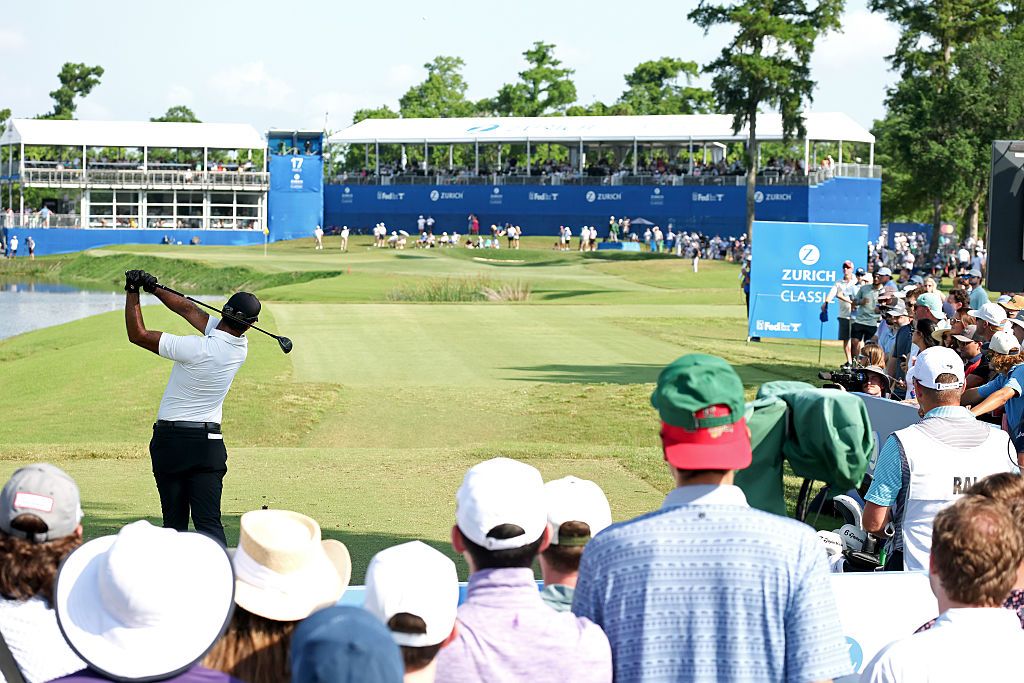
The PGA TOUR is in the middle of a big stretch of important tournaments with two majors and three Signature Events in a six-week span. The other tournament that isn’t a major or Signature Event is this week’s Zurich Classic, which is the only official team event on the regular PGA TOUR schedule. This year’s tournament is once again at TPC Louisiana in Avondale, Louisiana, a suburb southwest of New Orleans. The tournament tees off on Thursday, April 23, and will conclude on Sunday, April 26, barring any weather issues.
Let’s start the week with a look at the format, history and course for the Zurich Classic.
The Format of the Zurich Classic
The Zurich Classic is the only official team event on the PGA TOUR schedule. Players team up in pairs with alternating rounds of fourball and foursomes format. The first and third rounds will be fourball, with only the lower score counting for the team, and the second and final rounds will be foursomes, where the teams will alternate hitting shots.
The 80 teams that will start the event will be reduced to the top 33 teams and ties by the cut after Round 2. It’s an important week for players trying to qualify for next week’s Cadillac Championship since the Aon Next 10 will earn a spot in that Signature Event.
The event features a $9.5 million purse with each winner earning $1.37 million and 400 FedExCup Points.
The history of the tournament
The Zurich Classic began in 1938 and has been held every year since 1958. It transformed into a team event in 2017, with the current format beginning in 2018.
In 2017, Cameron Smith and Jonas Blixt were the first team to win, Billy Horschel and Scott Piercy won in 2018 before Ryan Palmer and Jon Rahm claimed the title in the final year before the event was canceled due to the COVID-19 pandemic in 2020. Smith won again in 2021, partnered with Marc Leishman. In 2022, Patrick Cantlay and Xander Schauffele teamed up for the win before Nick Hardy and Davis Riley set the tournament record with a -30 in their 2023 victory. Two years ago, Shane Lowry and Rory McIlroy won, and they came up short in their title defense last year, with Ben Griffin and Andrew Novak getting their first PGA TOUR wins before going on to excellent seasons.
Griffin and Novak are back to defend their title this year, but with so many big tournaments around it, the field is a little thin this week. Last week’s winner at the RBC Heritage, Matt Fitzpatrick, will be playing with his brother, Alex Fitzpatrick, and they have the shortest odds of all the teams on the board this week. Lowry is playing with Brooks Koepka instead of Rory this week, and that tandem has the second-shortest odds just behind the Fitzpatricks and ahead of Novak and Griffin.
Check out the full field and odds on DraftKings Sportsbook to see all the players teeing it up this year.
A Closer Look at the Course
TPC Louisiana has hosted this event since 2007, including each of the eight team events. The team format leads to very low scores, with the record of -30 and -28 or lower as the winning score in three of the last four years.
Typically, the first and third rounds are especially low-scoring, with each player playing the hole separately and counting the best score. The alternate shot makes the second and fourth rounds closer to “normal” scores. Last year, for example, McIlroy and Lowry were -10 in the first round and -11 in the third round, while playing -6 in Round 2 and -1 in Round 4.
Despite the very low scores, the course does have some difficult elements to it. The Pete Dye design is no pushover, with 106 bunkers and plenty of water in play on seven holes. The fairways and rough consist of bermudagrass, and the greens are TifEagle bermuda with Poa Trivialis.
It is a very scoreable layout, though, and taking advantage of birdie opportunities to go low in a hurry is critical to performing well at this track. Here’s an aerial overview to remind you of the course, and here are the final-round highlights from last year.
The risk/reward setup throughout makes the strategy in the team event unique and fascinating to watch all week. Typically, Strokes Gained: Approach, Par 5 scoring, Birdie or Better % and putting are the top metrics to focus on this week. It’s also important to try to see how the team dynamic between the players will play out, and as a general rule, I try to back players who have played this format and had success in the past.
Be sure to get your DFS fantasy golf lineups and betting cards filled out with the help of DK Network throughout this week!