The bracket did what it always threatens to do and rarely does this quickly: it tore up the script on Day 1. High Point already knocked off Wisconsin 83-82, VCU came back from 19 down to stun North Carolina 82-78 in overtime, Texas sent BYU home 79-71, and Texas A&M took out Saint Mary’s as the first real wave of double-digit-seed damage rolled through the field.
That changes the texture of Friday. The Round of 64 no longer feels theoretical; it feels unstable. Every favorite taking the floor today has already watched a 5-seed get clipped, a blueblood get erased after building a 19-point cushion, and a bracket’s neat little logic start leaking all over the place.
So the Day 2 exercise gets sharper and more specific. It is not just about hunting random chaos. It is about finding the matchups where yesterday’s lesson still applies: the favorite that needs rhythm, the underdog that can win the possession battle, and the moneyline that is still priced like Thursday never happened.
That is what this list is after—three more spots where the seed line looks a little too tidy, the gap is thinner than it appears, and the upset path is real enough to bet.
Let’s meet the darlings, shall we? I’ll be pumping out these predictions for individual games all season, with plenty of coverage here on DraftKings Network. Follow my handle @dansby_edits for more betting plays.
Best Round of 64 upset predictions for Friday 3/20/26
Santa Clara (+130) over Kentucky
Santa Clara has the shape of a team that can make a seed line look like a clerical error. The Broncos are 26-8, back in the tournament for the first time since 1996, and they arrive with one of the more persuasive underdog profiles on the Friday board: 82.9 points per game, 72.4 allowed, 47% shooting from the floor, 35.7 rebounds, 16.8 assists, and 8.9 steals a night. The offense is not built around one hot hand and a prayer; it is built around movement, spacing, and repeated small acts of stress. Christian Hammond just dropped 24 in the WCC title game against Gonzaga, Allen Graves is a 41% three-point shooter, and the Broncos’ late run included a statement win over Saint Mary’s before that loss to Gonzaga. There is enough shotmaking here to keep the floor wide, enough size to bother the glass, and enough ball movement to make Kentucky guard for longer than it wants to.
Kentucky has the bigger name and the louder individual ceiling, but the current version of the Wildcats is a little too dependent on clean conditions. They are 21-13, average 80.8 points and 73.8 allowed, and just lost 71-63 to Florida in the SEC quarterfinals while shooting 35.6% from the field and getting annihilated 50-29 on the glass. Otega Oweh went 5-for-18 in that game, Collin Chandler fouled out, and Kentucky’s offense looked less like a symphony than a machine missing one of its belts. The frontcourt issue is not fully solved either, because Jayden Quaintance has said a return this season is unlikely. That matters here. Santa Clara crashes hard enough to make missed box-outs expensive, and it moves the ball well enough to make Kentucky’s defensive attention travel. At +130, this is not some moonshot Cinderella ticket. It is a bet on a team with a top-end offense, real offensive-rebounding bite, and a steadier identity than the favorite it is facing.
UCF (+200) over UCLA
UCF’s case begins with something simple and very March: the Knights can make this game feel heavier than UCLA wants it to. They average 81.0 points, 37.2 rebounds, and 15.8 assists while shooting 47% from the floor, and their basic physical profile is the kind that can turn a polished favorite into a mildly annoyed one by the second media timeout. UCLA is cleaner defensively—71.0 points allowed to UCF’s 78.5—and a little more refined offensively in the half court, but the rebound gap is real, 37.2 to 32.3, and that matters in a game with this number attached to it. UCF does not need to out-beauty UCLA. It needs to win enough ugly possessions to bend the tempo and keep the Bruins from playing the kind of elegant, handoff-heavy game they prefer.
The other reason the dog stays live is that UCLA enters with just enough medical haze around its stars to make the favorite’s margin feel thinner than the branding suggests. Tyler Bilodeau suffered a right leg injury in the Big Ten tournament and was expected back for the NCAA opener with what UCLA called a mild right knee strain. Donovan Dent, meanwhile, had also been dealing with a calf issue but was expected to suit up. Both may play, and both matter enormously. Bilodeau is UCLA’s leading scorer at 17.6 points, Dent is the engine who just posted the first triple-double in Big Ten tournament history with 12 points, 12 assists, and 10 rebounds against Rutgers, and the Bruins are a different organism when either one is anything short of full speed. They still beat Michigan State 88-84 and then lost 73-66 to Purdue, but that Purdue game also came with a 17-9 second-chance deficit and nine offensive rebounds allowed to Oscar Cluff alone. That is exactly the kind of rebound leakage UCF can weaponize. At +200, the Knights do not need the Bruins to be broken. They just need them to be a little less sharp than usual in a game where boards and extra chances can do the talking.
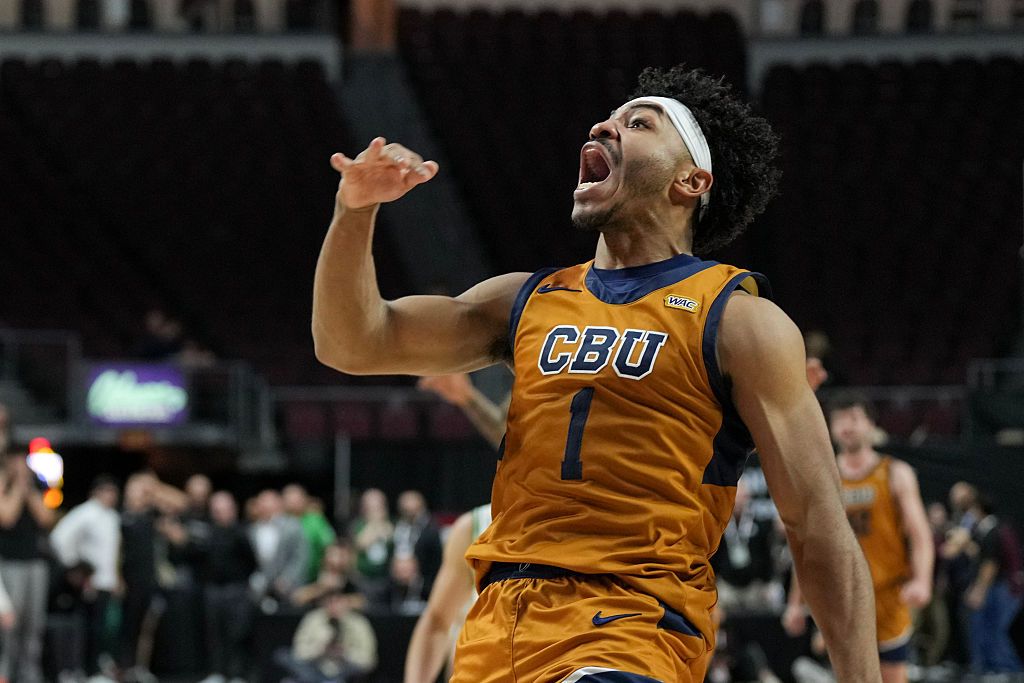
Cal Baptist (+750) over Kansas
Cal Baptist is the kind of long-shot ticket that starts to make sense once the game is stripped of logos and reduced to who can actually impose discomfort. The Lancers are in the tournament for the first time, and they are not arriving as some grateful little guest. They have won 15 of their last 17, they defend well enough to make a favorite sweat through possessions, and they have the cleanest single-player upset engine of these three games in Dominique Daniels Jr., who is averaging 23.2 points, 3.2 assists, and heavy usage on 43.7% shooting from the field and 81.5% at the line. Cal Baptist also rebounds at 39.9 per game, which is not a cosmetic stat in this matchup. If the Lancers can turn missed shots into second possessions and let Daniels play in a game that stays close deep into the second half, the whole thing starts to feel less like a 4-vs-13 and more like a star guard audition with Kansas in the wrong scene.
Kansas still has the better raw talent base, but this is not one of those Jayhawk teams that enters March feeling inevitable. The Jayhawks average 75.6 points, allow 69.4, shoot 45% from the field, and rebound at 38.8 per game. Their recent form has also been a little too fragile for a favorite in this price range. Houston just buried them 69-47 in the Big 12 semifinals, holding Kansas to a season-low 24.6% shooting, and even the national bracket chatter around this matchup has revolved around the team’s inconsistency and the need for Darryn Peterson to stay healthy and brilliant at the same time. That is not nothing. A line in the -14 range and a +750 moneyline are still charging a blueblood tax here, and Cal Baptist has enough defense and enough rebounding to make that tax look bloated. The Lancers do not need to be better for 40 straight minutes. They need Daniels to keep scoring, the glass to stay competitive, and Kansas to remain the slightly moody, occasionally stall-prone version of itself that has shown up too often late in the season. That is a real underdog script, and the price is paying like it is science fiction.