The bracket is live, the clock has started, and the clean, orderly version of college basketball is about to disappear for 48 hours. The Round of 64 is where March Madness stops being an analytical exercise and turns into a stress test—of depth, of shotmaking, of composure, and most of all, of possession control. This is the window where underdogs stop asking politely and start forcing the game into their shape.
Everyone filling out a bracket is hunting the same thing: the spots where the seed line feels a little too neat, where the favorite’s strengths depend on rhythm, and where the underdog has a real way to tilt the math—extra possessions, turnover pressure, offensive rebounding, or just enough scoring punch to keep it uncomfortable for 40 minutes.
Identifying the games where the numbers—and the recent form—say the gap is thinner than it looks. Three underdogs, three real paths to chaos, and three moneylines that are priced like those paths are far more out of reach than they actually are.
Let’s meet the darlings, shall we? I’ll be pumping out these predictions for individual games all season, with plenty of coverage here on DraftKings Network. Follow my handle @dansby_edits for more betting plays.
Best Round of 64 upset predictions for Thursday 3/19/25
South Florida (+165) over Louisville
South Florida has the exact kind of pedigree that can make a six-seed feel overdressed for the occasion. The Bulls are 25-8, won the AAC tournament, and come in with decorated late-season force: they beat Memphis 96-89 in the quarterfinals, blasted Charlotte 86-64 in the semis, and closed the deal with a 70-55 title-game win over Wichita State. In that three-game run, they scored 252 points, held two opponents under 65, and got 19 points from Wes Enis in the championship as he finished the week as the tournament’s Most Outstanding Player.
The season-long profile is still loud: 87.7 points per game, 42.7 rebounds, 17.2 assists, 9.2 steals, 19.1 points off turnovers, and only 11.2 giveaways per night. Wes Enis (G) is at 16.8 points with 107 made threes, Izaiyah Nelson (F) is at 15.7 points and 9.6 rebounds on 56.2% shooting, Joseph Pinion (G) has buried 106 threes, and CJ Brown (G) has handed out 158 assists. This team plays with surplus—extra boards, extra passes, extra possessions, extra strain.
That is a dangerous thing to bring into a matchup with Louisville, because the Cardinals have been very good but are entering this game as a slightly compromised version of themselves. Louisville is 23-10, averages 86.0 points per game, and still has one of the country’s more explosive perimeter groups, with Ryan Conwell (G) at 18.7 points and a team profile built around spacing and shotmaking. But the recent-form and injury texture matters here. Louisville’s ACC tournament run ended in a 78-73 loss to Miami in which the Cardinals turned it over 13 times, shot 6-for-24 from three, and got just one made three from Conwell on 10 attempts. More importantly, freshman guard Mikel Brown Jr.—one of the most dynamic pieces on the roster and one of only a small handful of Division I players to hit 45 in a game this season—is out for opening weekend with a back injury.
That does not erase Louisville’s ceiling, but it does trim the margin for error against a South Florida team that is peaking at the right time and wins by bloating the possession count. The Bulls rebound too hard, run too often, and keep too many trips alive for a favorite missing one of its biggest creators to feel entirely comfortable at this number.
High Point (+370) over Wisconsin
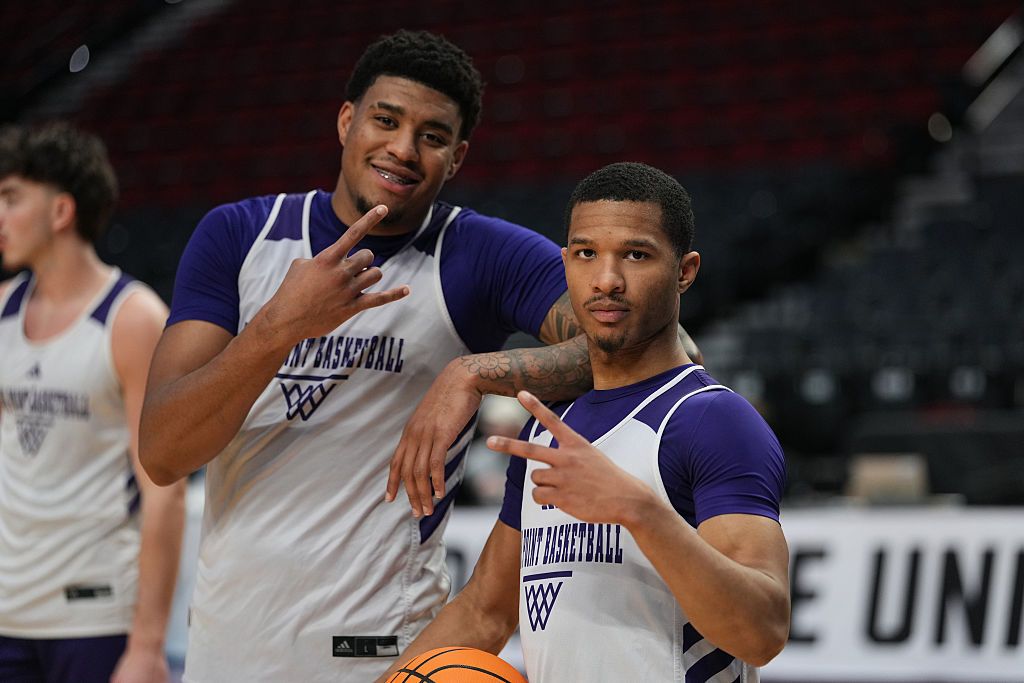
High Point walks into this game with the profile of a team that has spent four months building an upset in plain sight. The Panthers are 30-4, won the Big South, and have been one of the country’s loudest scoring operations all season: 90.0 points per game, 49.1% shooting from the field, 35.6% from three, 19.9 made free throws per game, and a +19.7 scoring margin. They also bring the exact extra-possession cocktail you want from a live underdog, forcing 16.4 turnovers per game while committing only 9.4 themselves. Terry Anderson (F) leads a balanced attack with 16.0 points and 6.0 rebounds on 56.4% shooting, Rob Martin (G) adds 15.3 points and 121 assists, and the recent-form runway looks exactly how you would want it to look in March: 81-59 over Gardner-Webb, 75-71 over UNC Asheville, and 91 points in the Big South title game against Winthrop. That is a team with both a ceiling and a floor. The Panthers can score at the rim, get to the line, and turn a loose five-minute stretch into a scoreboard jump.
Wisconsin is good enough to make any 12-over-5 argument feel dangerous. The Badgers are 24-10 and score 83.0 points per game, with one of the more dangerous guard duos in the bracket. Nick Boyd (G) is at 20.6 points and 4.2 assists, John Blackwell (G) is at 19.0 points, and Nolan Winter (F) gives them 13.3 points and 8.6 rebounds on 56.9% shooting. The recent-form case for Wisconsin is real: they beat Washington 85-82, roared back from 15 down to beat Illinois 91-88 in overtime, then lost 68-65 to Michigan in the Big Ten semifinals. But that same stretch also shows where the underdog door opens. Wisconsin allowed 82 to Washington, needed 69 combined points from Boyd and Blackwell to escape Illinois, and then got held to 65 by Michigan in a game where one cold spell was enough to tilt the night. High Point’s offense is even more explosive than the last few teams Wisconsin saw, and the Panthers’ turnover pressure gives them the one accelerant every big moneyline dog needs. At +370, you are buying the chance that this game stops being composed and starts being hectic. High Point has the scoring volume, the ball pressure, and the recent-form punch to make that version of the game very plausible.
McNeese (+525) over Vanderbilt
McNeese is the one that feels a little dangerous to hold, which is part of what makes the number interesting. The Cowboys are 28-5, won the Southland, and bring the kind of pressure profile that can turn a polished favorite into a rushed one. They score 80.0 points per game and allow 66.5, but the real hook is the possession math underneath it: 16.9 turnovers forced per game, 10.5 steals, and only 9.6 turnovers committed themselves. That is the kind of exchange rate that makes an underdog feel live without asking for miracle shooting. Javohn Garcia (G) leads the team at 12.6 points per game, DJ Richards Jr. (G) shoots 42.5% from three, Christian Shumate (F) gives them 10.4 points and 6.5 rebounds while shooting 62.3% from the field, and Quadir Copeland (G) brings 156 assists. The recent-form runway has the right kind of March texture too: McNeese survived a triple-overtime semifinal against UTRGV, then turned around and beat Stephen F. Austin 76-59 in the title game with Garcia pouring in a career-high 31, plus 18 from Larry Johnson and 17 from Tyshawn Archie. That is a useful underdog profile, because it shows both lungs and punch.
Vanderbilt has the flashier offensive résumé and the better seed for a reason. The Commodores are 26-8, ranked No. 16 in the final AP poll, and their backcourt is good enough to bend almost any game toward skill. Tyler Tanner (G) averages 19.2 points, 5.2 assists, and 2.4 steals, while Duke Miles (G) adds 16.5 points, 4.2 assists, and 2.6 steals. Their SEC tournament run was real: they beat Tennessee 75-68 with Miles scoring 30, crushed Florida 91-74 with Tanner posting 20 points and eight assists, then pushed Arkansas in an 86-75 title-game loss where Miles had 19 points, nine assists, and four steals. But that same recent form also points to the opening. Vanderbilt was beaten badly on the glass by Tennessee and Florida in Nashville, and when the Commodores lost the SEC final, Tanner shot 3-for-15 and had only one assist. That matters against a McNeese team built to weaponize discomfort. The Cowboys need it to be hurried, grabby, and slightly misaligned for 40 minutes. At +525, that is a much more realistic script than the price suggests.