The first lie of March Madness is that the bracket arrives as a verdict. It certainly does not. It arrives as an invitation—to argue, to mythologize, to turn five months of data into a handful of private superstitions and then call the whole thing expertise. The official 2026 men’s field is out now, the seed lines are fixed, the matchups are stamped into place, and the first truly American ritual after Selection Sunday has already begun: staring at the strongest teams on the page until they start to look fragile.
I’m focusing on high seeds whose paths feels weirdly alive, whose pedigrees remain excellent, but not fully calming. Whose strengths can suddenly look conditional under the white light of a 40-minute elimination game. I’ve settled on five names. Some are here because of March scar tissue, some because of a nasty first-round draw, some because the committee handed them a seed that did not protect them nearly enough. All five are good. All five are dangerous. All five are also teams that could leave earlier than their number suggests.
Here, also, is a link to my Five 2026 March Madness upset predictions to help you win your bracket piece, the subject matter of which should speak for itself!
Here’s how I see it. I’ll be pumping out these predictions for individual games all season, with plenty of coverage here on DraftKings Network. Follow my handle @dansby_edits for more betting plays.
Five potential trap teams on the 2026 bracket
1-seed Arizona Wildcats
Arizona, the No. 1 seed in the West, is the kind of favorite that should flatten this entire conversation before it starts. The Wildcats are 32-2, went 16-2 in Quad 1, finished No. 3 in the NET, No. 3 in BPI, No. 2 in KenPom, and No. 3 in Torvik, and paired the pedigree with the sort of statistical authority that usually makes a region feel like rented property: 86.1 points per game, 68.8 allowed, 50.2% shooting, 42.5 rebounds a night, a +10.8 rebounding margin, and 19.1 made free throws per game. The player layer only deepens the sense of abundance. Brayden Burries leads at 15.9 points on 49.2% shooting and 36.7% from three. Jaden Bradley, the Big 12 Player of the Year, gives the offense its balance wheel at 13.3 points with 154 assists against 59 turnovers and 40.4% shooting from deep. Koa Peat adds 13.6 points on 53.7% shooting, Motiejus Krivas brings 10.5 points, 8.1 rebounds, and 62 blocks, and Tobe Awaka—who led the nation in offensive-rebounding percentage—adds 9.4 points, 9.5 rebounds, and 125 offensive boards. This is a layered machine with multiple ways to make a game feel physical, long, and slightly hopeless.
What keeps Arizona in the bracket-buster discourse is the corridor after LIU. The second round is Villanova or Utah State, a much more adult 8/9 pairing than a No. 1 seed usually wants as its first real conversation. The Sweet 16 pod is Wisconsin or High Point on one side, Arkansas or Hawaii on the other, which means the top half of the West offers almost no ornamental teams. And across the region sit Purdue, Gonzaga, BYU, and Miami, enough shotmaking and brand-grade experience to make the entire route feel busy. The stylistic pressure point is just as easy to picture. Arizona makes only 5.9 threes per game, a startlingly low figure for a No. 1 seed with a modern offensive reputation, and that narrow perimeter volume is exactly the sort of flaw March turns into a public obsession. Add in the program’s conspicuous history—eight No. 1 seeds, but no Final Four since 2001—and the anxiety starts to make emotional sense. Arizona still looks like the best team in the region. It is simply the one-seed whose weakness is easiest to imagine under stage lighting.
5-seed Wisconsin Badgers
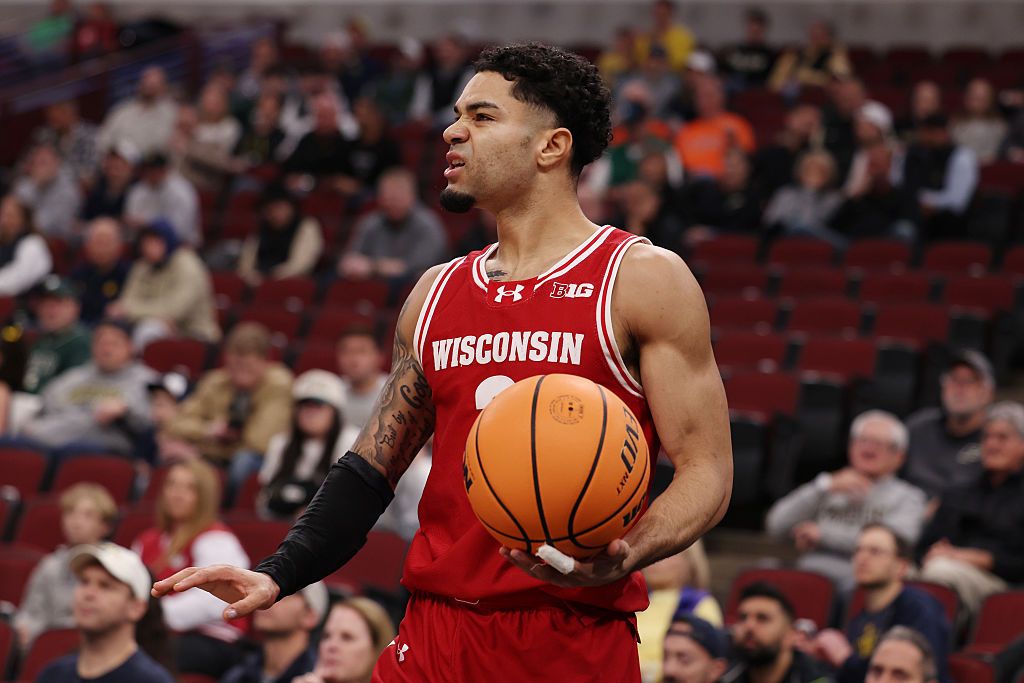
Wisconsin, the No. 5 seed in the West, is being treated as vulnerable because its profile is strong enough to make the draw feel unusually cruel. The Badgers are 24-10, finished No. 25 in the NET, No. 22 in KPI, No. 19 in SOR, No. 20 in WAB, and remained squarely inside the predictive comfort zone at No. 24 in BPI, No. 22 in KenPom, and No. 21 in Torvik. The team shape is clean and extremely March-coded: 83.0 points per game, 400 made threes, 36.1% shooting from deep, 543 assists against just 304 turnovers, and a 6-4 road record. Nick Boyd supplies the veteran guard scaffolding every bracket player claims to want—20.6 points per game, 143 assists against 58 turnovers, 47.9% from the floor, and 82.4% at the line. John Blackwell adds 19.0 points and 93 made threes at 38.4%, while Nolan Winter gives Wisconsin its interior counterweight at 13.3 points, 8.6 rebounds, and 36 blocks on 56.9% shooting. Historically, Wisconsin is making its 29th NCAA tournament, its 25th in the last 27 years, and carries a tournament résumé that includes 10 Sweet 16s and four Final Fours.
The problem is that Wisconsin’s path reads like a dare. First comes High Point, the No. 12 seed that immediately became one of the bracket’s most fashionable upset picks. The Panthers are 30-4, have won 14 straight, score 90.0 points per game, win by 19.7 a night, commit only 9.4 turnovers, and force 16.4, which is exactly the kind of possession-pressure profile that can make a composed favorite feel abruptly rushed. Terry Anderson scores 16.0 on 56.4% shooting, Rob Martin adds 15.3 with 121 assists and 52 steals, and Owen Aquino brings a wonderfully awkward March line—9.4 points, 5.9 rebounds, 82 assists, and 58 blocks. If Wisconsin survives that, the second round is Arkansas or Hawaii, hardly a decompression chamber, and after that the bracket almost certainly asks for Arizona. So the Badgers’ problem is that the whole western corridor gives them almost no dead air: a dangerous 12, then a frisky 4/13 pod, then a No. 1 seed with overwhelming team math. That is how a good five-seed turns into a national referendum.
4-seed Nebraska Cornhuskers
Nebraska, the No. 4 seed in the South, is exactly the kind of team the committee trusts and the public still keeps at arm’s length. On paper, the Huskers look entirely legitimate: 26-6 overall, 9-6 in Quad 1, 6-0 in Quad 2, 11-0 outside the league, 7-3 on the road, No. 14 in the NET, No. 20 in KPI, No. 10 in SOR, No. 13 in WAB, and still comfortably inside the predictive top 20 at No. 18 in BPI, No. 14 in KenPom, and No. 20 in Torvik. The offensive profile is polished enough to matter in March—55.4% effective field-goal percentage and a 1.84 assist-to-turnover ratio—and the defense is something to behold. Nebraska is the Big Ten’s best defensive team, especially on the perimeter, where it has held opponents to 30% from three. Pryce Sandfort gives the Huskers the sort of first-rounding-making scorer every four-seed wants, averaging 17.8 points, 4.8 rebounds, and shooting 47.1% from the floor and 40.1% from deep. Rienk Mast adds 13.5 points, 5.8 rebounds, and 2.9 assists as a connective forward, while Braden Frager gives the lineup another efficient wing scorer at 11.6 points on 49.0% shooting. This is a real team with a real statistical skeleton.
What makes Nebraska a popular bounce-early candidate is the bracket architecture around that résumé. The opener is Troy, a No. 13 seed that already won 108-107 in double overtime at San Diego State and came through the Sun Belt as both regular-season and tournament champion. Thomas Dowd is the matchup irritant who makes that upset feel thinkable: 14.8 points, 10.1 rebounds, 65 made threes, and 44 blocks, the sort of line that suggests both stretch and punishment. Cooper Campbell adds another live creator at 12.7 points, 66 threes, and 138 assists. Nebraska also comes in after a visibly shakier close; it finished 6-6 after a 20-0 start, then shot 39.3% and lost the glass 37-29 in a 74-58 Big Ten tournament loss to Purdue. And even if the Huskers get through Troy, the second round is Vanderbilt or McNeese, which means the first weekend is built entirely out of teams people already think are dangerous. Beyond that sit Florida, Clemson, and Iowa in the top half, with Houston, Illinois, North Carolina, and VCU waiting deeper in the region. That is the whole issue in one sentence: Nebraska did enough to earn trust, but the South gives it almost no chance to settle into the seed before the bracket starts asking harder questions.
5-seed Vanderbilt Commodores
Vanderbilt, the No. 5 seed in the South, is being discussed as a possible bracket buster largely because the seed line looks faintly insulting. The Commodores are 26-8, went 10-7 in Quad 1 and 7-1 in Quad 2, finished No. 13 in the NET, No. 9 in KPI, No. 12 in SOR, No. 10 in WAB, and held their place in every major predictive system at No. 14 in BPI, No. 12 in KenPom, and No. 10 in Torvik. The offense is aggressively, visibly mature: 86.7 points per game, 74.9 allowed, 47.8% from the floor, 78.9% at the line, 16.5 assists, and only 9.6 turnovers. Tyler Tanner is the hinge of the whole machine—19.2 points, 5.3 assists, 174 assists against 64 turnovers, and more than two steals a game—while also becoming the only high-major player this season to average at least 19 points, five assists, and two steals. Duke Miles adds 16.4 points with 108 assists against 44 turnovers and 89.4% free-throw shooting. Tyler Nickel has drilled 97 threes, Devin McGlockton gives them 9.7 points and 6.7 rebounds, and Jalen Washington adds 9.2 points, 5.7 boards, and 45 blocks. Then Vanderbilt went out and beat Florida 91-74 in the SEC tournament semifinal, with Tanner and Miles combining for 35 points and 15 assists, to make the seeding complaint feel even more pointed.
That irritation becomes an actual bracket problem the moment McNeese enters the frame. The No. 12 Cowboys are 28-5, allow only 66.5 points per game, force 16.9 turnovers, score 22.3 points off turnovers, average 10.5 steals, and turn the ball over just 9.6 times themselves. Larry Johnson leads with 17.5 points and 5.5 rebounds on 50.2% shooting, Tyshawn Archie adds 14.3 points with 64 threes and 90.0% free-throw shooting, and Javohn Garcia contributes 12.0 points plus 51 steals. That is real pressure-defense attached to a 12-line. If Vanderbilt survives, the second round is Nebraska or Troy, another game with no natural exhale, and then the top half of the South asks for Florida, Clemson, or Iowa before the regional final is even in view. Beneath all of that is a region stocked with Houston, Illinois, North Carolina, and VCU. So Vanderbilt’s vulnerability is of a team many people thought deserved the 4-line, then got dropped into a path where every round before the second weekend feels like a possession fight. That is how under-seeding becomes upset discourse.
4-seed Alabama Crimson Tide
Alabama, the No. 4 seed in the Midwest, is the kind of team that makes the line between danger and instability feel almost philosophical. The Crimson Tide are 23-9, played one of the country’s toughest schedules—No. 5 by NET strength of schedule and No. 3 in nonconference schedule strength—and still came out with a résumé sturdy enough for No. 18 in the NET, No. 12 in KPI, No. 15 in SOR, No. 15 in WAB, No. 15 in BPI, No. 18 in KenPom, and No. 18 in Torvik. The style is just as loud as the résumé: 91.7 points per game, 84.2 allowed, 397 made threes, 40.5 rebounds, and the nation’s highest three-point attempt rate. Labaron Philon Jr. is the center of gravity—21.7 points on 50.4% shooting and 40.0% from three, with 134 assists—while Aden Holloway adds 16.8 points and 43.8% shooting from deep, Amari Allen contributes 11.6 points and 7.1 rebounds, and Aiden Sherrell brings 11.2 points, 6.2 boards, and 68 blocks. In its best version, Alabama turns a game into pace, volume, and shot profile. In its shakier version, it looks like a favorite inviting variance to stay for dinner. That volatility now comes with an extra wrinkle: Reports everywhere broke on Monday that Holloway had been arrested on a felony charge, and Alabama had not yet announced his status. Keep a close eye.
The bracket does nothing to make that volatility feel safer. Hofstra, the No. 13 seed, is a much more serious opener than the number suggests: 24-10, first tournament appearance since 2001, wins at Pittsburgh and Syracuse, 75.6 points per game, just 66.1 allowed, opponents held to 38.7% shooting overall and 31.6% from three, plus a +5.5 rebounding margin. Cruz Davis, the CAA Player of the Year, is a usage empire—20.2 points, 81 made threes, 157 assists, and nearly 38 minutes a night. Preston Edmead adds 15.9 points, 90 threes, and 151 assists, while Hofstra’s frontcourt combines rim protection and glass work with 71 blocks between Silas Sunday and Victory Onuetu. If Alabama gets through that, the second round is Texas Tech or Akron, not exactly a soft handoff, and the upper half of the Midwest then runs into Michigan, Georgia, or Saint Louis. The lower half is no quieter, with Iowa State, Kentucky, Tennessee, and Virginia all on the regional board. That is why Alabama is being flagged. Not because the Tide are weak, but because their specific form of volatility is meeting a bracket that offers almost no calming influence at any stage.