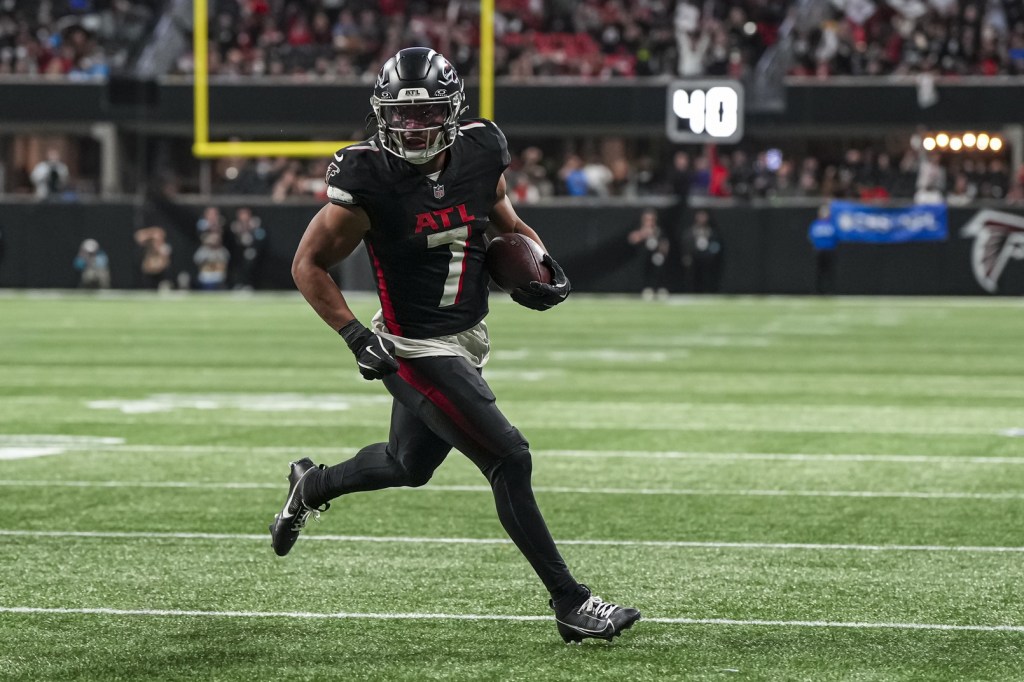
The NFL season has just about arrived. The long Sundays without football are nearly behind us, and hopes should be high ahead as you search for the best edge in completion in your respective fantasy football league.
Running back production has become an especially interesting topic both in the NFL and in fantasy football leagues. Once a staple to make up the majority of the first round picks, the running back position has become a bit diluted in talent. Plenty of teams are opting to lean on more of a committee-based approach. This has resulted in the number of fantasy football stars growing smaller at the running back position.
With the supply of true top-end running backs at a low point, does it make sense to attack this fantasy football season with the position as a priority?
The Case for Prioritizing Running Backs:
There may not be a more comforting feeling in fantasy football than having a bellcow running back you can pencil in for 15+ points on just about a weekly basis. With the options for players to fill this role becoming increasingly infrequent, this makes these types of players are even more valuable.
But for every Bijan Robinson and Saquon Barkley, there is a Ja’Marr Chase and Justin Jefferson. This is not a debate of the top guys at each position, but rather how much of a drop-off there is to the middle and late round options.
Looking at last year’s fantasy production based on DraftKings Scoring, Ja’Marr Chase was the leading wide receiver with 418.0 total fantasy points or 24.6 fantasy points per game. Saquon Barkley was the leader at the running back position in fantasy football production with 389.3 fantasy points or 24.3 fantasy points per game. Five wide receivers (Chase, Chris Godwin, Puka Nacua, Justin Jefferson, and Amon-Ra St. Brown) and six running backs (Barkley, Jahmyr Gibbs, Derrick Henry, Bijan Robinson, Alvin Kamara, and Jonathan Taylor) averaged over 19 fantasy points per game last season based on DraftKings scoring.
Where the gap becomes evident is a bit deeper down in the rankings. 36 running backs averaged over 10 fantasy points per game last season, with Zach Moss holding this final spot at 10.4 fantasy points per game. In comparison, 56 wide receivers averaged over 10 fantasy points per game, with Chris Olave holding this final spot.
With running back being the most scarce position for top-end talent, if you miss out on the top options, you can be left scrambling. There are typically a few surprising names to burst onto the scene, with injuries typically creating an unexpected opportunity. But expect everyone in your league to be waiting eagerly on the waiver wire as well, with this type of addition a possible league-winning type of move. This is a practice that should be done regardless, but isn’t necessarily a strategy you can count on.
When looking at the positional rankings on DK Network created by our very own Dan Johnson, he lists Jameson Williams as his 25th-ranked wide receiver and Tyrone Tracy as the 25th-best running back. Williams finished as the 24th-ranked wide receiver last year, averaging 14.7 fantasy points per game on DraftKings Sportsbook. Tracy ranked 32nd among running backs with 11.4 fantasy points per game.
The outlook changes heading into this year, with both rosters seeing some notable turnover. But with this used as a frame of reference for the quality of talent available at the positions, it makes a lot of sense to prioritize adding a top running back with the talent dropoff in mind. There is a world where Jameson Williams puts all of his physical tools together and is one of the best wide receivers across all fantasy football leagues. Even the biggest Tyrone Tracy believers likely cannot fully talk themselves into this being the case for the Giants.
The Verdict:
There is no full blueprint to fantasy football success. The unpredictability of league mates picking around you, as well as the difference in scoring systems, also complicates this equation. If you hold the seventh pick and Ja’Marr Chase surprisingly remains on the board, you should not just blindly take a running back out of principle.
But all things equal, there is an advantage to selecting a high-level running back in the early rounds to cement your best chances of getting one of the top performers. This point is magnified if you can add two or three running backs in the early rounds to further build up this strength. The positional dropoff is steep, and there is more of a risk of missing out completely with the zero running back strategy than ever before. Injuries will always be a risk, but this is not unique to the running back position. There are also clearer handcuffs for the top running backs than is the case for the wide receiver position, so you can put yourself in good standing with a late-round selection to be braced for everything.
There has been a bit of a resurgence in the running back position both on the NFL field and in fantasy football box scores. Be aware of this as you continue your draft prep and prioritize adding a key player at the RB position if the situation allows.