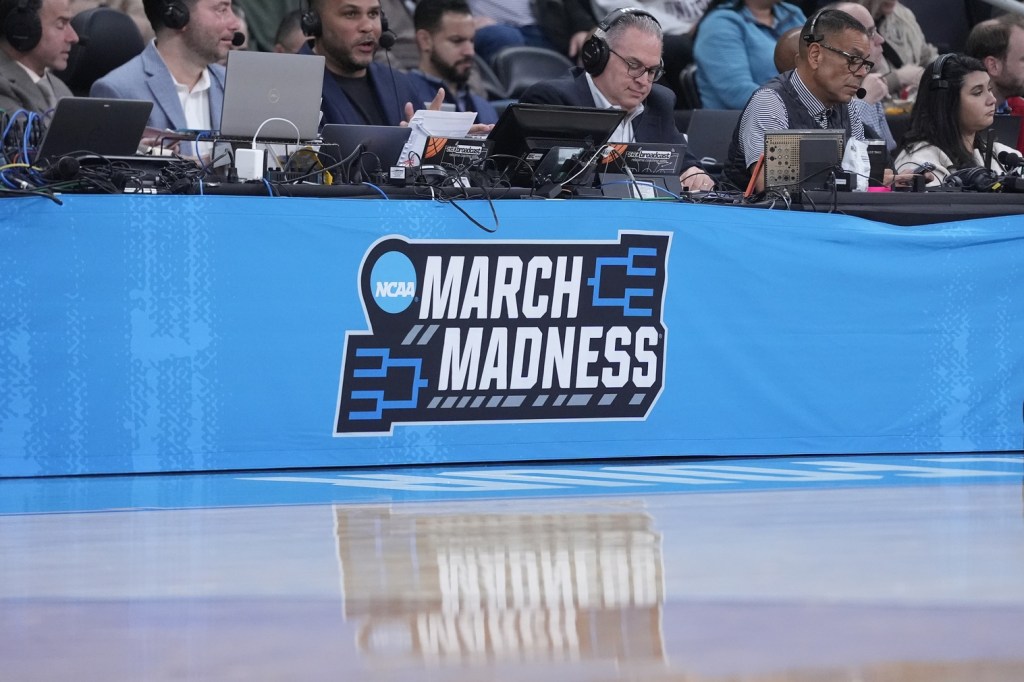
Could the Big Dance have been even BIGGER? Like, 96 teams big?
On the latest editon of The Sporting Class on Pablo Torre Finds Out, Pablo Torre, John Skipper and David Samson unpack how CBS and TNT Sports joined forces to keep March Madness out of the hands of the Worldwide Leader and thus scuttled the potential for a 96-team tourney.
With the first round of March Madness underway, Torre, Skipper and Samson go down memory lane and discuss a potential March Madness TV deal that could have shifted how we consume March Madness. For years, the tournament’s home has been CBS, with TNT recently joining the party. During his days as president of ESPN, Skipper revealed that the tournament was a product that ESPN wanted and made a strong push to buy the rights to the tournament. Skipper told Torre and Samson that he had a meeting in a park outside of a hotel in Indianapolis where the Final Four was being held in 2010. At this meeting, Skipper proposed to take the tournament to 96 teams and televise EVERY GAME. An important thing to keep in mind is that this was when CBS could only air one game at a time and the first two rounds had to be shown with regional coverage as CBS did not have any other outlets to share the games with and it had not yet teamed up with TNT. Skipper says he told the NCAA representative to come back to him before making any deal, suggesting that he was willing to outbid other competitors. Skipper explained the decision ultimately came down to a committee, and one of those committee members expressed that they were loyal to CBS.
In Skipper’s mind, he thought money would trump loyalty, and ESPN could provide better exposure, but instead, Turner saved CBS as they agreed to a deal where they would partner and help show all the games; however, they did not cough up more money than what ESPN was initially offering. Samson notes that both CBS and TNT realized they could make more money by showing more games, which made CBS bring on a cable partner, which is why some games are shown on TruTV. Skipper thought it made sense for the product to be on ESPN because they had multiple channels to put the games on, and quite frankly, they owned the regular season of college basketball. He pointed out that ESPN produced 1,500 regular season games and had its flagship College Gameday show.
According to Skipper, when the potential of the tournament coming to ESPN was initially discussed, it was said that ESPN had too much already on its platform and that there was a desire to prevent ESPN from having everything in the world of sports. Skipper says in true NCAA fashion, it was proposed to take the tournament to 68 teams instead of the 96 that Skipper had proposed. He thought it did not make sense for the tournament to go from 64 to 68. Skipper explained that in a 96-team format, 32 teams would receive a bye, creating more games overall.
Samson asked Skipper while the negotiations were going on if there had ever been any thought of ESPN joining in with CBS, given that CBS was looking for a partner. Skipper acknowledged that the idea of CBS and ESPN partnering was not out of the realm of possibility. However, CBS was looking to cut costs, and the CEO of CBS at the time, Les Moonves, was skeptical of entering into a long-term, expensive deal. Skipper humorously credits both Sean McManus and David Levy for banding together to keep the “evil empire” of ESPN from taking the tournament. Ultimately, TNT took on the lion’s share of the money, paving the way for TBS to have the semifinals and title game in alternating years with CBS.
So is the dream of a 96-team tournament dead? Never say never.
Former ESPN president John Skipper confirms that there have been discussions to expand the NCAA Tournament to 96 teams. 👀
“I know that the NCAA has discussed it several times, and it will happen at some point.” pic.twitter.com/ZX40EWkTdY
— Pablo Torre Finds Out (@pablofindsout) March 21, 2025
For more, check out the full episode of Pablo Torre Finds Out below! And make sure to tune into Pablo Torre Finds Out every Tuesday, Thursday and Friday at 3 p.m. ET on DraftKings Network!
SHOW BREAKDOWN
The Sporting Class: We’re Gonna Need a Bigger Bracket
- John Skipper, who is not on this season of The White Lotus, goes behind the scenes of his failed bid for “the evil empire” to steal the rights to March Madness. David Samson, who is trying very hard not to sneeze, takes on the haters of the MLB’s money-printing series in Japan. And, yes: Pablo is more valuable than a test pattern.
VIDEO:
Check out the Pablo Torre Finds Out YouTube page for more and subscribe to the show on Apple Podcasts, Spotify or wherever you get your podcasts. You can also follow the show on X at @pablofindsout and Pablo at @pablotorre.