

We’ve begun to reckon with the treatment of celebrities in conjunction with the paparazzi. The first person that comes to my mind is Britney Spears. Ironically, Netflix has released documentaries about Pamela Anderson and the late Anna Nicole Smith dealing with some of these issues. The onslaught of social media platforms have thinned the veil between fan and famous figures – but our collective insistence on knowing every move these people make has only grown to a different level of toxicity.
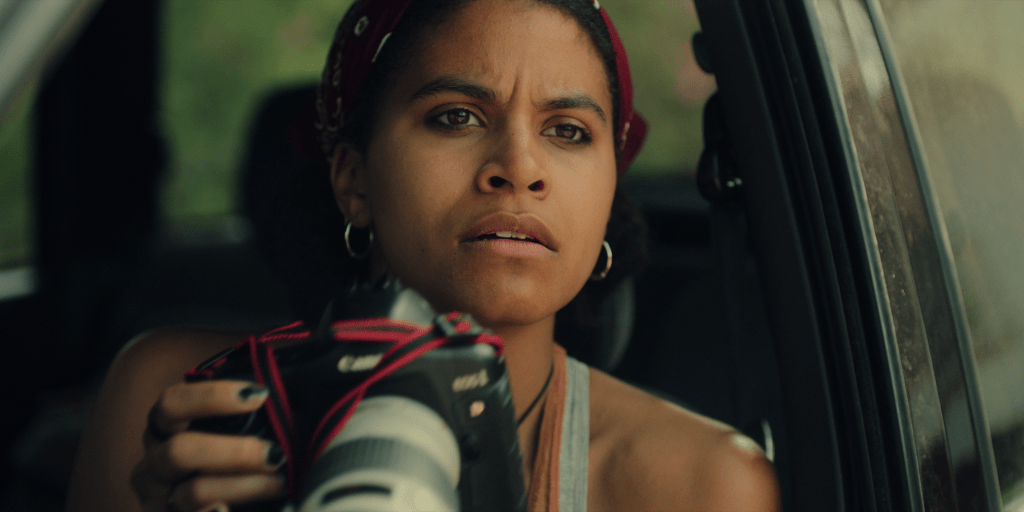
“Mazey Day” detours from the usual technology-infused warnings the Black Mirror franchise is known for and transports us back to 2006. The iPod Nano, Amerie’s ‘1 Thing,” and Muse’s Supermassive Black Hole are staples you recognize from that time. Even more so is the lack of smartphones with our current capabilities – thus, the voraciousness of paparazzi seemed to be at a fever pitch. At the heart of this episode are two characters from opposite sides of the coin. Bo (Zazie Beetz) struggles to make ends meet with a somewhat shaky roommate situation. She works as a paparazzo, and the first picture she takes is of an actor coming out of a hotel room with another man in a clandestine affair.
Naturally, the worse shots, the better. Even though this actor pleads with her, Bo still turns these photos end, eventually leading to his suicide. Much of this episode draws upon this push and pull of mortality – quite frankly, much doesn’t exist within Bo’s network of friends. Everything is about getting a star in the most compromised situation possible to get the biggest cash grab. A brief moment in the episode shows Bo wrestling with this and even decides to quit the business. She is the only one who has this epiphany.
:format(webp):no_upscale()/cdn.vox-cdn.com/uploads/chorus_asset/file/24751828/Mazey_Day_2.jpg)
However, a situation surrounding the title character and budding actress Mazey Day (Clara Rugaard) quickly knocks Bo out of a fleeting sympathy trance. Mazey is involved in a traumatic car accident on the set of her new film – to the point where she’s gone into hiding. People can’t leave well enough alone, and Bo needs money to pay her rent. Thus, the episode quickly turns into a hunt to get the prizeworthy picture.
The concept of “getting the shot” is explored in Jordan Peele’s Nope, but has a different tone in “Mazey Day” – albeit, horror has been known to punish those who stick their noses in somebody else’s business. It’s the shortest episode of the sixth season, and there’s a reason for this. Besides the twist concerning a werewolf and Black Mirror flexing some of its horror muscles, there’s not much to say beyond what’s been told repeatedly.
Our inability to exhibit some decorum regarding people and the gifts they give us has been critiqued many times. It’s an entitlement problem that is still rampant in the present day. While there might be some morsels of truth looking back at our past behavior, “Mazey Day” is one of the rare instances where Black Mirror feels as if it’s behind the curve in what it’s investigating.