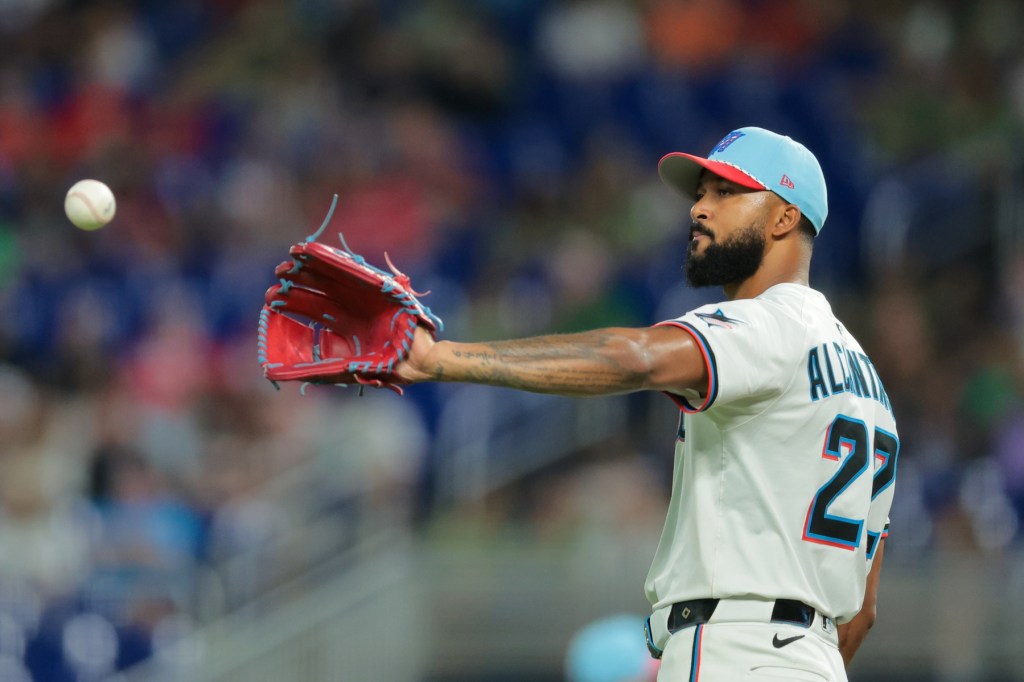
The 2025 MLB trade deadline is shaping up to be one of the most unpredictable in years. Unlike past seasons where the lines between buyers and sellers were clear, this market feels murky, blurred by parity and underperformance. Even marquee names like Luis Robert Jr. (sub-.600 OPS, K% north of 30%) and Sandy Alcantara (7+ ERA, xERA confirming the struggles) have cratered, leaving front offices hesitant about splashing big. Most teams are monitoring the standings through July before making final buy-or-sell calls. Advanced scouting reports suggest as many as 20 clubs are within five games of a playoff spot, bottlenecking decisions. That congestion could create a deadline where surprise blockbusters materialize late, and prices for premium talent skyrocket.
Let’s break down all the storylines for this year’s MLB trade deadline as of this writing, beginning with just when exactly it is.
2025 MLB trade deadline: Date, details
The July 31, 2025 MLB trade deadline marks the final day clubs can swap players without waivers and reshape rosters for the playoff push. It falls just two weeks after the All-Star break, amplifying urgency as front offices assess their true standing while players reflect on their first-half performances.
After the above date, trades can’t happen freely—teams must pass players through waivers, a risky and often blocked process. This creates a firm line in the sand where contenders load up and rebuilders cash in assets.
Oh, and in terms of weekday: the 2025 deadline lands on a Thursday this year, primed for a flurry of late deals as executives race the clock.
Projected 2025 deadline buyers
In the AL, five teams look primed to buy: the Tigers, Yankees, Astros, Blue Jays, and Mariners. Detroit, with the league’s best AL record, is surging thanks to a 114 wRC+ since June and a bullpen xFIP (3.61) that ranks top five. The Yankees boast the AL’s best K-BB% (19.2%) but need a rotation workhorse. Houston’s .788 OPS against lefties suggests righty bats are a priority, though their pen’s 3.12 ERA offers stability. Toronto’s re-signed core keeps them aggressive, while Seattle’s 98 wRC+ shows their offense still needs pop despite their pen’s 28% K rate.
In the NL, the Dodgers, Cubs, Mets, Phillies, Giants, and Padres headline buyers. Los Angeles, with MLB’s best record, could use a lefty bat to complement their 123 wRC+ against righties. The Phillies’ 3.52 xFIP starters need a bullpen with more than a 1.38 WHIP. The Mets’ 3.65 ERA since June contrasts with poor team defense, making a glove-first infielder logical. Chicago lacks power (.154 ISO) despite solid OBP. San Francisco’s 3.49 xFIP and 24% K rate since adding Devers show one need addressed, but depth is still key. San Diego’s 4.52 bullpen ERA is a glaring weakness they’ll target.
Tampa Bay and Milwaukee ride the fence. The Rays’ .682 OPS in high-leverage spots screams for another clutch bat. Milwaukee’s Peralta—2.60 ERA, 15% swinging strike rate, top-10 K-BB%—would headline the deadline if they pivot to sell.
Projected 2025 deadline sellers
The White Sox and A’s are clear AL sellers, both buried in their divisions and aiming to reset for the future. Chicago is fielding offers for Luis Robert Jr., whose .186 average and 31% strikeout rate have tanked his value on the field. Yet his elite sprint speed and hard-hit rate (43%) keep teams intrigued, knowing the tools are still there. His contract—team options for 2026-27 at $20M per year—makes him a controllable upside play. The White Sox also have Aaron Civale, who offers a 3.86 ERA and sub-1.20 WHIP as a mid-rotation rental. Oakland, sitting at the bottom of the AL West, will listen on nearly any veteran. Their bullpen has posted a 5.02 ERA, so expect them to shop relief arms while chasing young talent.
The Baltimore Orioles are positioned to pivot toward selling if their offense keeps underperforming. Their depth pieces aren’t generating playoff-level production, and veterans like Cedric Mullins (88th percentile sprint speed, elite center-field defense), Ramón Laureano (92nd percentile arm strength), and Ryan O’Hearn (.340 OBP, .190 ISO) could draw interest from contenders needing versatility. All are on expiring deals, making them logical trade chips. Baltimore could flip these vets for prospect depth while protecting its core.
The Los Angeles Angels are second in the AL in homers but are undone by a .298 team OBP and negative run differential. That imbalance pushes them toward selling mode. Tyler Anderson (3.04 ERA, 3.18 xFIP) remains a steady, playoff-ready starter. Kyle Hendricks (52% ground-ball rate) offers a contact-manager profile that fits October rotations. Kenley Jansen (2.81 ERA, 30% K rate) would upgrade any bullpen. All are likely to draw calls from contenders. If the Angels fall further, expect moves.
In the NL, Washington, Miami, Pittsburgh, and Colorado headline the seller list. Washington’s Kyle Finnegan brings 18 saves and a 2.45 ERA, with a .190 expected batting average against and a 30% whiff rate in late innings. Nathaniel Lowe’s recent power surge (four homers in 18 games) and career .350 OBP offer appeal for OBP-starved clubs. Pittsburgh has David Bednar (2.73 ERA, 36% K rate, .189 xBA) and Mitch Keller (3.74 xFIP, 1.18 WHIP) drawing calls. Miami’s wild card is Alcantara, who despite a 7+ ERA, still generates 98 mph velocity and a 13% swinging strike rate—traits teams pay up for. Colorado will part with anything not nailed down. Ryan McMahon’s .349 OBP, 89th percentile walk rate, and Gold Glove-caliber defense make him a coveted piece for contenders needing stability at third.
Bold trade deadline predictions
Sandy Alcántara:
Sandy Alcántara is firmly on the radar as Miami’s top deadline chip. Despite a rough 6.88 ERA over 14 starts, he’s flashing his peak velocity again (~97.3 mph) and maintaining a 13% swing‑and‑miss rate—signs that regression could be imminent. He carries two years of control plus a club option for 2027, giving buyers plentiful runway. The Dodgers, Orioles, and Mariners are quietly tracking him, betting on a rebound through pitch‑design tweaks and improved sequencing. Alcántara still sits in the 80th percentile in spin rate and exhibits a plus changeup he used to dominate with. Executives expect Miami to eat some salary—his $17 M salary makes a deal realistic. For contenders with rotation gaps, he offers upside returns worth a mid‑level prospect package, not rentals. Alcántara’s arc is textbook recovery, and teams with top radar analysts see a future frontline arm on the verge. He’ll be the most high‑ceiling rental this July.
Chicago Cubs:
Chicago enters the deadline as clear NL Central favorites, but they’re hungry for a starter and bench pop. Their rotation (4.28 ERA) ranks 22nd, and front office chatter centers on bolstering with a controllable arm. That urgency has shifted internal thinking—Cubs insiders suggest they’re ready to shop top prospects like Owen Caissie or Jaxon Wiggins to land a front‑end pitcher. MLB executives expect Chicago to go hard for talent like Keller or even Sandy Alcántara. Their farm remains deep—MLB Pipeline ratings rank Caissie top‑15 overall—but they’re willing to part with future in exchange for present wins. Whether dealing from the future or simple swaps, expect the Cubs to execute a bold move.
Freddy Peralta (MIL):
Peralta is performing like one of the top pitchers in baseball this season. His 2.60 ERA comes with a 30% strikeout rate, 15% swinging strike rate, and a 3.08 xFIP that confirms it’s no fluke. He’s holding hitters to a .197 xBA and generating weak contact at a 31% clip. If Milwaukee fades, Peralta becomes the most coveted arm on the market, period. His contract—$8M this season with a team option for 2026—makes him an ace-level bargain. Contenders like the Dodgers, Yankees, Blue Jays, and Orioles would trip over themselves to pay the premium for his services. A package would start with at least two top-100 prospects and more. If Milwaukee pivots to a retool, this is the blockbuster chip.
San Diego:
The Padres remain baseball’s wild card. Sitting at the edge of the NL Wild Card race, they’re one bad stretch from reconsidering everything. Manny Machado, signed long-term, carries a .794 OPS and 121 wRC+ this year. His barrel rate sits at 9%, and he’s on pace for another 25-homer campaign. While few expect them to move him, the possibility exists if the team fades fast in July. More realistic? Packaging smaller veterans—perhaps Michael King (3.74 xFIP, 26% K rate) or a reliever—for controllable pieces. But make no mistake: San Diego’s front office knows its window, and pressure is mounting.
San Francisco:
After landing Devers, the Giants aren’t done. They could chase a second big splash—think a controllable starter like Mitch Keller (3.74 xFIP, 25% K rate) or a power bat. San Francisco’s team ISO (.147) ranks near the bottom third; they need pop. They have the prospect depth and payroll flexibility to make one more win-now move, especially if the NL West remains a tight fight.
Tampa Bay:
The Rays are quietly at a crossroads. While they’re competitive, their offense’s .682 OPS in high-leverage spots underscores the need for another impact bat. On the flip side, they could deal from bullpen strength—perhaps flipping a reliever with a sub-3 ERA or a struggling veteran bat on an expiring deal. Expect Tampa Bay to shop creatively, potentially using a player like Yandy Díaz (90th percentile in xBA but declining ISO) to rebalance the roster if the right offer comes along.
Atlanta:
The Braves insist they aren’t sellers, but if their slide continues, everything could change. Marcell Ozuna, with a 120 wRC+, 18 homers, and 10% barrel rate, becomes a prime piece for a contender needing DH pop. Atlanta’s bullpen has posted a 4.41 ERA since June—another crack that might push them to consider adding or even soft selling on certain veterans. If Atlanta can’t close the Wild Card gap, an unthinkable retool could take shape fast.
Dodgers:
LA’s injuries are stacking up. With Muncy out and rotation depth thinning, they could shift from measured buyers to aggressive prospect dealers. Their .123 wRC+ against righties highlights how much a lefty bat at third would help. Expect them to monitor controllable infielders and swing big if they believe their rotation won’t hold up in October. Think Peralta, Keller, or even a dark horse like Civale.
Final word
The 2025 deadline promises high-stakes decisions and potential chaos. Top AL buyers include the Tigers, Yankees, Astros, Blue Jays, and Mariners. The Dodgers, Mets, Phillies, Cubs, Giants, and Padres headline NL buyers. Rebuilding clubs like the White Sox, A’s, Nats, Marlins, Pirates, and Rockies will fuel the trade market. The wildcard teams—Orioles, Angels, Rangers, and others—could swing things dramatically. Watch for expiring contracts and controllable stars alike to dominate headlines in what’s shaping up as a deadline full of surprises.