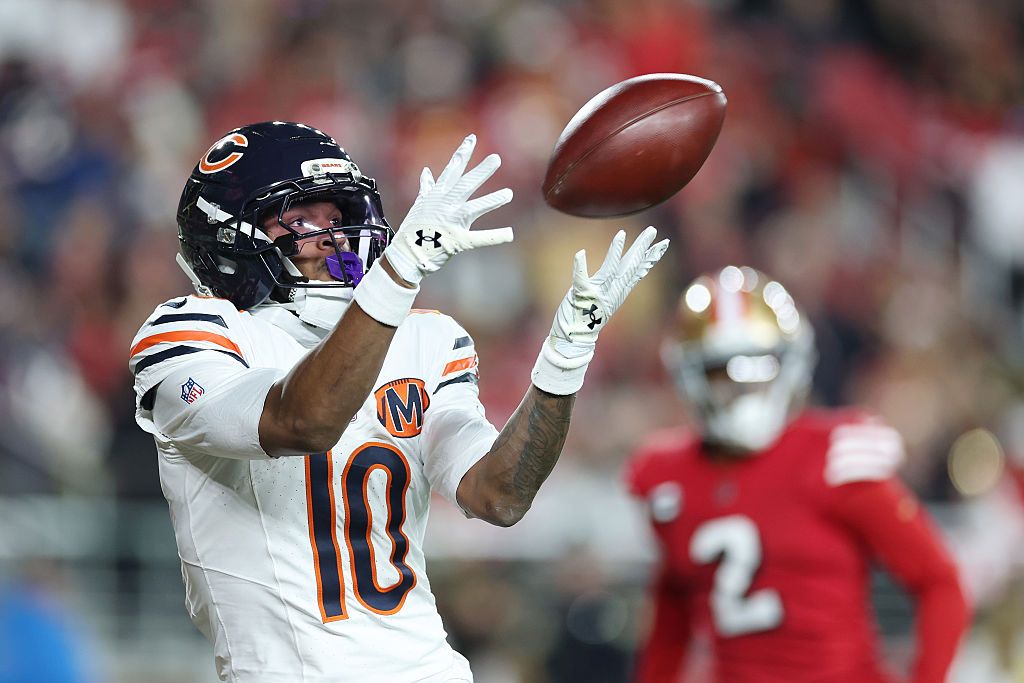
These top-60 wide receiver rankings capture my complete draft board after a summer of injuries, trades, depth-chart upheaval, and camp-fueled breakouts. The rankings table is our starship hangar, and the the 30 profiles are like the cargo so robust and precious that it’s the sole reason we’ve got all these big lasers attached to the hull. Each deep dive follows the target shares, first-read rates, route efficiency, first-down creation, red-zone production, and changing roles driving my largest departures from ADP. The specific order of the rankings is for PPR leagues, but the analysis applies to all your fantasy drafts.
Before you go read about these studs—these hopeful high fliers—see for a moment in your mind’s eye the aeronautic majesty in witnessing a plane ascend off the earth and, like magic, stay there in the sky. Such is the future we’re romanticizing for all these spectacular athletes this year.
Follow my handle @dansby_edits for all preseason and fantasy draft kit content—as well as plenty of NFL betting goodies—all summer long.
Dan Johnson’s top 60 wide receivers (PPR scoring)
UPDATE 8/27 10:00 AM
| WR Rank | Tier | Player | Team | Tag | Editorial Note |
|---|---|---|---|---|---|
| 1 | 1 | Ja'Marr Chase | CIN | 8/27 Update: Chase hyperextended his left knee Tuesday and missed Wednesday's practice. He said he could have played immediately, framing the absence as precautionary. Last season's 185 targets led football, producing 125 catches, 1,412 yards, and eight touchdowns. Joe Burrow missed nine games, yet Chase still finished third in PPR points per game. Cincinnati still offers football's strongest marriage of alpha volume and quarterback aggression. | |
| 2 | 1 | Jaxon Smith-Njigba | SEA | Smith-Njigba detonated for 119 catches, 1,793 yards, and 10 touchdowns on 163 targets. His 21.2 PPR points per game trailed only Puka Nacua. Seattle threw on 48.7% of its plays, yet JSN still won Offensive Player of the Year. Volume, separation, vertical damage, and Super Bowl proof now coexist inside one outrageous profile. | |
| 3 | 2 | Puka Nacua | LAR | 8/27 Update: Nacua has missed two weeks of team drills, although the Rams report no setback. That August friction matters after a volcanic 129-catch, 1,715-yard, 10-touchdown season. Nacua wins underneath, through contact, and deep enough to deform entire coverages. The psoas delay creates the only meaningful obstruction between Nacua and another positional crown. | |
| 4 | 2 | Amon-Ra St. Brown | DET | St. Brown converted 172 targets into 117 catches, 1,401 yards, and 11 touchdowns. He has cleared 141 targets and 1,250 yards in three consecutive seasons. Last year's 37.4% first-read share confirms Detroit's offense still begins with the Sun God. He also led every receiver in red-zone targets. This is industrial-scale fantasy production. | |
| 5 | 2 | CeeDee Lamb | DAL | Lamb's supposedly diminished season still delivered 1,077 yards across 14 games. Removing two cameo appearances raises him to 16.6 PPR points and 89.4 receiving yards per full game. His 2.51 yards per route remained ferocious. George Pickens prevents another total target monopoly. Dak Prescott and Lamb's route command still form a top-five machine. | |
| 6 | 2 | Justin Jefferson | MIN | The league spent one broken season pretending Jefferson became mortal. He still caught 84 passes for 1,048 yards amid Minnesota's quarterback wreckage. His two touchdowns and 12.5 yards per catch were career lows. Kyler Murray restores the deep and red-zone access that vanished. The best route runner alive now has oxygen again. | |
| 7 | 3 | Malik Nabers | NYG | EXTREME TARGET | Nabers is a target-eating kaiju when healthy. His first 18 complete NFL games produced 11.3 targets and 18.2 PPR points per appearance. His rookie season reached 109 catches, 1,204 yards, and seven scores. He then commanded 35% of Giants targets before tearing his ACL. Limited team work creates uncertainty, while his target ceiling can still swallow entire Sundays. |
| 8 | 3 | A.J. Brown | NE | TARGET | Brown still posted 78 catches, 1,003 yards, and seven touchdowns during Philadelphia's strangled passing season. His 26.1% target share survived hamstring trouble and offensive dysfunction. Last year's man and press success rates slipped from his extraordinary career standards. Drake Maye led football in EPA per play, completion rate over expected, and air yards per target. That quarterback upgrade and another projected 25% target share preserve Brown's elite ceiling. |
| 9 | 3 | Nico Collins | HOU | Collins commanded 29.6% of Houston's targets whenever he played last season. Since 2023, he ranks second in YPRR, tenth in TPRR, and sixth in first downs per route. He still produced 71 catches, 1,117 yards, and 15.7 yards per reception through injuries. C.J. Stroud finished the regular season among the top 10 quarterbacks in EPA per play. Elite man and press separation completes a profile with almost no football weakness. | |
| 10 | 3 | Drake London | ATL | London averaged 10.4 targets before a PCL injury ended his eruption. He ranked third among receivers in fantasy points per game during that healthy stretch. His 68 catches produced 919 yards and seven touchdowns across only 12 appearances. London has also drawn targets on 28.8% of routes during the last two seasons. Atlanta's quarterback ceiling remains modest, but London can bully inefficient environments through overwhelming volume. | |
| 11 | 3 | George Pickens | DAL | Pickens set Dallas on fire with 93 catches, 1,429 yards, and nine touchdowns. His 15.4 yards per reception accompanied 478 yards after the catch. He also cleared league-average success against every route family while living almost exclusively outside. CeeDee Lamb's presence reduced Pickens to a 22.4% target share across their shared games. That distribution lowers the volume ceiling without diminishing his weekly detonation power. | |
| 12 | 4 | DeVonta Smith | PHI | TARGET | The Slim Reaper finally owns Philadelphia's passing game. A.J. Brown's departure vacates 124 targets, 78 catches, and 47 first downs. Smith already produced 77-1,008-4 while sharing oxygen with Brown. His 385 career receptions prove the frame has never limited professional dominance. Volume can now meet the route-running genius. |
| 13 | 4 | Jaylen Waddle | DEN | EXTREME TARGET | Waddle has averaged 2.44 yards per route since 2022, an efficiency mark reserved for monsters. Without Tyreek Hill, he commanded a 29% share and produced 2.84 yards per route. He ranked eighth in first downs per route and 12th in YPRR last season. Miami ranked 30th in dropbacks; Denver ranked seventh. Sean Payton can finally weaponize Waddle through movement, cleaner releases, and greater route volume. |
| 14 | 4 | Chris Olave | NO | TARGET | Olave absorbed 156 targets, caught 100 balls, and cleared 1,160 yards. His 29% target share and 30 third-down receptions reveal a receiver quarterbacks trust when geometry collapses. Tyler Shough averaged 250.1 passing yards per full start. Olave's pristine releases already manufacture elite target volume. Better quarterback continuity could finally make the touchdowns behave. |
| 15 | 4 | Garrett Wilson | NYJ | EXTREME TARGET | Wilson opened his career with 83, 95, and 101 catches, clearing 1,000 yards every season. A knee injury limited him to 36-395-4 across eight games last year. He enters age 26 with 315 catches and 3,644 yards already banked. That résumé belongs to a target sovereign. The knee recovery interrupts an otherwise elite volume projection. |
| 16 | 4 | Tee Higgins | CIN | Higgins converted 98 targets into 846 yards and a career-high 11 touchdowns. His 18.7% targets-per-route rate established a career low, yet the scoring brutality endured. Four of five healthy Cincinnati seasons produced at least 15.4 PPR points per game. Ja'Marr Chase blocks the volume throne. Joe Burrow keeps Higgins living near the end-zone penthouse. | |
| 17 | 4 | Zay Flowers | BAL | Flowers established career highs with 86 catches and 1,211 yards. His 14.1 yards per reception included 473 after the catch, because his first missed tackle often becomes structural damage. Baltimore passed on only 45.4% of its plays. Flowers still commanded 29% of Ravens targets and improved sharply against press coverage. Passing volume and five career-high touchdowns restrain an otherwise exquisite receiving profile. | |
| 18 | 4 | Luther Burden III | CHI | EXTREME TARGET | Chicago spent a year keeping a sports car in the garage. Burden generated 601 of his 652 yards during the final eight games. He averaged 5.26 yards per route from heavy personnel and created first downs on 11.7% of routes. Those are extraterrestrial efficiency signals. A full route diet could produce one of fantasy's most violent breakouts. |
| 19 | 4 | Ladd McConkey | LAC | McConkey's rookie masterpiece delivered 82 catches, 1,149 yards, and seven touchdowns. Last year's 66-789-6 retreat still included 106 targets and 14 red-zone chances. Keenan Allen's departure reopens the middle, where McConkey's pacing humiliates linebackers and nickel corners. Mike McDaniel should manufacture cleaner releases. The rookie revelation remains the stronger talent signal than one diminished season. | |
| 20 | 5 | Rashee Rice | KC | FADE | Rice remains a short-area technician with running-back violence after the catch. Across his last eight games, he averaged 6.6 receptions and 71.4 yards. However, 10.8 yards per catch keeps the ceiling tethered to ruthless volume. Twelve appearances across two seasons also demand a durability tax. The catch avalanche remains powerful, although the surrounding assumptions carry almost no margin. |
| 21 | 5 | Tetairoa McMillan | CAR | McMillan walked into Carolina and immediately commandeered 30.7% of its receiving yards. His rookie line reached 70-1,014-7 on 122 targets. A 43.3% air-yard share ranked second across the entire league. That is alpha behavior before the game slows down. Carolina's 27th-ranked scoring offense supplies the only restraint on his terrifying trajectory. | |
| 22 | 5 | Parker Washington | JAX | EXTREME TARGET | Washington's expanded-role sample was absurd: 58 catches on 60 targets, 847 yards, and five touchdowns. He averaged 14.6 yards per reception while handling a 20% target share. Trevor Lawrence averaged 25.8 fantasy points when Washington and Jakobi Meyers played full-time. Washington's compact power and instant separation have outgrown sleeper language. Jacksonville's passing game became considerably more dangerous once his route share expanded. |
| 23 | 5 | Davante Adams | LAR | 8/27 Update: Rams practices have described Adams as fresh, explosive, and routinely uncoverable. Before last year's hamstring injury, he owned a 23.8% target share and 27% first-read share. He also produced 14 touchdowns and 30 red-zone targets through Week 14. The release package remains football pornography. Matthew Stafford supplies the exact aggression this touchdown emperor requires. | |
| 24 | 5 | Christian Watson | GB | TARGET | Watson returned from knee surgery and immediately turned 35 catches into 611 yards and six touchdowns. After his two-game ramp, full route participation produced 15.2 PPR points per game. His career full-role average sits at 17.5. At 17.5 yards per catch, every target carries detonation potential. Health creates the risk; rare size-speed geometry creates week-winning eruptions. |
| 25 | 5 | Jameson Williams | DET | Williams finally married route volume to his ridiculous accelerator. He set career highs with 65 catches, 1,117 yards, and seven scores. His 17.2 yards per reception ranked third among qualified receivers. Forty-nine catches moved the chains, proving the résumé extends beyond moon balls. Sam LaPorta's hip injury could unleash additional volume on football's fastest stress fracture. | |
| 26 | 5 | Mike Evans | SF | TARGET | 8/27 Update: Evans' groin issue followed an earlier quadriceps strain, and San Francisco expects him back next week. The body has accumulated August warnings, but the player remains a touchdown leviathan. Evans owns 11 consecutive 1,000-yard seasons and 108 career scores. His last two healthy campaigns produced a 28% target rate and 2.34 yards per route. Availability has become concerning, while the healthy production remains almost unimpeachable. |
| 27 | 5 | Emeka Egbuka | TB | FADE | 8/27 Update: Egbuka has missed nearly two weeks of team drills with a toe sprain. His rookie season began with 25 catches, 445 yards, and five touchdowns across five games. The final 12 produced only 38-493-1, exposing frightening volatility. Tampa Bay still gave him 127 targets. The toe injury compounds a profile already dependent upon another early-season scoring eruption. |
| 28 | 6 | Terry McLaurin | WAS | McLaurin remains one of football's cleanest vertical technicians, but Washington's infrastructure has cracked. Laremy Tunsil's torn triceps removes the protection engine behind longer-developing throws. McLaurin also managed only 38 catches, 582 yards, and three touchdowns last season. The route craft still scorches press coverage. A magnificent player now carries an increasingly hostile ecosystem. | |
| 29 | 6 | Marvin Harrison Jr. | ARI | TARGET | Harrison commanded a 25.7% target rate whenever he shared the field with Michael Wilson. That dwarfed Wilson's 15.8%, revealing Arizona's intended hierarchy. Harrison has 12 touchdowns through 29 games despite last year's disappointing 41-608-4 line. He remains a 6-foot-4 technician built for isolated matchups. Talent and intended usage still point toward a substantial third-year correction. |
| 30 | 6 | Rome Odunze | CHI | Odunze turned 90 targets into 661 yards and six touchdowns during an uneven second season. Five scores arrived across the opening four games before his role contracted. D.J. Moore's departure reopens perimeter volume and premium red-zone work. Luther Burden III and Colston Loveland still demand targets. The third-year eruption remains plausible, although weekly turbulence will survive inside this crowded offense. | |
| 31 | 7 | Brian Thomas Jr. | JAX | 8/27 Update: Thomas left joint practice with shoulder discomfort, but Liam Coen called the exit precautionary. His rookie 87-1,282-10 eruption remains one of the decade's great receiver debuts. Last year collapsed to 48-707-2 with 10 drops. The 14.5-yard average target depth still carries thermonuclear upside. The rookie masterpiece preserves his ceiling, while the sophomore collapse demands evidence of restored precision. | |
| 32 | 7 | DJ Moore | BUF | Moore escaped Chicago after a 50-682-6 season and landed beside Josh Allen. That quarterback upgrade is almost comically large. Moore has already posted four 1,000-yard seasons while winning at every receiver alignment. Buffalo's low passing rate and egalitarian distribution restrain target projections. Elite talent now meets a higher ceiling inside a crowded, run-heavy operation. | |
| 33 | 7 | Chris Godwin Jr. | TB | TARGET | Godwin's last healthy seven-game stretch produced 50 catches, 576 yards, and five touchdowns. That pace reached 121-1,399-12 before a catastrophic ankle dislocation. Last season's 33-360-2 return never resembled his full movement arsenal. He owns 612 career catches and remains a slot surgeon. Health uncertainty still conceals an elite possession predator. |
| 34 | 7 | Carnell Tate | TEN | Tennessee selected Tate fourth overall after a 3.17-yards-per-route college season with zero credited drops. His 14.62-yard average target depth confirms he won far beyond the sticks. Tate then dominated open practices with 17 catches across seven sessions. The preseason debut was quiet, but the route polish screamed immediately. He already looks capable of becoming Cam Ward's future obsession. | |
| 35 | 8 | Stefon Diggs | WAS | Diggs caught 85 of 102 targets for 1,013 yards, an outrageous 83.3% conversion rate. His 2.42 yards per route ranked eighth despite playing only 71% of available routes. Washington used neutral no-huddle on 62.1% of snaps, creating relentless opportunity. The age curve warrants caution. The hands, pacing, and quarterback rapport still look gloriously expensive to defend. | |
| 36 | 8 | Josh Downs | IND | TARGET | 8/27 Update: Downs' early groin problem resolved, but a separate calf injury cost consecutive practices. Keenan Allen's arrival adds another ruthless middle-field target earner. Downs still caught 58 of 88 targets for 566 yards last season. His 7.49-yard target depth makes volume essential. Excellent separation now faces a crowded September and another soft-tissue concern. |
| 37 | 8 | Michael Wilson | ARI | TARGET | Wilson became a full-scale destroyer during Arizona's final eight games, posting 56-775-6. His season finished at 78 catches, 1,006 yards, and seven scores. Arizona had not produced a 1,000-yard receiver since 2020. Harrison still commanded the stronger shared-field target rate. The alpha surge remains compelling, although Arizona continues designing its offense around another star. |
| 38 | 8 | DK Metcalf | PIT | Metcalf remains a 6-foot-4 siege weapon who turns vertical routes into acts of intimidation. Last year's 99 targets across 15 games produced only 12.5 PPR points per appearance. His targets-per-route rate has stayed below 22% for three consecutive seasons. Michael Pittman's arrival further crowds Pittsburgh. Singular weekly ceilings now coexist with a shrinking target floor. | |
| 39 | 8 | KC Concepcion | CLE | EXTREME TARGET | Concepcion commanded 27.2% of collegiate targets and finished with 61-919-9 plus 460 return yards. Cleveland selected him 24th overall because he bends entire personnel packages. He can win inside, outside, on carries, and after manufactured touches. Twelve total touchdowns showcased the electricity. Quarterback uncertainty remains severe, but his all-purpose menace can overwhelm imperfect delivery. |
| 40 | 8 | Courtland Sutton | DEN | Sutton has averaged 77.5 catches, 1,049 yards, and 7.5 touchdowns across two seasons with Bo Nix. His body control remains tyrannical near boundaries and in compressed red-zone windows. Jaylen Waddle's arrival removes the unquestioned target crown. It also creates lighter coverage for Sutton's isolation routes. A smaller share now coexists with exceptionally bankable quarterback chemistry. | |
| 41 | 8 | Jayden Reed | GB | Reed's season vanished beneath a clavicle injury and Jones fracture, limiting him to 19-207-1 across seven games. Green Bay still guaranteed $20 million in a three-year extension. His previous season generated 857 scrimmage yards, six touchdowns, and manufactured rushing work. Romeo Doubs and Dontayvion Wicks are gone. Medical uncertainty now surrounds a potentially enormous reclamation of routes and touches. | |
| 42 | 8 | Makai Lemon | PHI | 8/27 Update: Lemon returned to full participation and immediately caught a first-team touchdown. Philadelphia deployed him in the slot beside DeVonta Smith and Dontayvion Wicks. The hamstring cost eight practices and two preseason games, but never erased his starting role. Lemon's spatial awareness and after-catch balance already look professional. The missed time created turbulence without displacing him. | |
| 43 | 8 | Quentin Johnston | LAC | Johnston caught 51 passes for 735 yards and eight touchdowns, finally converting alien athleticism into NFL scoring. During four games with Joe Alt healthy, he averaged 19.9 PPR points. Keenan Allen's departure clears 102 targets from the middle and perimeter. Mike McDaniel adds motion and free releases. The former punchline has become genuinely dangerous. | |
| 44 | 8 | Wan'Dale Robinson | TEN | Robinson vacuumed 140 targets into 92 catches and 1,014 yards across 16 games. His 32.9% first-read share ranked 11th in football. Tennessee guaranteed $38 million and reunited him with Brian Daboll. Cam Ward now inherits a receiver who uncovers before pressure can breathe. Few receivers available this late possess comparable volume machinery. | |
| 45 | 9 | Jordan Addison | MIN | Addison's 42 catches produced 610 yards and three touchdowns, including a healthy 14.5 yards per reception. Seven drops poisoned drives and trust. He still averaged 77 yards when Carson Wentz started, proving competent quarterbacking can awaken the route tree. Kyler Murray supplies that competence. Immense scoring talent remains subordinate to Justin Jefferson's gravitational pull. | |
| 46 | 9 | Michael Pittman Jr. | PIT | Pittman has commanded at least 111 targets in five consecutive seasons and caught 68.7% of them. That reliability is almost architectural. However, his yards per game cratered across the last two seasons. Pittsburgh also added him beside DK Metcalf and a 42-year-old Aaron Rodgers. Professional target earning now requires renewed explosiveness inside a crowded passing game. | |
| 47 | 9 | Alec Pierce | IND | Pierce turned 47 catches into 1,003 yards and six touchdowns, averaging a barbaric 21.3 per reception. Ten games produced at least 65 yards. Ankle surgery has kept him on PUP throughout the preseason, darkening his September runway. Michael Pittman's departure helps, although Josh Downs, Keenan Allen, and Tyler Warren remain. Medical fog now surrounds football's premier field-stretcher. | |
| 48 | 9 | Romeo Doubs | NE | TARGET | New England traded Kayshon Boutte and handed Doubs the starting Z role beside A.J. Brown. A four-year, $68 million contract had already announced the franchise's conviction. Doubs brings size, boundary precision, and downfield trust for Drake Maye. Brown dominates first reads, limiting weekly volume. Touchdown-rich access to an ascending quarterback keeps Doubs relevant despite that hierarchy. |
| 49 | 9 | De'Zhaun Stribling | SF | TARGET | Stribling pairs a 4.36 forty with a 1.53 ten-yard split at 6-foot-2 and 207 pounds. His final college season delivered 55-811-6. San Francisco selected him 33rd overall and immediately explored a giant-slot role. That deployment weaponizes his burst against smaller defenders. Rare traits have landed inside Shanahan's most imaginative geometry. |
| 50 | 9 | Jakobi Meyers | JAX | Meyers remains the league's quietest professional chain thief. He caught 75 passes for 835 yards last season, then led Jacksonville's target share after arriving. Across nine Jaguars games, he posted 42-483-3. Five consecutive seasons have produced dependable catch rates and weekly yardage. Parker Washington caps the ceiling, while Meyers' route intelligence protects the floor. | |
| 51 | 9 | Jalen Coker | CAR | TARGET | Coker closed the regular season by catching 29 of 36 targets for 349 yards and three scores. He then erupted for 134 yards and another touchdown in the playoffs. Two NFL seasons have already produced 65-872-5. Carolina rewarded him with a three-year, $35 million extension. His tape and contract both identify a starting receiver hiding in the late rounds. |
| 52 | 9 | Dontayvion Wicks | PHI | EXTREME TARGET | Philadelphia traded two Day 3 picks and guaranteed Wicks $9 million. He seized first-team perimeter work beside DeVonta Smith while Makai Lemon occupied the slot. Last season's 30-332-2 line hides a receiver who consistently separates against NFL coverage. Drops remain the maddening tax. Expanded routes could finally convert that separation into weekly production. |
| 53 | 9 | Xavier Worthy | KC | Worthy's 4.21 speed remains a defensive coordinator's recurring nightmare. Last season yielded 42 catches, 532 yards, one touchdown, and 87 rushing yards. A 57.5% catch rate and 7.3 yards per target exposed the incompleteness. Kansas City still designed 73 targets plus rushing touches for him. Game-breaking speed remains attached to a demanding efficiency discount. | |
| 54 | 10 | Matthew Golden | GB | Golden's rookie season produced only 29-361-0, but his postseason tape finally flashed first-round electricity. Romeo Doubs and Dontayvion Wicks have since left Green Bay. Camp reports consistently highlight sharper chemistry with Jordan Love. Golden can threaten leverage at every level. The depth chart finally matches the draft capital and athletic ceiling. | |
| 55 | 10 | Kayshon Boutte | HOU | TARGET | Houston acquired Boutte after Jayden Higgins tore his ACL, opening a legitimate perimeter competition. Boutte produced 33 catches, 551 yards, and six touchdowns last season. His 16.7 yards per reception reflects genuine vertical violence. Xavier Hutchinson, Jaylin Noel, Tank Dell, Zay Jones, and Sterling Shepard still crowd the room. The ceiling deserves attention, although the job remains emphatically unclaimed. |
| 56 | 10 | Khalil Shakir | BUF | Shakir converted 95 targets into 72 catches, but those receptions generated only 719 yards. His 550 yards after catch reveal exceptional contact balance and spatial instinct. A 3.9-yard average target depth explains the limited fantasy eruption. Buffalo added D.J. Moore and retained its run-heavy identity. Efficiency survives, while volume and route depth remain formidable obstacles. | |
| 57 | 10 | Deebo Samuel Sr. | SF | Deebo returns to San Francisco, where his positionless violence became a football genre. Washington received 11.8 PPR points and 6.2 targets per game last season. His opening five games reached 17.7 points on 7.6 targets. Familiar motion, carries, and injuries around him create opportunity. Shanahan can still summon another cinematic stretch from this singular skill set. | |
| 58 | 10 | Keenan Allen | IND | TARGET | Indianapolis signed Allen after another outrageous 81-catch season. He produced 777 yards and four scores while remaining one of football's great leverage manipulators. Shane Steichen already understands how Allen humiliates zone coverage. Michael Pittman's departure creates volume, although Josh Downs and Tyler Warren own similar territory. Age and crowding surround a still-masterful technician. |
| 59 | 10 | Denzel Boston | CLE | TARGET | Boston delivered at least 62 catches, 830 yards, and nine touchdowns in consecutive college seasons. His final campaign reached 881 yards, 11 scores, and 45% of team air yards. At 6-foot-4, he presents a red-zone radius Cleveland desperately needs. The quarterback room could sabotage elegance itself. Dominant opportunity now collides with severe environmental chaos. |
| 60 | 10 | Rashid Shaheed | SEA | Shaheed remains pure nitrous, capable of flipping field position before a safety finishes turning. He totaled 687 receiving yards last season, including 499 across nine New Orleans games. Seattle used him sparingly after the trade, but signed him for three years. Elite punt and kick-return production confirms the ball-carrying danger. Week-winning speed remains available behind an established target monarch. |
Full profiles
All stats in the subheadings are from 2025, and were provided by the glorious FantasyPoints Data Suite.
WR3. Puka Nacua
Receptions: 129 | Targets: 166 | Yards: 1,715 | TDs: 10 | Target share: 28.8% | First-read share: 37.5% | TPRR: 37.0% | YPRR: 3.85 | First downs per route: 17.9% | Red-zone TD rate: 31.3% | PPR/G: 23.4
Los Angeles fed Nacua 166 targets despite a 75.1% route share, and he turned that workload into an efficiency riot. His 129 catches, 1,715 yards, and 10 touchdowns already describe a league-winning receiver. The underlying rates sound even more deranged. Nacua drew targets on 37.0% of his routes, generated 3.85 yards per route, and produced first downs on 17.9%. Every third route attracted the football. Nearly every sixth route extended a drive.
Nacua added 666 yards after the catch, 80 receiving first downs, and 115.9 receiving EPA. The second-place receiver finished 33.2 EPA behind him. His 77.7% catch rate accompanied 13.3 yards per reception, an absurd marriage of possession volume and chunk-play production. He also carried 10 times for 105 yards and another score. Defenses tracked him before the snap, assaulted him after the catch, and still surrendered 107.2 receiving yards per game.
I have Nacua at WR3 because his psoas soreness has interrupted team work since August 11. Side-field progress and an absence of reported setbacks keep the ceiling fully intact. The missed preparation still deserves a sliver of first-round taxation. His ADP around fifth overall already demands immediate domination and pristine availability.
The ranking protects against September uncertainty. The profile remains apocalyptic. Nacua can lead the NFL in receptions, yards, first downs, and PPR scoring because every route contains several ways to beat a defense.
WR7. Malik Nabers
Receptions: 18 | Targets: 35 | Yards: 271 | TDs: 2 | Target share: 28.2% | First-read share: 43.5% | TPRR: 26.1% | YPRR: 2.02 | First downs per route: 8.2% | Red-zone TD rate: 25.0% | PPR/G: 14.3
Malik Nabers has already spent his brief professional life demanding grotesque amounts of passing volume. His 2025 season lasted four games before the ACL tear, yet he commanded 35 targets and 48.1% of New York’s air yards. A 43.5% first-read share shows an offense treating every progression like a Nabers delivery system. That followed a rookie season featuring 109 catches, 1,204 yards, seven touchdowns, and 18.2 PPR points per game.
Across Nabers’ first 18 complete NFL games, he averaged 11.3 targets and 18.2 PPR points. That sample stretches across quarterbacks, coordinators, negative scripts, and an offense frequently operating with a butter knife. His 2025 average depth of target climbed to 15.9 yards while his target share remained 28.2%. Eleven deep targets arrived in four games. Nabers was graduating from volume monster into downfield tyrant before the knee betrayed him.
He shed the non-contact jersey on August 24 and resumed limited team work. Week 1 remains plausible, with workload certainty arriving later. I keep him at WR7 because ADP around 29th overall grants an astonishing discount on proven target imperialism. The market has priced rehab discomfort while nearly forgetting the receiver.
I was too low on several young stars once injury or uncertainty muddied the projection. Nabers deserves a cleaner evaluation. His target ceiling already exists. His downfield role was expanding. Once his route participation returns, 170 targets sit comfortably inside the plausible range. Few third-round selections can challenge for the positional scoring crown. Nabers can.
WR8. A.J. Brown
Receptions: 78 | Targets: 121 | Yards: 1,003 | TDs: 7 | Target share: 26.1% | First-read share: 39.2% | TPRR: 25.8% | YPRR: 2.14 | First downs per route: 10.0% | Red-zone TD rate: 46.2% | PPR/G: 14.7
A.J. Brown changed teams and immediately inherited one of football’s most intoxicating quarterback environments. Drake Maye led the league in EPA per play and completion percentage over expectation while pushing the football vertically. Brown now supplies the hulking, violent boundary presence that New England’s passing game lacked. A 25% target share inside this offense carries 100-catch and double-digit-touchdown possibilities.
Brown’s supposedly diminished 2025 still produced 78 catches, 1,003 yards, and seven touchdowns. He commanded 26.1% of Philadelphia’s targets and 39.2% of its first reads. His 2.14 YPRR marked another season above the elite threshold. Against man coverage, Brown drew targets on 32.4% of routes and generated 2.93 YPRR. Defenses identified the matchup, committed resources, and continued losing.
Age and knee management have cooled his market into the neighborhood of 20th overall. I rank him WR8 because his target concentration can rise while overall passing quality improves. Philadelphia divided attention among several ascending receivers and a rushing quarterback who devoured scoring opportunities. New England can shape the weekly plan around Brown’s leverage against man coverage, his 54.8% contested-catch rate, and his monstrous 44.5% first-read share against man.
Brown generated 61.1 receiving EPA during a season described as disappointing. That is the statistical equivalent of complaining about the interior stitching on a Lamborghini. The route-winning rates softened slightly, which deserves observation. The broader profile still contains premium target earning, explosive yardage, red-zone violence, and a quarterback ascending toward superstardom. WR8 feels aggressive only if the uniform commands more attention than the football.
WR13. Jaylen Waddle
Receptions: 64 | Targets: 100 | Yards: 910 | TDs: 6 | Target share: 23.3% | First-read share: 34.6% | TPRR: 26.5% | YPRR: 2.41 | First downs per route: 12.8% | Red-zone TD rate: 36.4% | PPR/G: 12.1
I was too high on Jaylen Waddle in Miami because I trusted his efficiency to overcome a collapsing play-volume environment. Miami finished 30th in dropbacks, and Waddle’s 64 catches, 910 yards, and six touchdowns landed well below the price. The error lived in workload translation. His individual receiving remained vicious. A 26.5% target rate, 2.41 YPRR, and 12.8% first-down rate per route still belonged among the position’s most predictive efficiency profiles.
Waddle has generated 2.44 YPRR since 2022. Across 519 routes without Tyreek Hill, he owns a 29% target share and 2.84 YPRR. Those numbers reveal a receiver fully capable of commanding an offense. Denver now offers Sean Payton, a top-seven passing volume environment, and a quarterback who consistently delivers on schedule. Waddle’s 41.0% air-yard share and 13.1-yard aDOT give that volume genuine caloric value.
His Miami usage also drifted too heavily toward static outside alignments. Denver can restore movement, free releases, layered crossers, and the manufactured leverage that once made Waddle feel electrically inevitable. He produced first downs on nearly 13% of routes last season despite Miami’s suffocating pace. More plays create more targets, more scoring drives, and more chances for his speed to fracture pursuit angles.
I rank Waddle WR13, roughly a round ahead of an ADP around 38th overall. This is a corrective reversal grounded in unchanged efficiency and transformed opportunity. Last year taught me that breathtaking per-route work still requires enough routes. Denver supplies the missing ecosystem. Waddle supplies everything else.
WR15. Garrett Wilson
Receptions: 36 | Targets: 59 | Yards: 395 | TDs: 4 | Target share: 34.3% | First-read share: 42.9% | TPRR: 26.2% | YPRR: 1.76 | First downs per route: 8.4% | Red-zone TD rate: 75.0% | PPR/G: 14.2
I remained aggressively in on Garrett Wilson last year, and the knee injury ended the argument before the football could. His abbreviated season still featured a 34.3% target share, 42.9% first-read share, and 46.4% of the air yards. Those are dictatorship numbers. Wilson played eight games, drew 59 targets, and scored four times while functioning as the obvious answer to every passing-game question.
The efficiency slipped to 1.76 YPRR, although context supplied plenty of mud. His career opened with three consecutive seasons of 83-plus receptions, including 95 and 101. Wilson accumulated 315 catches and 3,644 yards before turning 26 while catching passes from a parade of deeply unserious quarterback situations. Target dominance survived every permutation because his releases, tempo changes, spatial awareness, and body control consistently created throwable windows.
The market has pushed him toward 45th overall after the injury. I rank him WR15 and 29th overall. That gap reflects proven target earning plus a recovery discount that has stretched beyond reasonable caution. Wilson already owns multiple seasons of WR1-level volume. His unfinished task involves converting that volume into touchdowns and higher-value targets.
Last year left scars without changing the scouting conclusion. Wilson separates at every level, earns first reads at an outrageous rate, and holds a route portfolio broad enough to survive changing quarterbacks. Health can unlock 160 targets almost immediately. A receiver commanding one-third of team attempts belongs nowhere near the fourth round. I am buying the discount with both hands and an embarrassing lack of restraint.
WR18. Luther Burden III
Receptions: 47 | Targets: 60 | Yards: 652 | TDs: 2 | Target share: 12.8% | First-read share: 13.2% | TPRR: 25.6% | YPRR: 2.79 | First downs per route: 11.5% | Red-zone TD rate: 25.0% | PPR/G: 8.5
Luther Burden III made my patience look embarrassingly conservative. I loved the Missouri version, a Percy Harvin-esque supernova who carried, returned, motioned, broke tackles, and turned manufactured touches into controlled explosions. I still treated his rookie season as a draft-day stash. That framing underestimated how quickly overwhelming efficiency can seize an offense by the throat.
Burden ran only 230 routes and somehow produced 652 yards. His 2.79 YPRR, 25.6% target rate, and 11.5% first-down rate per route announced an elite player trapped inside a partial workload. From heavy personnel, he detonated for 5.26 YPRR. Seventeen designed targets confirmed that Chicago understood his multiplicity. Burden generated 334 yards after the catch and 13 explosive receptions before closing the season with 601 yards across his final eight games.
The 138-yard Week 17 performance felt like a flare fired directly into 2026 draft rooms. Chicago can now expand the route tree, preserve the backfield touches, and use motion to prevent corners from landing hands. His six drops deserve attention, though the volume and violence of his opportunities easily overwhelm that blemish.
A groin injury cost nearly three camp weeks before his limited August 26 return. I still rank him WR18, more than 20 overall spots ahead of market price. The injury introduces September friction. His rookie rates introduce league-winning possibilities. Burden needed only 230 routes to show a complete fantasy ecosystem. Doubling that route total creates mathematical obscenity. I learned the timing lesson last year. I refuse to repeat it once the player has already broken containment.
WR20. Rashee Rice
Receptions: 53 | Targets: 78 | Yards: 571 | TDs: 5 | Target share: 28.7% | First-read share: 29.0% | TPRR: 30.2% | YPRR: 2.21 | First downs per route: 11.2% | Red-zone TD rate: 27.8% | PPR/G: 18.8
Rashee Rice turns underneath volume into premium fantasy scoring because Patrick Mahomes keeps feeding him targets with scoring equity attached. Across eight games, Rice drew 78 targets, caught 53 passes, scored five times, and averaged 18.8 PPR points. His 30.2% target rate places him inside the rare air normally reserved for first-round receivers.
Kansas City designed 17 targets for Rice and delivered 18 red-zone opportunities. His 4.3-yard aDOT looks tiny until the remaining machinery appears. Rice generated 2.21 YPRR, 11.2% first downs per route, and 0.58 fantasy points per route. Against zone coverage, his YPRR surged to 3.00. Mahomes recognizes the leverage, Rice settles instantly, and the ball arrives before pursuit can compress the space.
The profile carries a sharp split against man coverage. Rice managed 0.91 YPRR there, exposing his reliance on scheme, spacing, and designed access. Durability also clouds the projection after only 12 appearances across two seasons. Those weaknesses explain WR20 and my Fade designation despite the nuclear per-game output.
His ADP around 31st overall prices the 18.8-point average as an established expectation. I see more volatility. Kansas City can distribute targets among multiple separators, while Rice’s shallow role requires relentless reception volume and touchdowns. His weekly ceiling remains enormous because Mahomes can manufacture both. The ranking respects the production. The fade respects how many assumptions must cooperate. Rice can smash WR20 while still proving overpriced at his draft slot.
WR22. Parker Washington
Receptions: 58 | Targets: 95 | Yards: 847 | TDs: 5 | Target share: 18.4% | First-read share: 22.2% | TPRR: 24.7% | YPRR: 2.20 | First downs per route: 9.6% | Red-zone TD rate: 30.8% | PPR/G: 11.5
Parker Washington keeps getting priced like a cute depth-chart story. Like he’s some echo of Christian Kirk. He is not. He turned 95 targets into 58 catches, 847 yards, five touchdowns, and 37 receiving first downs. His 2.20 YPRR and 24.7% target rate already clear the thresholds fantasy managers spend August chasing.
Washington generated 265 yards after the catch and attacked vertically with a 12.5-yard aDOT. Twenty-three deep targets widened his profile beyond the slot label. He also caught 10 of 13 red-zone targets and scored four times inside the 20. That blend of deep access and compressed-field production gives Trevor Lawrence multiple profitable ways to find him.
Jacksonville’s complete passing structure improved whenever Washington and Jakobi Meyers played full-time roles. Lawrence averaged 25.8 fantasy points in those games, reflecting an offense finally connecting separation, spacing, and vertical stress. Washington’s 22.2% first-read share shows his targets grew from designed progression placement. His opportunity came through route victory and quarterback trust.
I rank Washington WR22 while his ADP lingers around 68th overall. That disagreement feels almost comical. The market still sees a secondary receiver. I see a player who earned targets on one-quarter of his routes, exceeded two yards per route, created 37 first downs, and converted red-zone chances efficiently.
Vacated targets never become personal property. Washington has already earned his claim through stable, predictive rates. Another 500 routes at last season’s efficiency would launch him comfortably past 1,000 yards. A modest first-read increase could push him toward 120 targets. This is precisely where middle-round leagues begin tilting.
WR23. Davante Adams
Receptions: 60 | Targets: 114 | Yards: 789 | TDs: 14 | Target share: 24.8% | First-read share: 31.9% | TPRR: 28.3% | YPRR: 1.96 | First downs per route: 12.7% | Red-zone TD rate: 38.7% | PPR/G: 15.9
I carried Davante Adams too high last year and allowed his historic resume to soften legitimate durability concerns. He still responded with 14 touchdowns, because Adams inside the red zone remains football’s most accomplished locksmith. Thirty-one red-zone targets produced 12 scores. His footwork manipulates leverage in spaces where every defender understands the route and still arrives half a beat late.
The broader season offered a stranger profile. Adams caught 60 of 114 targets for 789 yards while missing three games and fighting through hamstring trouble. His 52.6% catch rate reflected contested usage and unstable availability. The advanced rates remained powerful: 28.3% TPRR, 31.9% first-read share, 12.7% first downs per route, and 1.96 YPRR.
Matthew Stafford gives those routes exquisite placement and fearless anticipation. Camp reports have described Adams as explosive and routinely uncoverable. That pairing could produce another touchdown avalanche because Stafford trusts veteran separators before their breaks. Adams also drew targets on 33.5% of routes against man coverage last season, proving his isolation game still cooks.
I rank him WR23, around nine overall spots ahead of ADP while resisting another emotional vault into the elite tier. Age and recent soft-tissue history cap the volume projection. Stafford and red-zone supremacy preserve the ceiling. Adams can finish as a top-12 receiver through 12 touchdowns and 130 targets. He can also lose September repetitions and force fantasy managers into weekly injury purgatory. WR23 captures both outcomes without pretending the touchdowns were accidental. Nobody alive has built a better career from making six yards feel impossible to defend.
WR24. Christian Watson
Receptions: 35 | Targets: 55 | Yards: 611 | TDs: 6 | Target share: 19.9% | First-read share: 28.6% | TPRR: 23.8% | YPRR: 2.65 | First downs per route: 12.1% | Red-zone TD rate: 33.3% | PPR/G: 13.2
Christian Watson spent 2025 turning modest volume into airborne larceny. He caught 35 passes for 611 yards and six touchdowns across 10 games, averaging 17.5 yards per reception and 11.1 yards per target. His 2.65 YPRR ranked among the league’s most efficient receivers. Every target carried the nutritional density of a full meal.
Green Bay used Watson at a 17.8-yard average depth, producing 18 deep targets and 34.6% of the team’s air yards. He drew first reads on 28.6% of routes and generated first downs on 12.1%. After a two-game ramp, Watson averaged 15.2 PPR points whenever his route participation exceeded 75%. His career full-role scoring sits around 17.5 points per game.
The target earning deserves more attention than the highlight catches. Watson drew a target on 23.8% of routes, a powerful figure for a receiver operating so far downfield. Vertical specialists frequently live around 15%. Watson pairs field-stretching geometry with legitimate first-read command and six-foot-four red-zone dimensions.
I rank him WR24 while the market remains near 60th overall. Availability supplies the discount after several years of muscular and knee complications. Green Bay’s receiver-room turnover supplies the opportunity. Watson can own the high-value targets, command the boundary role, and punish every safety tilted toward Tucker Kraft.
The volatility will produce quiet games. His season-long mathematics remain ferocious. Five targets at 11 yards apiece already create 55 yards before touchdowns enter the equation. Seven targets can detonate a matchup. Watson’s health carries risk. His healthy routes carry thermonuclear yield.
WR25. Jameson Williams
Receptions: 65 | Targets: 101 | Yards: 1,117 | TDs: 7 | Target share: 18.4% | First-read share: 22.6% | TPRR: 17.3% | YPRR: 1.91 | First downs per route: 8.4% | Red-zone TD rate: 11.1% | PPR/G: 12.9
Jameson Williams finally turned all that terrifying horizontal stress into a complete receiving season. He caught 65 passes for 1,117 yards and seven touchdowns, averaging 17.2 yards per reception. Detroit used him on 94.2% of routes, ending the old fantasy problem where explosive talent kept rotating off the field.
Williams produced 433 yards after the catch, 23 explosive receptions, and 49 receiving first downs. His 1.91 YPRR landed below the freakiest efficiency names, although his workload and depth created immense cumulative value. Against man coverage, he erupted for 2.93 YPRR while drawing targets on 29.6% of routes. Corners asked to chase him without zone help spent Sundays discovering new forms of panic.
The 17.3% overall target rate remains the pressure point. Williams ran nearly every route and still commanded a modest slice behind Detroit’s established stars. Ten drops also left production on the grass. Sam LaPorta’s hip uncertainty could free middle-field targets, while Williams’ expanding route tree offers another path toward 120 opportunities.
I rank him WR25 because his 1,100-yard season still feels like a midpoint. The market sits around 62nd overall, granting a manageable price for elite field-flipping ability. Williams can reach 1,300 yards through incremental target growth and ordinary catch improvement. His red-zone usage also has enormous room to expand after only nine targets.
He has become far more than a wind-sprint merchant. Williams now wins digs, crossers, comebacks, and layered outbreaking routes. The speed remains preposterous. The developing completeness gives that speed enough weekly volume to become fantasy artillery.
WR26. Mike Evans
Receptions: 30 | Targets: 61 | Yards: 368 | TDs: 3 | Target share: 22.8% | First-read share: 36.8% | TPRR: 27.6% | YPRR: 1.67 | First downs per route: 9.5% | Red-zone TD rate: 33.3% | PPR/G: 10.6
I was too low on Mike Evans last year, allowing age-based caution to overpower one of the most stubbornly elite receiving baselines ever assembled. Evans entered 2025 with 11 consecutive 1,000-yard seasons, 866 catches, 13,052 yards, and 108 touchdowns. Hamstring and clavicle injuries then limited him to eight games, ending the streak without resolving the talent question.
Even inside that wreckage, Evans drew targets on 27.6% of routes and commanded 36.8% of first reads. Against man coverage, his target rate climbed to 34.1% with a 43.6% first-read share. Those figures preserve the essential truth. Quarterbacks still identify Evans as the correct answer whenever defenses leave him isolated.
His 1.67 YPRR and 49.2% catch rate show how injuries degraded the execution. The previous two healthy seasons produced a combined 28% target rate and 2.34 YPRR. That recent healthy baseline deserves more predictive weight than eight compromised appearances.
A quadriceps strain followed by current groin trouble creates another uncomfortable August. Evans should return soon, although soft-tissue stacking at age 33 requires sober treatment. I rank him WR26 after previously carrying him higher. The market’s similar overall price accurately recognizes both the history and current warning lights.
Evans still owns double-digit-touchdown potential because his boundary releases remain surgical and his catch radius devours imperfect throws. Health could restore 120 targets and another 1,000-yard season. Continued muscular interruptions could make every Sunday morning unbearable. I learned last year that fading his age alone was foolish. This ranking responds to present evidence while preserving profound respect for a receiver who has spent a decade humiliating decline curves.
WR27. Emeka Egbuka
Receptions: 63 | Targets: 127 | Yards: 938 | TDs: 6 | Target share: 23.6% | First-read share: 29.4% | TPRR: 24.4% | YPRR: 1.80 | First downs per route: 6.5% | Red-zone TD rate: 35.7% | PPR/G: 11.5
Emeka Egbuka’s rookie season opened like a hostile takeover and finished like an endurance test. His first five games produced 25 catches, 445 yards, and five touchdowns. The final 12 delivered 38 catches, 493 yards, and one score. That split captures both the receiver’s ceiling and the instability hiding beneath his rising draft price.
Egbuka commanded 127 targets, 23.6% target share, and 29.4% of first reads. He also caught only 49.6% of those opportunities. Twenty-seven deep targets and a 12.3-yard aDOT created difficult chances, while 959 unrealized air yards left an ocean of theoretical production. His 1.80 YPRR and 6.5% first-down rate per route landed closer to useful than dominant.
The touchdown profile provided early fireworks. Egbuka caught five of 14 red-zone targets and scored frequently before defenses adjusted. His 335 yards after the catch and 20 explosive receptions displayed genuine playmaking. Six drops and the late-season efficiency collapse exposed the remaining refinement.
A toe sprain has now removed him from team periods since August 12. That timing amplifies my concern because his ADP around 39th overall prices a smooth second-year leap. I rank him WR27 and roughly 10 overall spots lower. The player can become a star. The current investment asks fantasy managers to purchase the breakout before camp health and late-season questions receive answers.
Egbuka deserves excitement. His route versatility, deep usage, and first-read share create an enormous ceiling. WR27 recognizes that ceiling while preserving room for toe limitations, target competition, and the possibility that his sensational opening month distorted the market.
WR29. Marvin Harrison Jr.
Receptions: 41 | Targets: 73 | Yards: 608 | TDs: 4 | Target share: 18.0% | First-read share: 26.6% | TPRR: 19.8% | YPRR: 1.65 | First downs per route: 7.6% | Red-zone TD rate: 40.0% | PPR/G: 9.8
Marvin Harrison Jr. enters year three carrying a fantasy reputation built partially from the player everybody expected him to become. I bought too deeply into that breakout arc last season. His sophomore campaign produced 41 catches, 608 yards, and four touchdowns across 12 games. The 1.65 YPRR and 19.8% target rate failed to support the premium price.
Harrison’s first-read share reached 26.6%, showing Arizona continued designing the progression around him. The offense simply found Michael Wilson more productive during extended stretches. Harrison’s 18.0% target share and 31% air-yard share fell below alpha-receiver expectations, especially for a player operating at a 13-yard aDOT.
There are still sharp reasons for optimism. Harrison has scored 12 times through 29 games, and his six-foot-four frame remains a dominant red-zone instrument. He commanded 25.7% of targets during shared-field snaps in the most encouraging portions of last season. His releases grew more varied, and his route pacing looked less mechanical.
I rank him WR29, ahead of an ADP around 75th overall while refusing to restore the old coronation. The price finally allows the production to arrive after the selection. Harrison can leap if Arizona consolidates first reads, increases motion, and gives him more intermediate access. Another season around 20% TPRR would keep him trapped inside WR3 volatility.
Pedigree supplies context. Routes, first reads, and targets supply fantasy points. Harrison owns enough talent to seize the hierarchy. This ranking requires him to demonstrate that seizure while offering a profitable price if it arrives.
WR30. Rome Odunze
Receptions: 44 | Targets: 90 | Yards: 661 | TDs: 6 | Target share: 23.7% | First-read share: 31.7% | TPRR: 23.4% | YPRR: 1.72 | First downs per route: 9.6% | Red-zone TD rate: 45.5% | PPR/G: 12.2
Rome Odunze’s second season contained enough alpha usage to keep the breakout furnace roaring. He drew 23.7% of targets, 31.7% of first reads, and 36% of Chicago’s air yards. Those are commanding-role figures. His 44 catches and 661 yards undersold the opportunity because injuries restricted him to 12 games and several inefficient stretches.
The route-level production remained sturdy. Odunze drew targets on 23.4% of routes, generated 1.72 YPRR, and created first downs on 9.6%. Against man coverage, his YPRR climbed to 2.20 with a 29.6% target rate. That split supports the college scouting report: Odunze thrives when isolated and given space to attack leverage vertically.
He saw 23 deep targets and accumulated 805 unrealized air yards. Eleven red-zone targets produced six touchdowns, confirming his strength through contact and ability to win above the rim. Seven drops introduced unnecessary volatility. A concentrated offseason on finishing catches could unlock a substantial conversion spike without any role change.
DJ Moore’s departure clears routes, first reads, and intermediate volume. Luther Burden and Colston Loveland will demand attention, although their presence can also create cleaner boundary opportunities. I rank Odunze WR30, close to market while holding more ceiling enthusiasm than the slot implies.
A 120-target season with his existing air-yard profile can produce 1,100 yards and nine touchdowns. The breakout case lives inside opportunity he has already earned. Odunze needs health, improved finishing, and a modest efficiency lift. Those ingredients could turn a respectable WR30 price into a weekly hammer.
WR31. Brian Thomas Jr.
Receptions: 48 | Targets: 91 | Yards: 707 | TDs: 2 | Target share: 19.3% | First-read share: 25.3% | TPRR: 20.4% | YPRR: 1.59 | First downs per route: 7.6% | Red-zone TD rate: 14.3% | PPR/G: 9.9
I entered last season skeptical of Brian Thomas Jr.’s soaring price after his spectacular rookie year. The fade largely survived. Thomas fell from 87 catches, 1,282 yards, and 10 touchdowns to 48 catches, 707 yards, and two receiving scores. The collapse came through injuries, inefficient connection, and a plague of unfinished opportunities.
Thomas still received 23 deep targets and 30.8% of Jacksonville’s air yards. His 14.5-yard aDOT produced 767 unrealized air yards, enough latent production to power an entire respectable season. Ten drops shredded the conversion rate. He finished around 9.9 PPR points per game despite an expected rate near 13.0.
The target-earning profile also receded. Thomas drew targets on 20.4% of routes and generated 1.59 YPRR. Both marks landed well below his rookie electricity. His 25.3% first-read share remained healthy, giving the offense a foundation for rehabilitation. Trevor Lawrence’s improved structure can restore higher-quality opportunities if Thomas regains timing and confidence.
A recent shoulder scare appears precautionary, though another interrupted August deserves attention after last season’s physical attrition. I rank him WR31, slightly ahead of an ADP around 75th overall. The price finally acknowledges the volatility while preserving access to his outrageous vertical ceiling.
My previous skepticism receives no victory lap. Thomas’ tape still contains rare acceleration, tracking, and boundary geometry. Drops and injuries amplified the decline beyond any clean talent verdict. WR31 gives him room to rebound without pretending the rookie season automatically returns. A healthy Thomas converting even half those vanished air yards can torch this ranking.
WR32. DJ Moore
Receptions: 50 | Targets: 85 | Yards: 682 | TDs: 6 | Target share: 16.0% | First-read share: 15.8% | TPRR: 15.7% | YPRR: 1.26 | First downs per route: 5.9% | Red-zone TD rate: 45.5% | PPR/G: 10.0
DJ Moore escaped a collapsing Chicago target hierarchy and landed with Josh Allen, immediately creating one of fantasy’s strangest valuation puzzles. Moore’s 2025 efficiency cratered to 1.26 YPRR with a 15.7% target rate. Those numbers describe a receiver fading toward complementary status. His career contains four 1,000-yard seasons and years of evidence pointing much higher.
Buffalo supplies devastating quarterback quality and frustrating volume distribution. The Bills passed on only 47.5% of offensive plays last season, then scattered targets across formations and personnel groups. Moore can dominate schemed crossers, glance routes, and catch-and-run opportunities. His 22 deep targets also fit Allen’s willingness to punish safeties.
Moore caught 50 passes for 682 yards and six touchdowns while producing only 5.9% first downs per route. That chain-moving collapse concerns me more than the raw yardage. He needs Buffalo to restore intermediate volume and exploit his tackle-breaking ability. His single drop and 15 explosive receptions indicate the hands and acceleration remained cooperative.
I rank Moore WR32 while ADP sits around 57th overall, making him one of my more restrained veteran prices. Allen lifts touchdown expectancy. Buffalo’s rotational tendencies and Moore’s declining target earning suppress reception certainty. The resulting profile can produce 900 yards and eight scores without ever feeling stable.
The optimistic version becomes intoxicating quickly. Buffalo gives Moore 110 targets, Allen turns broken plays into explosives, and the red-zone efficiency survives. That would crush WR32. His recent per-route decline keeps the projection anchored. I want the quarterback upgrade at a price reflecting the target competition.
WR33. Chris Godwin Jr.
Receptions: 33 | Targets: 51 | Yards: 360 | TDs: 2 | Target share: 18.3% | First-read share: 19.9% | TPRR: 20.1% | YPRR: 1.42 | First downs per route: 9.1% | Red-zone TD rate: 33.3% | PPR/G: 9.2
Chris Godwin spent 2025 playing a compromised version of his own game after the devastating ankle dislocation. He caught 33 passes for 360 yards across nine appearances, generating 1.42 YPRR and 9.2 PPR points per game. Those numbers reflected limited explosion, managed routes, and a body still negotiating the violence of NFL cuts.
The previous healthy sample carries far more electricity. Across seven games in 2024, Godwin caught 50 passes for 576 yards and five touchdowns. That pace stretched toward 121 receptions, 1,399 yards, and 12 scores. His slot releases, spatial manipulation, and tackle-breaking made him one of football’s most bankable volume receivers before the ankle folded.
Godwin still generated first downs on 9.1% of routes last season while catching 64.7% of his targets. His 20.1% TPRR remained respectable inside a severely restricted role. The current discount assumes permanent athletic erosion. A full offseason can restore the lower-body confidence required for hard option-route breaks and violent transitions after the catch.
I rank him WR33, more than 20 overall spots ahead of ADP. The market sees last season’s 360 yards. I see a player one year further removed from catastrophic trauma, attached to a passing game that understands his leverage. Godwin also carries a proven 100-catch route when healthy.
The range remains wide. His ankle could continue taxing explosiveness, especially against man coverage. A return to 80% of the 2024 form would make WR33 look timid. Few receivers available this late have already demonstrated weekly league-winning reception volume. Godwin has lived there.
WR34. Carnell Tate
Receptions: 51 | Targets: 66 | Yards: 875 | TDs: 9 | Target share: 16.4% | Catch rate: 77.3% | TPRR: 22.8% | YPRR: 3.03 | First downs per route: 12.1% | TD per target: 13.6% | Drop rate: 0.0%
Carnell Tate entered the NFL with a route profile that practically glows under laboratory lighting. His final Ohio State season produced 51 catches, 875 yards, and nine touchdowns on only 66 targets. That becomes 13.3 yards per target, 17.2 yards per reception, and a pristine 77.3% catch rate despite a 14.6-yard aDOT.
Tate generated 3.03 YPRR and first downs on 12.1% of routes. He scored on 13.6% of targets and caught 85.7% of contested opportunities without recording a drop. Those numbers describe control. Tate stretched the field, finished through contact, and maintained elite efficiency while sharing targets with an absurd collection of future professionals.
Tennessee selected him fourth overall and immediately fed him extensive first-team work. Seventeen catches across seven open offseason practices revealed the early chemistry with Cam Ward. Tate’s size, pacing, and sideline command give Ward a massive target window. His route polish can translate faster than the usual rookie boundary profile.
I rank Tate WR34, slightly behind market price because the professional target hierarchy still requires definition. Rookie receivers drafted this highly usually receive every opportunity to seize 100-plus targets. Tate’s college efficiency suggests those targets can carry exceptional downfield and touchdown value.
The ceiling lives beyond ordinary rookie production. A 20% target share with his catch efficiency can create 1,000 yards immediately. The Titans need competent protection and enough scoring drives to activate the touchdown case. Tate supplies a route-winning résumé that already feels startlingly mature. His first season could become one long announcement.
WR35. Stefon Diggs
Receptions: 85 | Targets: 102 | Yards: 1,013 | TDs: 4 | Target share: 21.3% | First-read share: 24.7% | TPRR: 25.7% | YPRR: 2.55 | First downs per route: 13.1% | Red-zone TD rate: 33.3% | PPR/G: 12.4
Stefon Diggs quietly produced one of the most efficient seasons of his career while fantasy conversations wandered toward younger names. He caught 85 of 102 targets for 1,013 yards, generating an absurd 83.3% catch rate. His 2.55 YPRR, 25.7% target rate, and 13.1% first-down rate per route all landed inside elite territory.
Diggs created 354 yards after the catch and 87.9 receiving EPA. His 61.5% contested-catch rate added a delicious wrinkle because his game has traditionally thrived through separation and timing. Even as his average depth settled around 8.5 yards, Diggs converted underneath targets into drive-sustaining offense with relentless precision.
Washington’s neutral no-huddle rate reached 62.1%, creating abundant route volume. That pace can turn a 21% target share into 125 opportunities. Diggs also caught nine of 12 red-zone targets, providing more scoring upside than last season’s four touchdowns suggest. His first-read share can rise as the quarterback grows comfortable with his immaculate route pacing.
I rank Diggs WR35, more than a round ahead of an ADP around 94th overall. The age discount has become aggressive enough to ignore current production. Diggs exceeded 1,000 yards, cleared 2.5 YPRR, and caught nearly everything thrown near him. Those are present-tense accomplishments.
The ceiling lacks his old 170-target lunacy. Washington has other mouths, and Diggs wins through surgical volume rather than downfield bombardment. His existing efficiency still gives WR2 production a broad runway. A player creating first downs on 13% of routes belongs firmly inside my top 40.
WR36. Josh Downs
Receptions: 58 | Targets: 87 | Yards: 566 | TDs: 4 | Target share: 17.5% | First-read share: 20.4% | TPRR: 23.6% | YPRR: 1.53 | First downs per route: 8.7% | Red-zone TD rate: 26.7% | PPR/G: 8.5
Josh Downs remains a beautiful target earner whose fantasy environment keeps adding more cloggage in front of the runway. He caught 58 passes for 566 yards and four touchdowns while drawing targets on 23.6% of routes. That rate supports his first two seasons, when Downs repeatedly created instant separation and became the quarterback’s cleanest pressure answer.
The 1.53 YPRR disappointed, especially after a preseason filled with breakout expectations. Indianapolis compressed his route share from 69% toward 54% during crowded stretches. His 7.6-yard aDOT also required heavy reception volume. Downs caught 10 of 15 red-zone targets and produced first downs on 8.7% of routes, maintaining useful drive-level efficiency.
Michael Pittman’s departure should clarify opportunities, although Keenan Allen and Tyler Warren occupy overlapping portions of the field. Downs must command the slot role, preserve third-down priority, and expand beyond underneath spacing. His 20.4% first-read share gives that projection a sturdy foundation.
A calf injury has now interrupted practice after an earlier groin issue resolved. Two soft-tissue episodes plus new target competition force me to rank Downs WR36. His ADP around 90th overall remains reasonable, though I prefer several healthier receivers nearby.
I overextended the automatic breakout logic last year. Young receivers still require routes, scoring drives, and weekly personnel stability. Downs already owns the separation and target-rate pieces. His 2026 ceiling rises if Indianapolis places him above 75% route participation. The current ranking prices the traffic and calf uncertainty while preserving enthusiasm for a receiver who gets open with exquisite regularity.
WR39. KC Concepcion
Receptions: 61 | Targets: 103 | Yards: 919 | TDs: 9 | Target share: 26.4% | Catch rate: 59.2% | TPRR: 27.6% | YPRR: 2.46 | First downs per route: 11.8% | TD per target: 8.7% | YAC: 440
KC Concepcion plays receiver with the sort of deliberate route-running technicality and finesse that reminds you of a younger Stefon Diggs. His final college season produced 61 catches, 919 yards, nine receiving touchdowns, 440 yards after the catch, and 44 first downs. He added 75 rushing yards, another offensive score, and 460 return yards. The ball found him everywhere because he kept creating profitable outcomes everywhere.
Concepcion commanded 26.4% of targets, drew opportunities on roughly 27.6% of routes, and generated 2.46 YPRR. Eleven receptions gained at least 20 yards. His 12.3-yard aDOT paired vertical access with manufactured touches, giving defenses an impossible menu of motions, screens, option routes, and downfield breaks.
Cleveland selected him in the first round and has used him across the formation with the starting offense. His 65.3% outside rate in college shows genuine alignment flexibility. Concepcion can move into the backfield, threaten jet action, and still beat corners on traditional routes. He arrives with an established history of carrying offensive volume.
The 10.3% drop rate creates turbulence, and Cleveland’s quarterback uncertainty can sabotage even beautifully designed opportunities. I still rank Concepcion WR39 against an ADP around 125th overall. That difference reflects his extraordinary touch portfolio and immediate path toward team-leading volume.
A rookie earning 100 targets needs route access and organizational intent. Concepcion has both. His rushing and return background also reveal open-field instincts that ordinary box-score projections miss. If Cleveland generates competent quarterback play, Concepcion can produce 70 catches, 900 yards, and enough designed touches to become a weekly fantasy obsession.
WR41. Jayden Reed
Receptions: 19 | Targets: 22 | Yards: 207 | TDs: 1 | Target share: 13.4% | First-read share: 9.6% | TPRR: 20.0% | YPRR: 1.88 | First downs per route: 8.2% | Red-zone TD rate: 25.0% | PPR/G: 6.9
Jayden Reed’s 2025 disappeared beneath a clavicle fracture and a Jones fracture before his role could stabilize. He caught 19 of 22 targets for 207 yards across seven games, producing an excellent 86.4% catch rate and 1.88 YPRR. The tiny sample obscured the broader player who generated 857 receiving yards, six touchdowns, and additional rushing juice one season earlier.
Green Bay has since traded Romeo Doubs and Dontayvion Wicks, then guaranteed Reed $20 million through a three-year extension. Those decisions clear routes and loudly establish organizational commitment. Reed’s target rate reached 20.0% during his injured season despite only 9.6% of first reads. More intentional placement could expand both figures rapidly.
His motion rate reached 14.2%, and Green Bay designed four targets during limited action. Reed excels on slot fades, overs, screens, and backfield touches. He creates leverage before the snap and acceleration afterward. That multiplicity becomes especially useful near the goal line, where horizontal movement can manufacture clean releases.
I rank Reed WR41, roughly 16 overall spots ahead of ADP. The discount treats last year’s absence like role failure. His efficiency remained intact while fractures destroyed continuity. Green Bay’s receiver departures now offer a clear path toward 90 targets and another layer of designed work.
Christian Watson will own the vertical detonations. Tucker Kraft can command the middle. Reed becomes the formation manipulator linking those pieces. A healthy season could produce 75 catches, 900 scrimmage yards, and eight total touchdowns. That ceiling feels enormous for his draft neighborhood.
WR47. Alec Pierce
Receptions: 47 | Targets: 84 | Yards: 1,003 | TDs: 6 | Target share: 18.0% | First-read share: 23.1% | TPRR: 18.3% | YPRR: 2.18 | First downs per route: 8.9% | Red-zone TD rate: 33.3% | PPR/G: 12.2
Alec Pierce turned 47 receptions into 1,003 yards, which reads like somebody entered a cheat code against ordinary receiving geometry. He averaged 21.3 yards per catch and 11.9 yards per target. Ten games produced at least 65 yards. His 17 explosive receptions and 51.8% air-yard share made him Indianapolis’ weekly field-position wrecking ball.
Pierce generated 2.18 YPRR while operating at a staggering 19.0-yard average depth. Even with that vertical burden, he drew 23.1% of first reads and converted 47 catches into six touchdowns. He created 59.2 receiving EPA and repeatedly punished isolated safeties before they could open their hips.
The problem arrives through current availability and changing competition. Ankle surgery has kept Pierce on PUP throughout camp. Keenan Allen joined Josh Downs and Tyler Warren, giving Indianapolis several high-volume underneath options. Michael Pittman’s departure frees targets, although Pierce requires timing, lower-body explosion, and full route participation to capture the valuable portion.
His ADP around 88th overall treats last season’s 1,003 yards as a stable baseline. I rank him WR47 and more than 15 overall spots lower. The fade reflects health, target competition, and the fragility of extreme downfield production. A few missed deep connections can erase entire fantasy weeks.
Pierce remains a tremendous receiver and best-ball flamethrower. His 2.18 YPRR deserves respect. The current price leaves minimal protection against a slow September or reduced route count. WR47 preserves access to the spectacular ceiling while refusing to draft last season’s perfect vertical conditions as destiny.
WR48. Romeo Doubs
Receptions: 55 | Targets: 85 | Yards: 724 | TDs: 6 | Target share: 18.5% | First-read share: 20.0% | TPRR: 20.3% | YPRR: 1.73 | First downs per route: 8.8% | Red-zone TD rate: 36.4% | PPR/G: 9.6
Romeo Doubs entered New England and immediately started stacking red-zone touchdowns like he wanted to immediately double his touchdown totals back in Green Bay. The Patriots traded Kayshon Boutte, paid Doubs $68 million across four years, and installed him as the starting Z opposite A.J. Brown. Three camp red-zone scores quickly illustrated why the pairing can become vicious.
Doubs’ final Green Bay season produced 55 catches, 724 yards, and six touchdowns. He drew 18.5% of targets, generated 1.73 YPRR, and earned opportunities on 20.3% of routes. Those rates describe a dependable starter with room for greater concentration. Green Bay’s rotation regularly interrupted rhythm and capped route volume.
New England offers clearer personnel usage and a rapidly ascending quarterback. Drake Maye’s aggression creates opportunities outside the numbers, while Brown’s gravitational pull can isolate Doubs against second corners. His boundary tracking, back-shoulder chemistry, and red-zone body control fit that ecosystem beautifully.
I rank Doubs WR48 while his ADP remains around 130th overall. The market appears slow to process both the contract and the depth-chart purification. Doubs can run 500 routes, earn 90 targets, and approach eight touchdowns inside an offense expected to score substantially more.
His ceiling depends on target concentration because Brown will dominate first reads. Doubs has already demonstrated enough per-route competence to convert secondary volume. The gap between WR48 and his market price creates a clean late-round bet on routes, quarterback quality, and touchdown access. Sometimes fantasy value arrives through complicated projection. Sometimes a team hands a receiver $68 million and keeps throwing him touchdowns in camp.
WR49. De’Zhaun Stribling
Receptions: 55 | Targets: 77 | Yards: 811 | TDs: 6 | Target share: 14.8% | Catch rate: 71.4% | YPR: 14.8 | YPRR: 1.95 | aDOT: 8.3 | YAC per reception: 7.8 | TD per target: 7.8%
De’Zhaun Stribling is your not-sleeper of the offseason! San Francisco selected him 33rd overall, handed him first-team opportunities, and watched a six-foot-two, 207-pound receiver move with 4.36 speed. His preseason work included four catches for 46 yards, several arriving on leverage-heavy third downs.
Stribling’s final college season produced 55 catches, 811 yards, and six touchdowns on 77 targets. He caught 71.4% of his opportunities while averaging 14.8 yards per reception. Charted route samples credited him with 1.95 YPRR, 7.8 yards after the catch per reception, and only one drop. His 1.53 ten-yard split appears immediately on tape through explosive releases and acceleration after the catch.
San Francisco has explored him as a giant slot, where his frame can punish nickel defenders and his speed can shred linebackers. That deployment also creates friendly middle-field targets inside an offense built around yards after the catch. Stribling’s college alignment history offers enough flexibility to remain on the field across personnel packages.
I rank him WR49 while ADP sits beyond 120th overall. Rookie uncertainty and target competition remain substantial. The role could begin modestly and expand through performance. His physical profile and early usage give that expansion genuine force.
Stribling offers the late-round combination I crave: draft capital, athletic extremity, first-team access, and evidence of quarterback trust. He can earn routes before fantasy markets receive regular-season confirmation. Once a player this large and fast begins converting third downs, coaches usually find reasons to keep him involved.
WR51. Jalen Coker
Receptions: 33 | Targets: 43 | Yards: 394 | TDs: 3 | Target share: 14.8% | First-read share: 18.0% | TPRR: 15.4% | YPRR: 1.41 | First downs per route: 7.5% | Red-zone TD rate: 66.7% | PPR/G: 8.2
Jalen Coker’s time has come. We think. I believe. He caught 33 of 43 targets for 394 yards and three touchdowns across 11 games. During the final regular-season stretch, he converted 36 targets into 29 catches, 349 yards, and three scores.
Then the playoffs arrived, and Coker added nine catches for 134 yards and another touchdown. Across two professional seasons, he has accumulated 65 receptions, 872 yards, and five touchdowns through limited opportunities. Carolina responded with a three-year, $35 million commitment. That contract follows production, trust, and a steadily expanding route portfolio.
Coker generated 37.2 receiving EPA and 2.10 fantasy points per target last season. His overall 1.41 YPRR looks modest because partial roles diluted the sample. The late-season and postseason usage showed a player increasingly trusted on third downs, intermediate windows, and contested boundaries.
I rank him WR51 while his ADP hovers around 136th overall. That price ignores the contract and the trajectory. Coker can become Carolina’s secondary target alongside its established centerpiece, especially if his route participation climbs beyond 75%.
His profile lacks one overwhelming athletic statistic. It compensates with timing, body control, quarterback friendliness, and repeated production when routes increase. Late-round receivers need a credible path toward 90 targets. Coker owns one through earned trust and organizational investment. He has spent two seasons quietly proving his legitimacy. WR51 finally prices that proof.
WR52. Dontayvion Wicks
Receptions: 30 | Targets: 46 | Yards: 332 | TDs: 2 | Target share: 12.4% | First-read share: 18.5% | TPRR: 20.7% | YPRR: 1.50 | First downs per route: 9.5% | Red-zone TD rate: 50.0% | PPR/G: 5.4
Dontayvion Wicks became one of August’s loudest role changes when Philadelphia traded two Day 3 picks and guaranteed him $9 million. A Howie Roseman endorsement takes you miles. The Eagles immediately installed him with the first-team perimeter offense. That investment pairs beautifully with a receiver whose underlying route work has always outpaced his box scores.
Wicks caught 30 passes for 332 yards and two touchdowns during his final Green Bay season. He drew targets on 20.7% of routes, generated first downs on 9.5%, and dropped only one pass. Against man coverage, his target rate exploded to 33.3% with 2.25 YPRR. Zone coverage dragged him toward 1.00 YPRR, revealing both his isolation strength and developmental task.
Philadelphia can use Wicks outside while Makai Lemon handles the slot. DeVonta Smith commands defensive attention, and Jalen Hurts’ mobility creates extended-play opportunities for receivers who uncover late. Wicks’ release package and ability to separate against man fit that environment with predatory precision.
I rank him WR52, more than 30 overall spots ahead of an ADP near 150. The movement comes from role evidence, financial commitment, and transferable route-winning rates. Wicks still needs enough passing volume inside a rushing-heavy offense. His first-team placement gives him repeated access to high-value routes.
A full season around 80 targets can produce 800 yards and six touchdowns. His man-coverage profile offers a larger ceiling whenever opponents crowd the box. Philadelphia identified a receiver whose film and advanced metrics deserved more work. I agree with their aggression.
WR55. Kayshon Boutte
Receptions: 33 | Targets: 46 | Yards: 551 | TDs: 6 | Target share: 11.7% | First-read share: 13.0% | TPRR: 12.3% | YPRR: 1.47 | First downs per route: 7.5% | Red-zone TD rate: 50.0% | PPR/G: 8.9
Kayshon Boutte reached Houston through a trade and instantly gained access to C.J. Stroud’s arm, Nico Collins’ gravity, and Jayden Higgins’ vacated routes. The opportunity feels enormous because Boutte’s 2025 production arrived through exceptional target efficiency. He caught 33 of 46 passes for 551 yards and six touchdowns, averaging 16.7 yards per reception and 12.0 yards per target.
His 17.0-yard aDOT confirms a true vertical assignment. Boutte generated 54.4 receiving EPA from only 46 targets, producing explosive value whenever New England actually involved him. The limiting figures remain obvious: 11.7% target share, 12.3% TPRR, and 13.0% first-read share. He created damage without establishing volume authority.
Houston offers a competition rather than a gifted starting job. Xavier Hutchinson, Jaylin Noel, Tank Dell, Zay Jones, and Sterling Shepard can all claim packages. Boutte must earn full-time routes through boundary separation, timing with Stroud, and continued finishing downfield.
I rank him WR55 against an ADP beyond 200 because the cost barely acknowledges his efficiency or quarterback upgrade. A 70-target season at even 70% of last year’s per-target production would create substantial fantasy value. Collins also forces single coverage and opens the exact vertical lanes Boutte attacks.
The floor remains unstable because 12.3% TPRR can disappear inside a crowded room. The ceiling becomes irresistible at this price. Boutte has already shown he can turn scarce targets into touchdowns and field-position earthquakes. Houston simply needs to decide how often to light the fuse.
WR58. Keenan Allen
Receptions: 81 | Targets: 122 | Yards: 777 | TDs: 4 | Target share: 22.6% | First-read share: 27.2% | TPRR: 27.0% | YPRR: 1.72 | First downs per route: 10.8% | Red-zone TD rate: 26.7% | PPR/G: 10.8
Keenan Allen keeps winning targets through timing, leverage, and the peculiar magic of making defenders commit one step too early. He caught 81 passes on 122 targets last season, commanding 22.6% of team attempts and 27.2% of first reads. His 27.0% target rate per route remained outstanding even as his explosiveness declined.
Allen generated 1.72 YPRR and first downs on 10.8% of routes. Those rates show his chain-moving craft survived. He caught seven of 15 red-zone targets and produced 231 yards after the catch. His 10.8 PPR points per game fell slightly below an expected 11.6, leaving room for ordinary scoring correction.
Indianapolis signed him for one year and $8.32 million after Michael Pittman’s departure. Shane Steichen already understands Allen’s option-route intelligence from their previous work together. Josh Downs and Tyler Warren create middle-field congestion, although Allen’s first-read history gives him a credible route toward 100 targets.
I rank him WR58 while ADP sits around 173rd overall. Age and declining yards after the catch limit the ceiling. His target earning and situational intelligence create a remarkably stable late-round floor. Allen can catch 75 passes while younger receivers around him fight for rotational snaps.
A previous evaluation mistake taught me to verify Allen’s current team, role, and physical context before projecting the familiar name. This version carries less explosion and considerable target competition. He also remains one of football’s most dependable separators against zone and underneath man coverage. WR58 buys that craftsmanship at a price requiring very little athletic resurrection.