Who can suppress all the greatest forces of competitive volatility for six outs? The juicy NRFI—a wager on sequencing, on command showing up immediately, on hitters needing just one more pitch to calibrate. Even this early in the season, the modern game is louder than ever—exit velocity, launch angle, damage on contact. But the first inning still lives in a narrower band, where timing lags just enough behind power to create silence.
With that in mind, here are my top three NRFI picks for Sunday’s full slate of MLB action.
Yankees vs. Phillies NRFI (-120)
The names in both lineups will inflate the perceived danger, but the opening-inning command numbers create a legitimate wager. Will Warren has allowed 15 hits, three homers, and only four walks across 19 first innings. He has struck out 27 hitters, producing a 6.75 strikeout-to-walk ratio. His full-season 4.00 ERA is ordinary, yet his first-inning profile shows fewer free passes, greater bat-missing ability, and cleaner sequencing than his broader line.
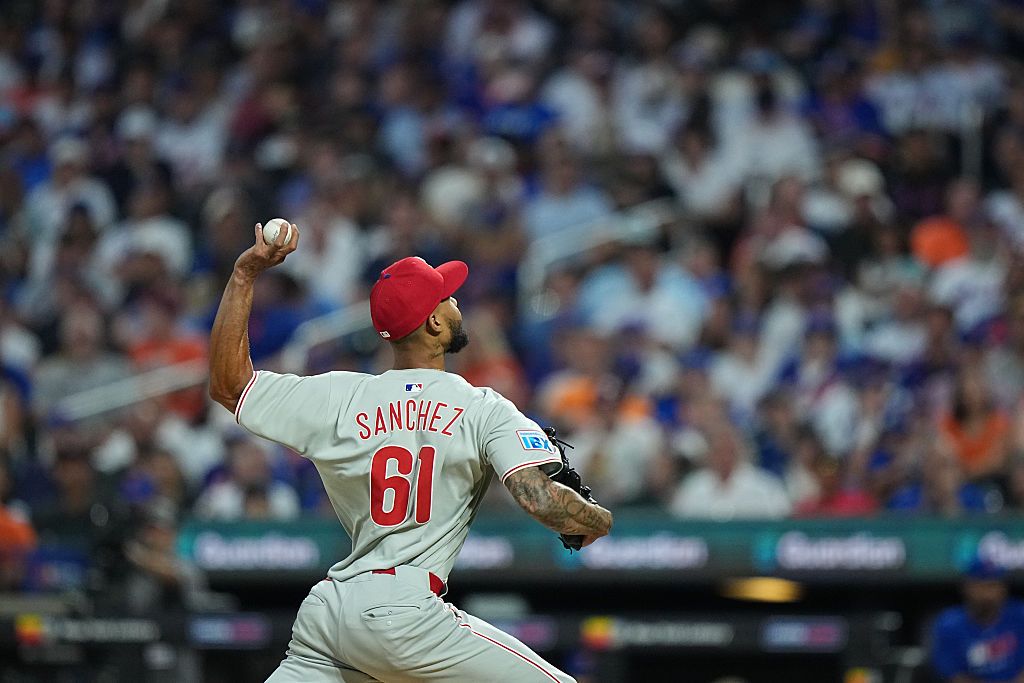
Cristopher Sánchez has allowed more first-inning hits, but almost none of his trouble begins with lost command. He has surrendered 26 hits and three homers across 21 opening frames while issuing only two walks. His 19 strikeouts against those two walks create a 9.50 ratio. Sánchez also carries a 2.71 ERA and 151 strikeouts overall, giving Philadelphia a starter capable of surviving the Yankees’ right-handed power without placing extra runners aboard.
The danger comes from Citizens Bank Park and two top-heavy orders. This cannot be priced like a low-total game. The value rests in both starters forcing the opponent to earn everything through contact. Warren and Sánchez have combined for 46 first-inning strikeouts against only six walks across 40 starts. Their combined opening-frame WHIP sits near 1.18 despite facing the opponent’s best hitters every time.
Sánchez’s ground-ball shape also reduces the easiest scoring path for New York. Warren attacks aggressively enough to avoid the walk-single-extra-base-hit sequence that ruins many NRFIs. The home-run threat remains meaningful, so this becomes a price-sensitive position instead of the card’s largest wager.
Blue Jays vs. Red Sox (-140)
Kevin Gausman and Ranger Suárez bring stronger first-inning profiles than their matchup environment suggests. Gausman has allowed 25 hits, two home runs, and eight walks across 21 opening frames, with 18 strikeouts. The hit count is imperfect, but his two homers allowed across 21 first innings provide meaningful protection at Fenway. He also owns 117 strikeouts this season, preserving an escape route when traffic develops.
Suárez has been sharper. He has permitted 17 hits, two homers, and five walks across 17 first innings while striking out 22. That gives him a 4.40 strikeout-to-walk ratio and only 24 baserunners across 17 opening frames. His full-season line includes a 3.15 ERA, 1.16 WHIP, 25.8% strikeout rate, and only five homers allowed across 91.1 innings.
The two starters have combined to allow four first-inning home runs across 38 starts. That matters in a park where one elevated mistake can settle the market immediately. Their combined opening-frame line includes 42 hits, 13 walks, and 40 strikeouts across 38 innings. Suárez supplies the stronger half, while Gausman’s splitter gives him a legitimate put-away pitch against Boston’s left-handed bats.
Toronto scored six runs Saturday, but five arrived during the third inning. The first remained scoreless. Boston managed one hit for the entire game, while its lineup continued a difficult post-break stretch. That recent silence cannot carry the wager alone, though it strengthens a matchup already supported by first-inning home-run prevention.
Fenway and warm daytime conditions keep this below the first two selections. The available price must compensate for Toronto’s power and Boston’s home environment.
Padres vs. Marlins NRFI (-105)
San Diego has been one of baseball’s least productive first-inning offenses. The Padres are hitting .190/.291/.318 in opening frames, with only 12 home runs across 105 games. They have struck out 117 times in 428 plate appearances, a 27.3% rate, while scoring 52 first-inning runs. Their .609 opening-frame OPS reflects poor contact, limited extra-base damage, and too many empty plate appearances from the lineup’s premium positions.
Janson Junk’s 5.09 season ERA creates an ugly surface impression, but his first innings have been considerably more stable. Across 13 opening frames, Junk has allowed 14 hits, five walks, two home runs, and seven earned runs. That produces a 4.85 ERA and 1.46 WHIP, hardly dominant numbers, but the home-run exposure remains contained. His broader contact profile includes a 90.0 mph average exit velocity, 41.4% hard-hit rate, and 7.2% barrel rate. Junk’s command-and-contact approach fits far better against San Diego’s passive, strikeout-heavy opening offense than against a deeper lineup.
Walker Buehler supplies the stronger half of the wager. Across 20 first innings, he has allowed 16 hits, two home runs, and eight walks while striking out 22. That creates a 1.20 WHIP, a 2.75 strikeout-to-walk ratio, and only one first-inning homer per 10 starts. His 5.23 season ERA overstates the underlying contact damage somewhat. Buehler owns a .322 xwOBA allowed against a .332 actual mark, with an 8.5% barrel rate and 41.2% hard contact.
Buehler’s cutter provides the most useful pitch-level advantage. He throws it 24.1% of the time, and opponents have managed only a .230 xBA, .327 xSLG, and 32.8% hard-hit rate against it. That pitch gives him a dependable early-count strike and a contact-management weapon against Miami’s right-handed bats. Buehler has permitted only two opening-frame homers despite allowing louder overall contact later in games.
Miami’s first-inning offense is better than San Diego’s, though it remains manageable. The Marlins own a .241/.327/.399 opening-frame line, with 11 home runs and 48 runs across 105 games. Their .726 OPS carries some danger, especially through Otto Lopez and Kyle Stowers, but Miami has scored only four total runs during this series and enters on an 11-game losing streak. Saturday remained scoreless until the third inning, with San Diego’s damage also arriving later.
The closed roof removes Miami’s heat, humidity, and wind from the equation. That keeps the game inside loanDepot Park’s controlled environment and protects both pitchers from weather-assisted carry.