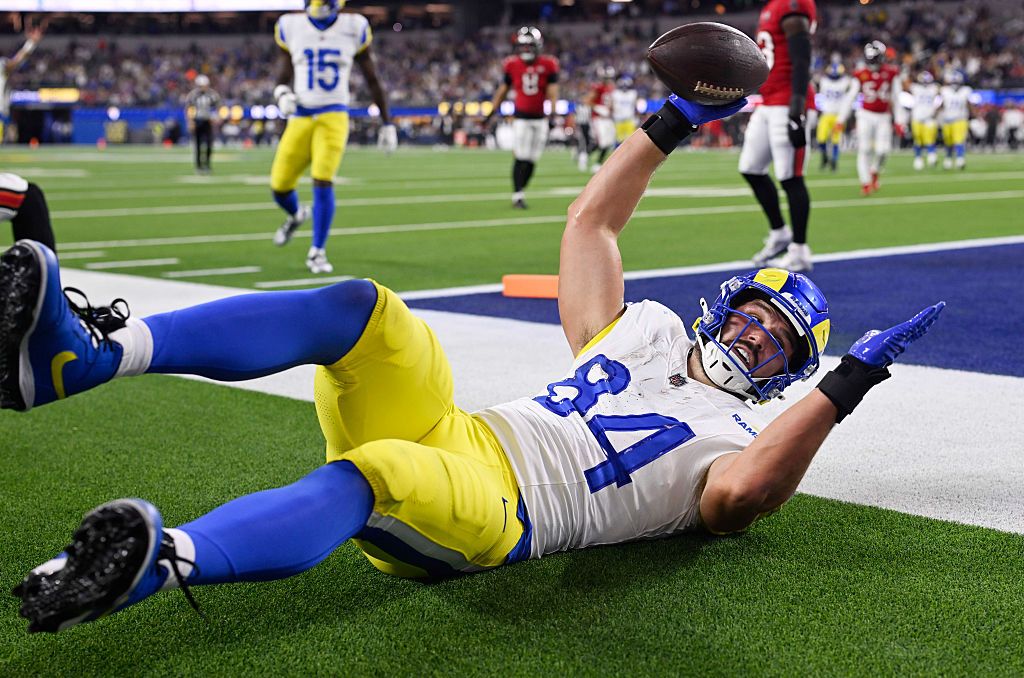
Week 13 tight end play feels like rummaging through leftover chaos. Thanksgiving box scores are already baked into standings, fantasy brackets hang on tiebreakers, and every seam route now leans on two playoff races at once. Some lineups are nursing fragile leads from Thursday explosions; others are staring at a deficit that only a double-digit tight end can erase. Coaches know the calendar. This is where the call sheet trims down to what actually travels: heavy eleven personnel, tight splits, sift motion, early-down play-action, and designed touches for the one mismatch they trust when the season tilts. Tight ends who own those calls stay on the field for every leverage snap; tight ends who only decorate formations get squeezed to the margins. Through that lens, three tight ends on this Sunday slate demand a green light in Week 13—and two need to take the bench.
Follow my handle @dansby_edits for more fantasy football advice, as well as plenty of NFL and college football betting goodies.
Start ‘Em
Colby Parkinson, Los Angeles Rams (Carolina Panthers)
Colby Parkinson is what happens when a role player turns every target into a haymaker. He sits at +9.70 total EPA with +0.462 EPA per target and a 71.4% success rate, absurd efficiency even before you remember this is a tight end, not a slot receiver. That line comes on 21 targets and 19 catches, a 90.5% catch rate that screams trust from Matthew Stafford and trust from Sean McVay in the routes they hand him.
The red-zone profile is even louder. Parkinson has nine receptions on ten red-zone targets, which is basically cheat-code territory. When the Rams get inside the 20, he functions like a power back in a tight end body: efficient, on time, brutally simple. Carolina has already coughed up 65 catches, 799 yards, and five touchdowns to tight ends, bottom-ten across every fantasy leaderboard. They are light in the middle of the field, light in the tackling, and living on a pass rush that rarely hits Stafford’s tier of pre-snap control.
The spread tells the rest of the story. Los Angeles is laying a big number and should live in scoring range all afternoon. That is the exact script where Parkinson’s “limited” volume matters more than raw targets. He is not grinding five-yard outs on second-and-seven; he is catching seam balls, boots, and red-zone daggers.
In PPR formats, Colby Parkinson should start over every fringe option outside the clear top tier. The role is narrow, but every snap he gets carries touchdown oxygen.
Dalton Schultz, Houston Texans (Indianapolis Colts)
Dalton Schultz is the metronome this slate needs. Seventy-two targets, 52 receptions, 497 yards, and a profile that hums in both volume and value. The EPA sheet backs it up: +23.78 total EPA at +0.330 EPA per target with a 56.9% success rate. That is not empty PPR fluff; more than half his looks move the chains or tilt the scoreboard. A 72.2% catch rate keeps C.J. Stroud on schedule and keeps Schultz on the field in every serious situation.
Red zone work does not pop like Colby Parkinson’s, but it still matters. Three receptions on seven red zone targets means the Texans trust him when the field compresses, even if the box score has not detonated yet. Indianapolis is the perfect correction spot. The Colts sit near the top of the league in fantasy points allowed to tight ends, already bleeding around 70 catches, close to 800 yards, and five touchdowns to the position. Linebackers and safeties get stretched thin by boundary threats, and tight ends eat the leftovers between the numbers.
Game script leans in his favor. Houston is live in the AFC seeding race and will not treat this like a run-and-hide spot. Stroud’s efficiency plus Indy’s willingness to give up chunk gains to tight ends creates a runway for eight or nine targets without a wild outlier.
In full PPR, Dalton Schultz belongs firmly inside the top eight at the position in Week 13 and should start over touchdown-or-bust options.
Juwan Johnson, New Orleans Saints (Miami Dolphins)
Juwan Johnson is the kind of tight end who quietly tilts a week. The raw line already plays: 67 targets, 49 receptions, 537 yards, three touchdowns. Underneath it, the EPA sheet glows. He sits at +19.25 total EPA with +0.287 EPA per target and a 55.2% success rate, meaning more than half his looks create real positive value. A 73.1% catch rate on that kind of volume is exactly what an unstable offense needs to stay on schedule.
The shape of his production matters. Johnson’s 11.0 yards per catch is the highest among this start group, turning tight end usage into wideout-level chunk plays. He is not just catching flares and hooks; he is bending seams, working crossers, and ripping intermediate windows that punish linebackers who step downhill. In the red zone he has converted four of seven targets, a solid 57.1% hit rate that keeps touchdown equity live every week, even if the totals lag behind an outlier like George Kittle.
Miami is the right amplifier. The Dolphins sit near the top of the league in fantasy points allowed to tight ends, repeatedly getting nicked between the numbers while safeties lean toward outside speed. Their games also tend to expand in pace and volume, forcing opponents to match tempo. That is perfect for a tight end who already owns steady targets and explosive per-catch numbers.
In full PPR, Juwan Johnson belongs in Week 13 lineups over touchdown-or-bust dart throws and low-volume “block first” options. The blend of role, efficiency, and environment is too strong to fade.
Sit ‘Em
George Kittle, San Francisco 49ers (Cleveland Browns)
George Kittle’s profile is almost unfair. Thirty-three catches on 40 targets, an 82.5% catch rate, and a 65.0% success rate. The EPA sheet is even filthier: +30.03 total EPA, a league-warping +0.751 EPA per target. Perfect in the red zone, nine receptions on nine red zone targets. Every time the ball finds him, the offense jumps a full rung up the ladder. On talent and efficiency, this is still one of the best tight ends alive.
Week 13 is exactly the kind of spot where that truth can mislead. Cleveland allows roughly 273.0 yards per game and only 170.7 passing yards, sitting near the very top of every pass-defense metric. The pass rush already owns 42 sacks, which means routes do not get the luxury of fully blooming. San Francisco is also perfectly comfortable treating Kittle as a sixth offensive lineman for long stretches, especially against a front this violent. That combination creates brutal volume risk.
The game total hovers in the high thirties, signaling a rock fight, not a fireworks show. San Francisco can lean on the ground game, the screen game, and defense, never needing to chase points or spam high-risk seams into tight coverage. Kittle can play well in real life and still leave a fantasy crater.
Kyle Pitts, Atlanta Falcons (New York Jets)
Kyle Pitts still looks like a superhero in pads and a land mine in spreadsheets. He has 67 targets and 49 catches, which should scream locked-in starter. Instead, the EPA page throws a flag. Pitts sits at -4.16 total EPA with -0.062 EPA per target and a 46.3% success rate, the only negative profile in this tight end group. Nearly half of his looks are empty calories. The volume is real; the value is not.
The red zone does not fix it. He has two receptions on five red-zone targets, which sounds passable but feels thin for a supposed alpha. Atlanta treats him like a featured route runner between the 20s and an accessory near the goal line. That split is exactly how tight ends sink lineups: plenty of touches, not enough touchdowns.
The matchup tightens the screws further. New York ranks in the top 10 in passing yards allowed and forces grimy, low-possession games. Corners squeeze outside receivers, safeties squat on seams, and the Falcons’ staff leans back into a run-heavy shell whenever script allows. That approach feeds running backs and leaves Pitts running routes that rarely cash.
In standard one-tight-end formats for Week 13, Kyle Pitts profiles as a bench option unless league depth makes alternatives impossible.