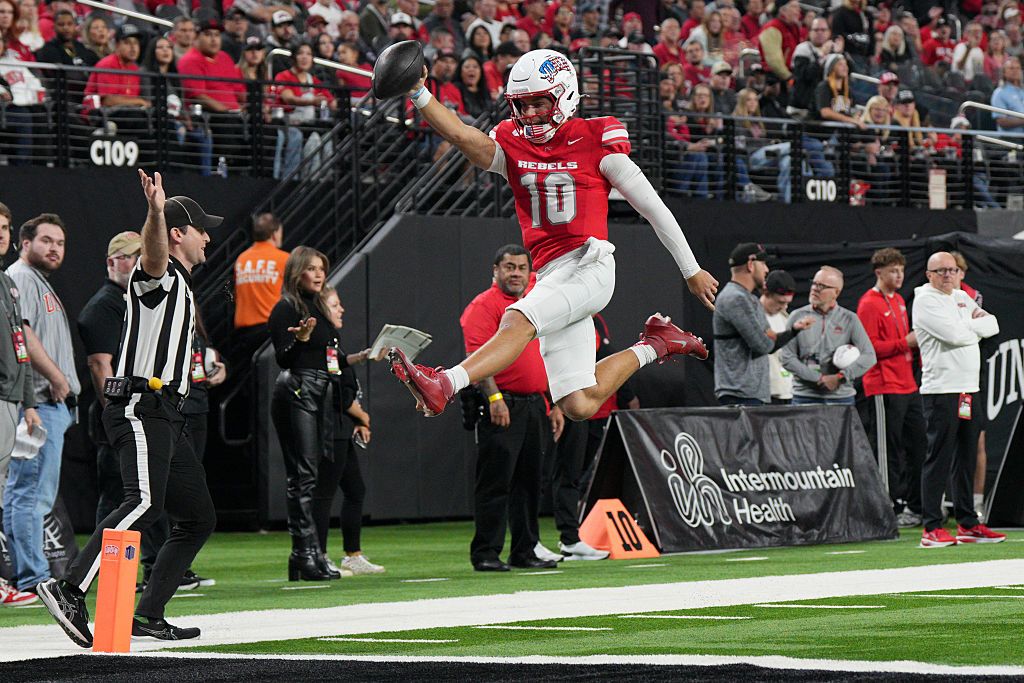
Allegiant at night, at least for NCAA teams, always brings that air of a high-scoring lab for the Mountain West. UNLV and Hawaii arrive with matching urgency, chasing a title lane and carrying offenses built to light bulbs. The Golden Pineapple is a prop; the real prize is staying alive in the conference traffic jam. Under that roof there is no weather mercy, only clean footing, clear sightlines, and scoreboards begging for stress. Both staffs know a low-possession rock fight suits neither roster, which nudges this thing toward volume and shots. Below is my prediction for CFB Week 13’s football game between the UNLV Rebels and the Hawaii Rainbow Warriors.
Here’s how I’ll play it. I’ll be pumping out these predictions for individual games all season, with plenty of coverage here on DraftKings Network. Follow my handle @dansby_edits for more betting plays.
UNLV vs. Hawaii prediction, preview
UNLV’s offense is the cleanest structure on the field, almost 460 yards and 36.6 points per game. They average 6.88 yards per snap and 0.532 points per play, numbers that belong in ranked company. That balance matters; 201.3 rushing yards and 258 through the air keep Hawaii from keying one direction. Anthony Colandrea has cleared 2,500 passing yards with another 500-plus on the ground, so the quarterback alone forces eleven-man math. Jai’den Thomas sits on 780 rushing yards and 173 receiving, and his hamstring tag still hovers over the plan. If he dresses, he joins Jaylon Glover and Keyvone Lee to keep fresh legs hammering light boxes. Outside, Jaden Bradley’s 712 receiving yards pace the room while Troy Omeire and DaeDae Reynolds both sit north of 380. Every formation hides multiple eight-target candidates when that trio is healthy. Third downs stay favorable because they convert 46.9%, staying ahead of schedule and stacking drives instead of trading punts. Red-zone trips rarely die; they cash just over 91% and finish with touchdowns often enough to validate the yardage. Hawaii’s defense is competent but not smothering, mid-twenties in points allowed, roughly 360 yards, 5.7 yards per snap. Against this top-twenty offense with that symmetry and that many proven producers, competent usually just means slower bleeding.
Hawaii brings the counter from the sky, living in a 62% pass rate and around 300 passing yards per night. Micah Alejado has 2,380 passing yards, third in the league, and he is throwing into a room that keeps winning. Jackson Harris has stacked five straight 100-yard games and ten touchdowns, real WR1-type production against this schedule. Pofele Ashlock sits top-eight in conference yardage and already logged a 113-yard, three-score night. Landon Sims adds roughly 720 scrimmage yards and five touchdowns as the lone real ground threat defenses must honor. They still reach roughly 414 yards and 31.3 points, about six yards per snap, and almost never waste red-zone trips. Third downs behave the same; they convert 46.4% and stay on schedule more than not. Once inside the red zone they score on 97% of drives, with Kansei Matsuzawa perfect on field goals. UNLV’s defense is the problem side, 448.6 yards allowed, 31 points, and an SP+ grade outside the top seventy. They give up explosives on the ground and through the air, yet lean on one quirky strength. Opponents convert only 29% on third down, which bends drives without actually erasing yardage. Against this Hawaii passing volume and that receiver form, that pressure spike can cut both ways. It either kills drives outright or hands short fields that drag the total upward.
Hawaii vs. UNLV pick, best bet
UNLV’s defense has lived at 6.8% sacks overall, then spiked above 13% across the last three games. If they keep hitting 15% in single nights, and Alejado sees only obvious-dropback leverage, possessions disappear quickly. Hawaii brings just nine sacks all season, so a one-sided pressure map is the cleanest under-friendly angle. Both staffs know a loss almost ends the title shot, which can nudge fourth-down decisions toward caution, not conviction. You can sketch a night where field goals stack, Hawaii’s coverage holds, and 70 points never seriously threaten the screen. I still think that version ignores how both offenses keep creating short-yardage thirds and red-zone entries almost by habit. UNLV rarely punts when the script stays balanced; Hawaii’s red-zone streak and turnover habit keep the scoreboard breathing. That combination doesn’t sound like long, silent stretches, especially under a roof that never steals wind or footing.
I expect UNLV to lean into its balance, pounding downhill early then stressing Hawaii with glance, cross, and shot structures. They carry an offense SP+ sitting in the mid-20s nationally, and that rarely stays trapped below 30 at home. Hawaii answers by spreading the field, letting Alejado spam quick game, choice, and verticals that punish single-match mistakes. They’ve cleared 30 in five straight, and that run includes comfortable wins and comeback scripts, not just one game state. Drives will occasionally die in the backfield, especially for Hawaii, but short fields from sacks or picks still feed totals. UNLV’s third-down defense living around top five nationally means more fourth-and-mediums, not guaranteed escapes from scoring range. Matsuzawa’s perfect field-goal card, plus UNLV’s willingness to finish drives on the ground, keeps three points constantly available. The scoreboard rhythm feels more like traded flurries than one clean runaway, with each side stacking four or five bursts. In that world, I want the points themselves, not a side sweating every fourth-quarter timeout and short-yardage call.
I’ll ride the over 64.5 and call it UNLV 38, Hawaii 34 in a proper late-night shootout.
Best bet: UNLV vs. Hawaii o64.5 total points (-110)
Tail it with me in the DKN Betting Group here!