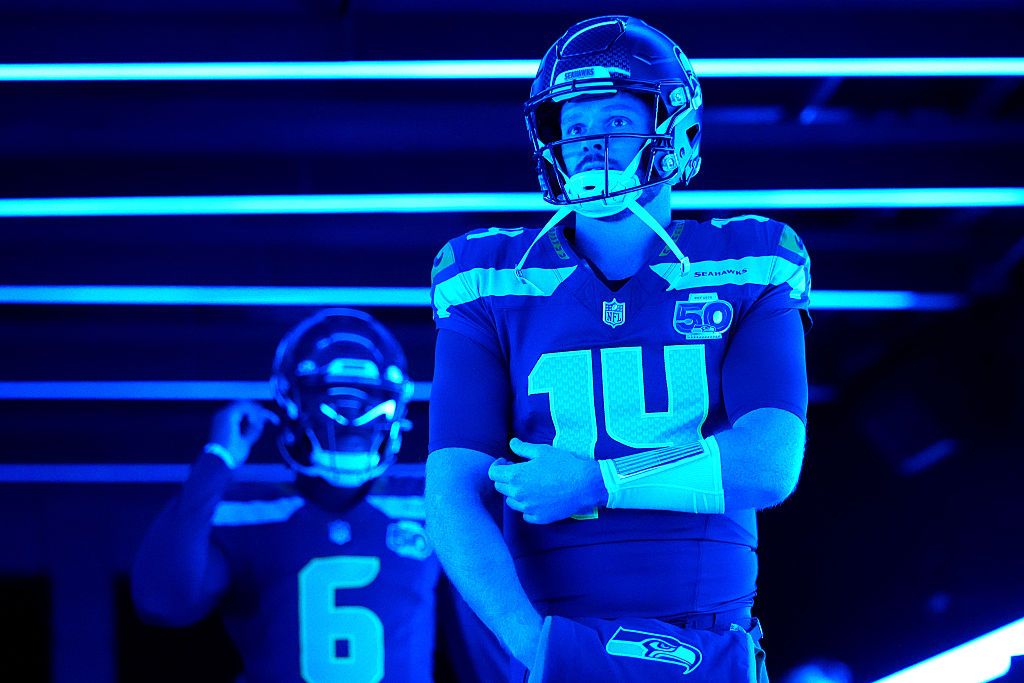
Week 11 is a sharper November cut—plans are set, injuries harden into identity, and coordinators trade flash for answers. Madrid wakes first with Commanders–Dolphins, a slick overseas window that tends to juice scripted aggression and fourth-down conviction. Houston reshapes the map again: C.J. Stroud stays in protocol, so Davis Mills likely gets Tennessee with a defense that invites long downs and patient sequencing. New York flips the script entirely—Brian Daboll out, Mike Kafka in, and Jameis Winston poised to start against Green Bay—so we’re pricing a brand-new sideline voice and a different risk profile under center. The divisional spine carries weight late: Ravens–Browns and Chiefs–Broncos compress quarterback ceilings with pass-rush honesty and red-zone stinginess, while Seattle–L.A. and Chargers–Jaguars lean pace and layered shot menus. At SoFi, Stafford’s second-level daggers collide with Darnold’s Kubiak-tuned rhythm—L.A. rotating match and quarters to squeeze seams, Seattle answering with motion, condensed splits, and play-action crossers. Protection will choose the winner: if the Rams’ edges dent timing, Stafford’s quick game and option routes keep serve; if Seattle’s stretch and keeper game hold second-level eyes, Darnold layers digs and glance into clean windows. That duel sits at the center of the NFC’s seeding posture. The bye trims options (Colts, Saints), but the theme holds: ride clean-pocket distributors and creators whose legs convert first downs, and fade big names stepping into elite defensive geometry. With that context, I’ve got three quarterbacks to start this week; two to sit.
Follow my handle @dansby_edits for more fantasy football advice, as well as plenty of NFL and college football betting goodies.
Start ‘Em
Jordan Love, Green Bay Packers (at New York Giants)
Jordan Love enters Sunday hot and efficient, and the matchup cooperates. He sits third in EPA/play at 0.24, with a 49.6% success rate, 2.67s time-to-throw, and a stingy 4.44% sack rate—quarterbacking that translates in any script. He’s also completing 68.9% at 7.9 YPA with a 13-to-3 TD:INT line, totaling 2,247 yards on 286 attempts.
The Giants’ defense has bled steady value through the air: +0.04 EPA/pass, 64.5% completions allowed, and a 5.29% sack rate. That combination rarely dents rhythm throws or play-action crossers. It’s also a unit conceding 16 passing scores already, which keeps Love’s touchdown equity healthy even if the total stays modest. They’re allowing 230.9 opponent passing yards per game, reinforcing the on-schedule nature of this spot.
Green Bay’s pass game is trimmed but functional. Tucker Kraft’s ACL loss consolidates tight end routes under Luke Musgrave, who handled TE1 duties on Monday and should stay featured in LaFleur’s middle-field menu. With Kraft out for the season, Musgrave’s role expanded immediately, and Green Bay pushed to its season-high usage of 11 personnel last week. Expect plenty of 11 again, with Romeo Doubs steady outside and Christian Watson re-established in the vertical/over routes. Injuries to Jayden Reed (collarbone) and management for Dontayvion Wicks (calf) and rookie Matthew Golden (shoulder) further condense targets toward Doubs, Watson, and Musgrave.
Game context supports volume and red-zone looks. The Packers are favored by a touchdown at MetLife, and New York’s offense is turning to Jameis Winston under interim head coach Mike Kafka. Love’s floor rises behind a clean pocket against a defense that’s struggled to finish rushes; the ceiling comes from Green Bay’s shot structure off run looks against a group allowing positive passing EPA. Market totals sit 43.5 with Green Bay −7, matching the efficiency edges on both sides of the ball.
Justin Herbert, Los Angeles Chargers (at Jacksonville Jaguars)
Justin Herbert is a start for me at Jacksonville because the shape of this matchup flatters his skill set. He arrives with 2,610 yards (second), 19 touchdowns, and a 63.6 QBR, a steady drumbeat of volume that survived a physical win over Pittsburgh, where the Chargers leaned into motion, quick-game, and timely shots while Ladd McConkey posted 107 and a score and Keenan Allen kept the chains honest. The runway stays clear in Duval. Jacksonville has blitzed heavily over the last five games (35.8%) yet owns the league’s lowest sack rate in that span (2.6%), and even those heat calls only generate a middling pressure rate. That is the exact profile Herbert punishes: ID the pressure, throw behind it, stack first downs.
Protection context matters, and it pushes me further toward Herbert. Joe Alt is out for the season after ankle surgery, and the Chargers’ pass-block win rate dips to the league’s basement without him. Roman and Harbaugh have compensated with tempo, under-center play-action, and backs in release—answers that marry with Jacksonville’s rush-without-finish trend. Even if the Jags sit back, this defense has played bottom-third ball by yardage allowed, so the intermediate windows should stay available on daggers, glance, and deep crossers.
Herbert’s options are live and layered. McConkey stretches spaces on crossers and speed-cuts (questionable but trending), Allen owns the option tree on third down, and the backs give clean outlets against simulated pressure. The schedule and scene cooperate, too: Chargers at Jaguars in Week 11, likely a one-score script that keeps Herbert throwing through the fourth. I expect efficient volume and multi-touchdown ceiling; in DK, double-stacks with Allen/McConkey fit the tape and the tendencies.
Sam Darnold, Seattle Seahawks (at Los Angeles Rams)
Sam Darnold is a start at the Rams because form and structure align. He enters Week 11 with 2,262 yards (7th), 17 touchdowns (t-7th), and a league-best 77.6 QBR, an efficiency spine that has traveled—Seattle is 4–0 on the road—including 21-of-24 for 330 and four at Washington and a clean, explosive follow-up against Arizona where game flow capped volume at 10-for-12, 178 yards. Seattle’s offense under Klint Kubiak marries under-center, outside-zone rhythm with play-action crossers and quick-game answers; the preseason already telegraphed that shift, and the early-season splits have held with more UC and play-action in the base menu.
The matchup is real, not prohibitive. Chris Shula’s defense is disciplined in the red zone—46.43% TDs allowed (No. 2)—and generally keeps a lid on explosives, but it wins more with structure than all-out heat: 30.4% blitz rate (18th), with a Cover-3/closed-post backbone and post-snap rotations. They’ve also kept opponent completions modest at 23.1 per game (No. 26) while allowing only 17.0 points per game (No. 2). That profile invites timing throws, crossers, and play-action glance where Darnold has been decisive. Jared Verse headlines the rush with real juice—40 pressures and an 84.4 pass-rush grade in recent reports—so the onus is on Seattle to handle edges without inviting five- and six-man heat.
His options are live and varied. Jaxon Smith-Njigba sits at 63 for 1,041 and threatens every blade outside; Cooper Kupp works the option tree at 26-367-1, while newly acquired Rashid Shaheed brings vertical stress after posting 44-499-2 with New Orleans before the trade. AJ Barner (21-236-4) offers a seam and chip-release outlet that fits Kubiak’s under-center play-action, with rookie Elijah Arroyo rotating as a secondary Y (14-174-1). That mix stresses rules across quarters and match-three, especially when corners pass off crossers.
Game state helps. Seahawks–Rams lands Sunday at SoFi with division stakes and a likely one-score script that sustains attempts. Layer Seattle’s surge—27.9 points per game (No. 5)—against L.A.’s bend-but-don’t-break red-zone profile, and you get efficient drives with bankable third-down answers. I’m starting Darnold for efficient volume and multiple touchdowns.
Sit ‘Em
Patrick Mahomes, Kansas City Chiefs (at Denver Broncos)
This is the rare week I step off Mahomes. Denver’s defense is playing out of its mind, sitting second in defensive EPA/play and first in opponent red-zone TD rate at 37.5%. That combination strangles ceiling, especially on the road at altitude. The Broncos create disruption without living on blitz, sending extra rushers on 24% of dropbacks and still piling up 240 total pressures while keeping coverage structures intact. That lets them spin to two-high and match late—split-safety looks on over 50% of snaps—forcing a patience game where explosives die on the vine.
Mahomes remains excellent—2,349 yards, 17 touchdowns, 74.5 QBR—but this environment trims fat from a fantasy line. Kansas City’s recent answers have leaned quick game and RPO glance to manage protection, which plays into Denver’s speed and tackling layers. The Broncos have squeezed money downs—only 35% allowed on third—and boxed teams in the red area all fall, pairing that stinginess with league-best red-zone results. Expect drives to stall around the fringe and for field goals to replace touchdowns; opponents attempt roughly 2.2 field goals per game against this unit.
The pass rush is real, and it finishes: Denver’s front has produced a top-tier sack and pressure profile with an 8.1% team sack rate while avoiding reckless heat, keeping seven in coverage and closing windows. That’s the specific look that dulls Kansas City’s YAC engine and caps spike weeks even when completion rate climbs. If you must play a Chiefs pass catcher, lean target accumulation over deep-shot hunting. The median outcome looks like efficient completions, muted yards after catch, and a box score closer to 230–1–0 than his season pace. In seasonal formats, pivot to a healthy streamer with a softer pressure profile and friendlier red-zone outlook—this matchup is built to compress even elite quarterbacks.
Lamar Jackson, Baltimore Ravens (at Cleveland Browns)
This is a ceiling squeeze, not a talent take. Cleveland is playing suffocating ball: second in defensive EPA/play, 37% pressure rate, and a 26% blitz rate that still yields an 8.2% team sack rate. That four-man heat lets Jim Schwartz keep coverage honest—split-safety or quarters on more than half of snaps—and close windows late. Pair it with a 56.0% opponent red-zone TD rate and you get a game script that forces patience, bleeds snaps, and trims spike outcomes.
The matchup hits Jackson where fantasy lines fatten. Under pressure, his efficiency dips—5.8 YPA under heat vs 8.4 when clean—and Cleveland drives that lever with edges that win without help. They’ve also been nails on money downs, allowing 36% conversions on third and holding opponents to 5.7 net yards per attempt. Baltimore’s own recent profile trends conservative inside the 20—2.8 red-zone trips per game, 48% TDs over the last month—which intersects poorly with a unit that rallies to scramble drills and closes check-downs before YAC can stack.
Cleveland’s rush finishes and the back end erases freebies. Myles Garrett commands doubles north of 30%, yet the Browns still generate a 34% pressure rate with four; that’s the exact look that dulls Baltimore’s play-action crossers and limits designed-run explosives. Expect longer drives to stall at the fringe and for 2–3 field-goal attempts to replace touchdowns. If you must play a Raven, prioritize volume over volatility—short-area targets, not deep-shot hunting. The median box for Jackson reads closer to 210–1–0 through the air with modest rushing than his season ceiling. In seasonal formats, pivot to a streamer facing a softer third-down defense and friendlier red-zone runway.