Five Lists of Fright, more like it! Happy Halloween to you good people, all your sweet teeth. Here in Fantasyland, Week 9 creeps in like bogeyman fog over a graveyard of byes—Browns, Jets, Eagles, and Buccaneers vanish into the crypt, thinning star power and forcing managers to conjure leverage from the bench. The non-contact-injury reaper just scythed Travis Hunter’s knees, tightening Jacksonville’s target tree and galvanizing Brian Thomas Jr.’s boo(!)m odds against Las Vegas. In New England, a cauldron bubbles: Rhamondre Stevenson’s been ruled out for Sunday’s game, so TreVeyon Henderson’s likely workload rises from the tomb—all fangs, no mummy wrap—against Atlanta. This week’s marquee, though, is a daunting horror-flick sequel—Chiefs at Bills—where the late-window witching hour should detonate into demonic possession(s) and some playoff seeding toil & trouble. Elsewhere, Washington’s long and fearful early-season darkness sees the lightswitch flipped back with Jayden Daniels’ return, which adds some downfield teeth to their bloodthirsty offense. They’ll need it against this shadowy Seahawks villain, who might just become the full Bathsheba by week’s end. And so the playoff hunt rolls its bones across the map: usage condenses, red-zone hierarchies shift, and ascending DSTs lurk in the longest reaches. Let’s get right to my Five Lists of Five: Week 9 edition, here, and truly summon ourselves some stashes, dart throws, breakouts, and, probably most importantly, as always, running back sleepers for fantasy football Week 9.
The refrain remains the same—All I want is for you to be better than your friends. You’re going to be surrounded by them on Sunday, probably. How sweet would it be if you could be sure you’ve checked every box possible that might guarantee you a resounding victory this week? Some kick-your-feet-up insights? I’ve got some. And I know my audience. The smoke-break audience. The quick-scan-of-the-phone-on-the-way-to-the-fridge audience. The I-ain’t-reading-all-that-but-good-luck folk. I’m a man of the people.
And so: the Five Lists of Five series. Think of these as byte-sized, two-minutes-to-yourself lists to scan during your weekend as you foam at the mouth for any competitive fantasy edge. As much relevant analysis as I can fit into, like, ~250 words per player.
Below: Top five smash starts for fantasy football Week 9. Must-starters based on matchup and sky-high ceilings.
Here are the other offerings from my 2025 Fantasy Football Five Lists of Five: Week 9 edition:
- Top five breakout running backs for Week 9 of 2025 fantasy football
- Top five breakout wide receivers for 2025 fantasy football Week 9
- Top five WR/CB matchups to target for Week 9 fantasy football
- Top five fantasy football streamers for NFL Week 9
Follow my handle @dansby_edits for all of my fantasy football content—as well as plenty of NFL and College Football betting goodies—all season long.
Top five smash starts for Week 9 of 2025 fantasy football
Jordan Addison, WR, Minnesota Vikings
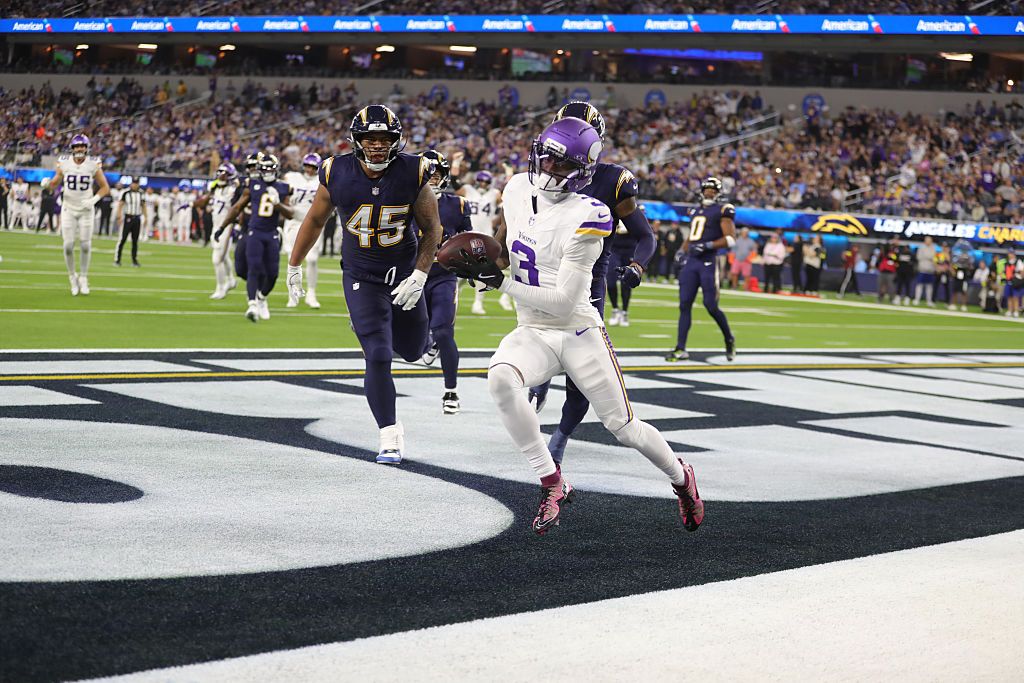
Since returning, he’s been the WR7 in fantasy points per game, with an 18.8% target share, 33.7% air-yard share, and 77.3 receiving yards per game. He owns a 23.8% first-read share, seven red-zone targets, and six deep targets across four games—bankable usage with multiple scoring paths. The coverage math helps. Detroit plays single-high at the seventh-highest rate (56.9%), and against single-high Addison has produced 1.45 yards per route run. The Lions also sit top-10 in man rate (33.3%), and Addison has answered man with 114 routes, 17 catches, 260 yards, a 21.9% target rate, and 0.48 PPR points per route.
Pressure will speed decisions and tilt looks toward defined separators. Minnesota has allowed the eighth-highest pressure rate (35.6%) and the second-most sacks (19), while Detroit ranks third in pass-rush win rate (58.5%), 10th in sacks (25), and 10th in pressure rate (38.5%). That environment funnels quick, first-read throws and crossers—routes Addison owns. Detroit’s secondary has been stingy to pure perimeter volume since Week 4 (ninth-fewest PPR points per target), but Addison’s role spans intermediate digs, overs, and schemed glance shots that attack space rather than static sideline wins.
Addison’s early-down separation versus man and single-high coverage schemes answers the Lions’ pressure with immediate, high-value targets. Expect Minnesota to lean motion and condensed splits to free him inside-out, then layer deep-intermediate play-action when protections hold. The usage floor is sticky, the leverage is favorable, and the coverage blueprint matches his strengths. Pencil in a sturdy WR2 line with real WR1 pop in Ford Field’s fast track.
Ladd McConkey, WR, Los Angeles Chargers
Since Week 5, he’s the WR6 in fantasy points per game with a 26.5% target share, 73.5 yards per game, 2.01 yards per route run, a 26.7% first-read share, eight red-zone looks, and five deep targets. That’s bankable volume in all the right places. The opponent tendencies match his strengths. Tennessee has played man on 17.4% of snaps and zone on 74.0%, and they sit bottom-ten in yards allowed per coverage snap and per target. Against man, McConkey owns a 26.3% target rate and 0.42 PPR points per route; versus zone, he’s at 17.9% and 0.31 PPR/RR—still strong, but his man answers are premium from condensed splits and motion. McConkey’s man-beating target rate marries with Tennessee’s per-target inefficiency for immediate, high-value volume.
The environment tilts positive. Los Angeles carries a 26.5-point team total and sits around a 9.5-point favorite, which sustains red-zone chances and scripted first-read usage. Even if the Titans dampen explosives with two-high looks, L.A. can feed McConkey on glances, speed-outs, and crossers that attack space. Pass-rush context helps. Trench metrics place Tennessee at a 39% pass-rush win rate (17th) and 30% run-stop win rate (21st), not the kind of front that erases timing. The floor is further stabilized by his season baseline: 43 receptions for 468 yards and three scores already, with 311 routes and 64 targets logged.
Add it up and you get sticky first-read volume, multi-path touchdown equity, and a defense that struggles per coverage snap. Start McConkey confidently as a WR2 with real WR1 ceiling in Nashville.
Kimani Vidal, RB, Los Angeles Chargers
Victor Frankenstein twice crucially encountered electricity in his vile endeavors, so we’ve got ourselves a second Bolt this week as a must-start: Kimani Vidal. Over his last two, he logged a 65.9% snap share and a 44% route share, averaging 17 touches and 86.5 total yards. He’s handled nine of ten Chargers red-zone rushes in that window, ranks second among 57 backs in explosive run rate, and sits 12th in yards after contact per attempt. He just dropped 117 rushing yards and his first touchdown in Week 8, confirming the role plus efficiency.
Tennessee is the exact defense to press that edge. The Titans have allowed 1,141 rushing yards on 233 attempts—4.9 yards per carry—and 14 rushing touchdowns, bottom-tier outputs through eight games. They’re also allowing 142.6 rushing yards per game, among the league’s worst clips. Their front ranks 21st in run-stop win rate at 30%, which pairs poorly with those leakage numbers. Vidal’s explosive rate and near-monopoly on red-zone carries meet a defense allowing 4.9 per rush and 14 scores.
Environment stacks more volume. Los Angeles is a 9.5-point favorite with a 43.5 total, implying a positive script and sustained red-zone trips. Tennessee enters on three straight double-digit losses, a profile that often invites fourth-quarter carry padding as opponents salt games away. Opponents have leaned into that tendency, running on 48.0% of snaps against the Titans—one of the highest opponent rush rates on the slate—while Tennessee’s front ranks just 30% in run-stop win rate (21st). Even if the Chargers’ line sits 26th in run-block win rate (69%), Vidal’s role has persisted and grown within a game flow that should stay run-friendly. If the scoreboard tracks the market, twenty touches are firmly in play.
The calculus is clean: sticky work near the goal line, explosive efficiency between the 20s, and a defense hemorrhaging rushing production. Start Vidal confidently as an RB2 with RB1 upside if Los Angeles controls tempo early.
George Kittle, TE, San Francisco 49ers
Kittle’s 2025 role has sharpened quickly: 69.1% route participation on 67 routes, a 13.3% target share, 13.7% first-read share, 9.0% air-yard share, two deep targets, and two red-zone looks across three games. He’s logged a 64% snap share to date, 81.8% catchable-target rate, 1.01 yards per route run, and 0.40 fantasy points per route.
The opponent profile invites tight end leverage. New York plays man at 37.5% and zone at 56.5%, with middle-closed (single-high) on 58.8% and middle-open (two-high) on 38.4% of snaps—coverages Shanahan routinely attacks with motioned crossers and play-action seams. The Giants’ defense ranks near the bottom in EPA/play allowed (-0.09) and permits a 68.0% opponent red-zone TD rate, a fertile scoring environment for a featured tight end. Their front wins at a middling 39% pass-rush win rate and 30% run-stop win rate, softening both protection math and downhill threats that force lighter hooks and conflicted safeties. While raw yards per pass attempt allowed sits at 6.3 (11th), the defense’s explosive-play leakage and overall efficiency drag create mismatch pockets between linebackers and rotating safeties.
Kittle’s first-read, motion-boosted crossers punish New York’s high man rate and single-high tendencies, exactly where the Giants allow red-zone conversions at 68%. Expect San Francisco to layer condensed splits and under-center play-action, spiking Kittle’s first-read share in the low-red and on intermediate seams. With a 48.5 total and consistent route volume, the path is clear: bankable usage, favorable coverage geometry, and a defense conceding touchdowns at an elevated clip.
Brian Thomas Jr., WR, Jacksonville Jaguars
Las Vegas’ coverage has cracked all season, ranking 31st in PFF coverage grade at 43.2. The Raiders play man at just 13.2% (30th) and zone at 78.4% (sixth), a heavy-zone diet that matches Thomas’s usage profile. Against zone, he’s logged 214 routes with 24 receptions and 269 yards, a 22.0% target rate and 0.27 PPR points per route. That’s 1.26 yards per route run, with volume flowing through quick-hitting in-breakers and glance shots. When opponents flip to man, his explosiveness spikes: 41 routes, three receptions, 96 yards, a 17.1% target rate, 0.31 PPR per route, and a blazing 2.34 yards per route run.
Micro matchup juice sweetens it. Raiders slot/inside corner Darnay Holmes has allowed 15 completions on 22 targets for 145 yards. Their safeties have been vulnerable in space, with Jeremy Chinn and Isaiah Pola-Mao each charged with four touchdowns allowed. That back-end profile pairs poorly with Jacksonville’s condensed tree after Travis Hunter went to injured reserve. Expect Brian Thomas Jr.’s first-read opportunities to tick up as Jacksonville leans on motion, stacks, and reduced splits to manufacture free access.
Thomas’s man-beating burst and zone-finding tempo collide with a defense sitting 31st in coverage grade and living in 78% zone. The geometry works: heavy-zone looks yield underneath rhythm, while the rare man snaps invite deep-intermediate aggression. With a friendly spread, clean touchdown paths, and identifiable coverage tells, the floor sits at WR2. If Jacksonville sustains pace and scoring position, those man looks appear often enough for a WR1 pop.