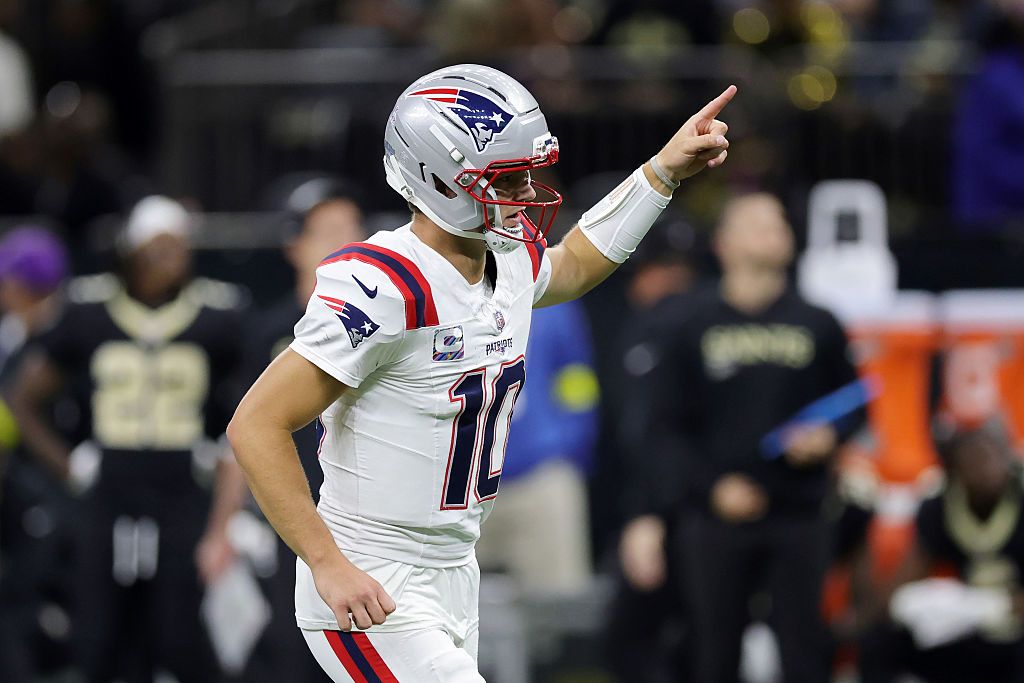
Week 7 is about separation—teams separating into who they are, and fantasy managers separating signal from noise. Offensive lines are banged up, pass rush win rates spike as rotations deepen, and QB play bifurcates: the rhythm throwers who beat the blitz with answers, and the creators who buy time and tax zone rules. That’s why we chase quarterbacks tied to clean pockets, quick-game precision, or real rushing equity—not just highlight arms. By mid-October, coordinators have enough film to self-scout and pivot tendencies, and that changes the board. In fantasy terms, raw talent still matters, but usage + leverage is the currency. Routes, first-read share, and red-zone role are beating name value for quarterbacks every week. And with so many devastating injuries to marquee quarterbacks—though the group is getting healthier week-by-week, luckily—I’ve got three quarterbacks you should start this week, and two you should sit.
Follow my handle @dansby_edits for more fantasy football advice, as well as plenty of NFL and college football betting goodies.
Start ‘Em
Drake Maye, New England Patriots (vs. Tennessee Titans)
Drake Maye’s ascent has been special, special stuff. Spectacular. Over his last five starts, he’s averaged 28.4 pass attempts, 276.2 yards, 2.1 touchdowns, and just 0.6 interceptions per game. Of those, his deep-ball splits are elite: 42% completion on throws 15+ air yards, which leads all QBs who’ve thrown 75+ deep passes. He also ranks top 4 in EPA per attempt from a clean pocket, showing that when left unpressured, he maximizes every down. Meanwhile, Tennessee ranks sixth-worst in adjusted pass defense when guarding deep (45+ yards), and their pressure rate is only 7% of dropbacks, among the lowest in the league. New England also runs 8.5 pass plays on first down per game, keeping Maye active early. Add in a middle-of-the-road rushing floor (he’s topped 25 rushing yards in three straight) and you get a QB who can score even if a few throws miss. If his volume slips, his accuracy picks up slack. In Week 7, he offers 4–6x upside, especially in a game that projects to be competitive and pass-tilted. He’s no longer a low-ceiling dart—he’s trending into reliable QB1/2 territory.
Layer in situational sharpness: Maye owns a 73% red-zone completion rate with a 7:1 TD:INT inside the 20, a 2.42s time-to-throw on rhythm calls, and a pressure-to-sack ratio under 16% (better than league average). On play-action, his YPA jumps by +2.1, and on third down he’s converting at 47% with a 102 passer rating. Tennessee allows a +8% explosive-pass rate over expectation; marry that with New England’s 54% early-down pass rate, and you’ve got a profile built for chunk-yardage spikes without sacrificing floor.
Jordan Love, Green Bay Packers (at Arizona Cardinals)
Love’s platform is built on efficient vertical accuracy and rhythm throws. He’s thrown eight touchdowns with only three INTs so far, with 1.5 passing TDs/game in his last four—tied for best in that sample. His completion rate on 16+ air-yard throws is 41%, and he leads QBs in deep-ball EPA per attempt. Arizona yields 10 deep TDs allowed, ranks 30th in opponent completion rate, and pressures on just 23% of pass snaps. Green Bay’s offense adds juice with 15 hurry-up snaps per game, overloading Arizona’s substitution flows. Watson and Doubs average 10.5 YPT on vertical routes, forcing the Cardinals to cover both seam and boundary threats. Love also trades well under duress: when pressured, his interception rate is still under 1.2%, one of the lowest among starters. His recent two games include 25+ attempts, 4 total TDs, and zero turnovers. Against a soft zone-and-rotation defense, Love is in this tier by matchup—safe floor, upside to flirt with QB1-line output.
Sink your teeth into his situation—Love owns a 104.8 red-zone passer rating with a 9.1% TD rate inside the 20 and posts +2.3 YPA on play-action (vs. non-PA), a signal LaFleur will lean into versus linebackers that bite. On third down he’s converting at 46% with a 7.8 YPA, and his time to throw (2.55s) syncs with Green Bay’s quick-glance verticals. The Cardinals allow a +7% explosive-pass rate over expectation and a 98.6 opponent rating when they don’t get pressure; they blitz at just 22%, further insulating Love’s clean-pocket edge. Projection: 260–285 yards, 2–3 TDs, and a top-10 weekly outcome if one deep shot lands.
Justin Fields, New York Jets (vs. Carolina Panthers)
Fields is the modern archetype for dual-threat chaos against static coverage. In 2025, he’s averaging 42.8 rushing yards per game (third among QBs) with four 20+ point fantasy outings, one of only three quarterbacks to clear that mark. His 68.2% completion rate on tight-window throws underscores his command in compressed zones, and he’s posted a 6.7% big-time throw rate over the past month, top-five among starters. Carolina’s defense gives him oxygen—they pressure on just 18% of dropbacks (bottom five) and allow 7.5 YPA on deep attempts, well above league average. Over the last three games, QBs facing the Panthers have combined for nine passing touchdowns, all with 100+ passer ratings.
New York’s tempo amplifies that advantage—the Jets average 46 dropbacks per game (fifth-most) and rank top-10 in neutral-script pass rate (59%) since Week 4. Fields’ RPO game thrives on that rhythm, as he averages 0.34 EPA per designed run and converts third downs at a 67% clip when rolling right. Even his scramble efficiency—1.8 yards per carry under pressure—forces defensive ends into hesitation, stretching contain lanes wide. Carolina’s linebackers have surrendered a 113.6 passer rating when targeted, so bootlegs and half-field reads will find daylight.
The schematic fit couldn’t be cleaner: a tempo offense meeting a passive zone unit with weak contain discipline. Expect 225–250 passing yards, 40–50 rushing, and at least two total touchdowns. The blend of structure and improvisation makes Fields a top-eight play with a legitimate 30-point ceiling if game flow tilts pass-heavy.
Sit ‘Em
Tua Tagovailoa, Miami Dolphins (at Cleveland Browns)
Tua’s profile is passable in middling matchups but gets crushed here. He’s logged 1,278 yards, 10 TD, five INTs and a 66% completion rate—but only two games above 18 fantasy points, and zero rushing yards beyond 10 yards. Cleveland yields only 6.4 YPA and has allowed just two QBs to surpass 14.7 fantasy points at home. They pressure on 31% of dropbacks with bracket coverage in 62% of passing snaps, neutralizing deep and intermediate windows. Waddle becomes his workhorse, but Cleveland’s bracket structures force separation and drain YAC. Without vertical stress, Tua’s adjusted separation falls 0.9 yards below expectation, and his red-zone share dips vs tougher defenses. In games vs top pass Ds, Tua’s fantasy PPG averages 12.8. Expect 225–235 passing yards, 0–1 TD, no rush boost. That’s benchable in standard formats—pivot to a higher-volume corridor.
Add the situational teeth: Tua’s aDOT drops nearly 1.6 yards against two-high, and his play-action YPA falls from 9.1 to 6.8 when defenses stay split-safety, which Cleveland does at a top-tier rate. His pressure-to-sack rate jumps from 14% to 23% versus simulated pressure—Cleveland majors in it—and his clean-pocket passer rating (102) craters to 74 when hurried. Inside the 20, the Dolphins’ red-zone TD rate without Tyreek is down to 45%, and Tua’s TD rate there has slid to 4.9% over the last month. The Browns allow just 47.8% third-down conversions on passes, and opponents complete only 58% between the numbers, the one area Miami must win. The ceiling math isn’t here; sit him.
Jaxson Dart, New York Giants (at Denver Broncos)
Dart’s rookie margins collapse in Denver. The Broncos generate a 13% sack rate and allow just 5.6 YPA, the stingiest mark in the league. Opposing QBs here average 178 yards and 4 combined scoring passes over six weeks. His pressure splits are brutal: 42% completion under pressure, with five INTs in limited attempts, giving a whopping 4.1% interception rate when under duress. The Giants’ WR corps beyond Waller is inconsistent, limiting stretch threats. Denver’s Cover-6 and delayed blitzes punish indecision; against single-high and pattern-match shells, Dart’s progression speed lags. Their offense runs 57% run rate, cutting opponent plays to ~56.7 snaps/game, shrinking his ceiling further. He’ll likely be neutralized into checkdowns and negative gains.
Add the situational teeth: Denver’s pressure-to-sack conversion (23%) is top-five, and they post a -0.18 EPA/dropback against, with opponents converting just 31% on third-and-6+ via the pass. Red-zone resistance is real—visiting QBs have produced a 37% TD rate inside the 20, and Denver’s two-high shells on money downs force late throws into robber help. Dart’s time-to-throw balloons past 3.0s when his first read is covered, and his on-target rate dips 10 percentage points outside structure. The Giants’ protection hasn’t traveled—35% pressure rate allowed on the road—so the pocket will muddy fast. Unless New York manufactures explosives via misdirection, you’re drawing dead for volume and efficiency. Sit the rookie and protect your floor.