Week 6 tight ends live in the gray area between scarcity and opportunity. The top of the position is volatile, the middle is injured, and most managers are staring at names that swing matchups by five PPR points either way. The edge comes from usage and opponent leverage, not brand names. Target share, red-zone equity, and snap rate—all of it matters more than reputation right now. Defenses like Buffalo, San Francisco, and Cleveland are eliminating seams with split-safety structure, while others—Carolina, Arizona, the Jets—keep hemorrhaging completions to the middle because of linebacker depth and motion confusion. That’s where the market inefficiency lives. This week demands that you identify who’s earning timing throws and option routes against those soft interiors and who’s walking into disguised shells that shrink the field. The data tells a simple story: tight ends attached to pace and heavy play-action setups are out-producing static offenses by nearly 32 % in expected fantasy points per route. So the calculus is clean, as it always is: chase volume, and sniff out high-leverage routes.
Follow my handle @dansby_edits for more fantasy football advice, as well as plenty of NFL and college football betting goodies.
Start ‘Em
Jake Ferguson, Dallas Cowboys (at Carolina Panthers)
Usage defines a fantasy tight end, and Ferguson’s usage borders on monopolistic. Through five weeks he’s logged 41 receptions for 272 yards and three touchdowns, a pace that would land near 95 catches across a full season. He leads all tight ends in receptions and red-zone targets, and he’s converted 77.3 % of those looks into either first downs or points. Since CeeDee Lamb’s ankle injury, Prescott’s progression has revolved around Ferguson—30 targets, 27 receptions, 171 yards, three TDs in that stretch—making him the functional WR1 in a passing game that ranks fifth in early-down success rate (54.8 %).
The matchup only sweetens the math. Carolina has allowed tight ends 14.8 PPR points per game, a +47 % matchup above league baseline, and has already yielded three scores and 328 yards to the position. Their hook-curl spacing is slow to close; play-action pulls linebackers two steps forward, leaving Ferguson wide enough lanes to dictate leverage. Dallas will use heavy personnel and motion to chase matchups, and Ferguson’s quick-out timing fits perfectly against Carolina’s soft-zone tendencies. In a week full of bye-week chaos, Ferguson remains elite value.
Tyler Warren, Indianapolis Colts (vs. Arizona Cadrinals)
Rookie tight ends rarely arrive fully formed, yet Warren already plays like a veteran mismatch. He’s produced 23 receptions, 307 yards, and one touchdown in his first five games—numbers that rank fourth among rookie TEs in history through Week 5—and he’s posted 70+ yards in three. Indianapolis has given him a legitimate WR2-level workload: 21 % target share, 1.97 yards per route run, and 4.8 yards after catch per grab, all top-eight at the position. At 6-foot-6, 253 pounds, his catch radius bails out Daniel Jones when protection collapses; Steichen calls him the “bootleg anchor,” which means Jones finds him on half-rolls, RPO slides, and delayed seam routes that punish flow defenders.
The Cardinals’ linebackers over-pursue and their safeties are late to midpoint rotations, leading to a defensive line that’s given up the fifth-most yards (323) and 2 touchdowns to tight ends. Combine that with Arizona’s 68.9 % completion rate allowed between the hashes, and you have Warren’s wheelhouse. Expect 6-8 targets, 5-7 catches, 60-80 yards, and a strong 40% chance at a score off play-action. In a position defined by volatility, Warren’s route volume and YAC efficiency make him rare steady profit. Start him.
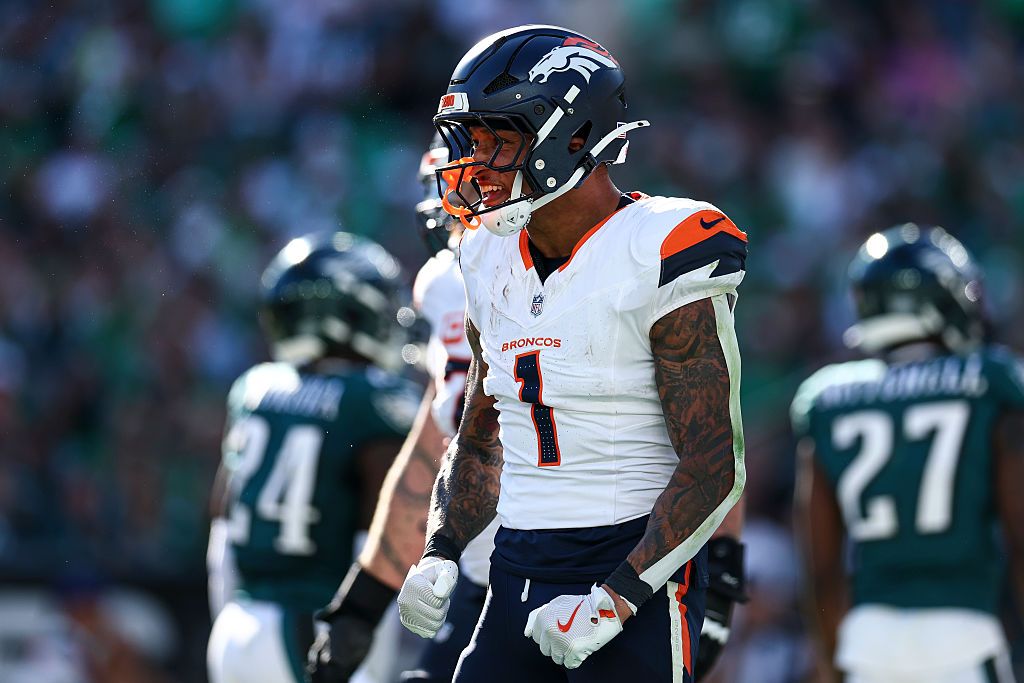
Evan Engram, Denver Broncos (vs. New York Jets)
The surface line is modest because the sample is small and interrupted, not because the role is empty. Engram missed time early with a back issue (inactive in Week 3) and has only recently resumed his full route inventory, yet he still sits at 12 receptions, 95 yards, one TD through four games, with last week’s 11-yard score the clearest signal that his red-zone usage is live again. Since returning, his deployment has trended where we want it: routes on roughly 80% of dropbacks, heavy slot usage, and a growing share of pressure-answer concepts that make him Bo Nix’s fastest completion.
The matchup does the rest. The Jets funnel targets inside because their perimeter corners squeeze the boundary; tight ends against New York have combined for 38 targets, 27 receptions, 202 yards, and five TDs — that’s 7.6 targets, 5.4 catches, 40.4 yards, and 1.0 TD per game allowed to the position. The call sheet fits Engram’s strengths: option, choice, and sit routes from condensed and bunch looks, plus motion to pry off leverage in the low red. Expect Denver to script him on early sticks to stabilize drives, then stack him on safeties in scoring range. In a week starved for stability, the role-plus-funnel combination pushes Engram into a top-eight outcome on volume alone — and the late-arriving explosiveness gives him a path to 15–18 PPR if the script tilts pass-heavy.
Sit ‘Em
Kyle Pitts, Atlanta Falcons (vs. Buffalo Bills)
The name still carries gravity; the 2025 context does not. Pitts enters Week 6 at 20 receptions, 205 yards, a single TD on 24 targets with an ~18% target share and ~1.6 yards per route run (TE9 in PPR per game so far, but fueled by short-area volume more than seams). His downfield usage remains thin—one deep target and only one red-zone target to date—which erodes ceiling in non-pristine matchups. Buffalo profiles as anything but pristine. They’ve played heavy split-safety looks at roughly 61% two-high and disguise rotations that delete seam access, the exact vertical third where Pitts historically turns air yards into chunk gains.
Through the early-season sample, Bills opponents have gotten almost nothing from the position; over Weeks 1–3, opposing tight ends produced 5, 10, and 17 receiving yards, with just one total TD allowed (Jeremy Ruckert)—the textbook image of a floor-sapping matchup. Even neutral scripts are rough: Arthur Smith’s passing tree tilts toward backs and slot crossers, and if Atlanta chases Josh Allen’s tempo, protection checks cap Pitts’ route depth and keep him working underneath. You’re effectively betting on a busted coverage to bail you out.
Cade Otton, Tampa Bay Buccaneers (at San Francisco 49ers)
The Week 5 pop (4 receptions, 81 yards) helped in real life more than it moved his fantasy profile. Through five weeks, Otton sits at 10 receptions, 115 yards, zippo TDs, which works out to 2.0 catches and 23.0 yards per game—numbers that demand either red-zone luck or a defensive funnel to crack lineups. San Francisco offers neither. By fantasy scoring, the 49ers have been roughly league-average vs TEs (8.2 FP/G allowed) across the opening five weeks, but that surface hides how their structure erases easy tight end answers: the edges crash boots, the second level (Fred Warner, basically) squeezes pivots/sticks, and the secondary rallies to tackle, keeping TE YAC suppressed. That’s precisely where Otton makes his living.
When Tampa faces fronts like this, route rate can dip below 60% as protection rules keep him attached; when he does release, simulated pressure plus late safety rotation take away his quick-game freebies. The result is low volume and thinner scoring equity than the average matchup suggests. Streaming tight end is about chasing bankable usage, not prayer. Bench Otton and pivot to a volume funnel like Ferguson or Warren, or ride a matchup funnel like Engram.