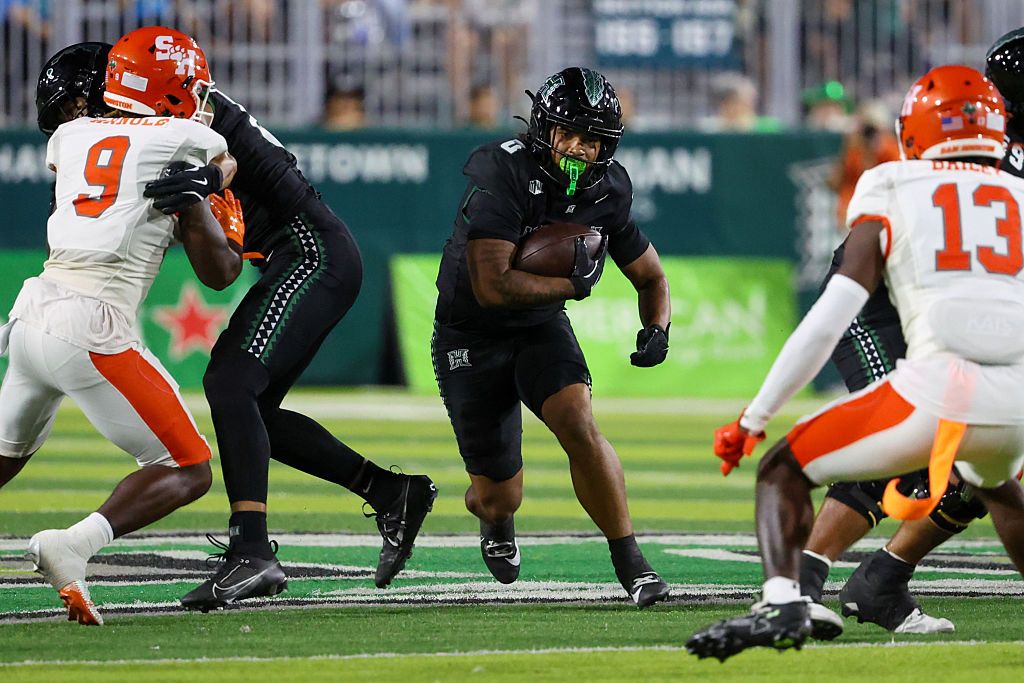
Hawaii (2–1) returns to the Clarence T.C. Ching Athletics Complex off a 37–20 win in which quarterback Luke Weaver went 27-of-43 for 294 yards and 3 TDs, with Pofele Ashlock posting seven catches, 125 yards, and 2 TDs. The Warriors’ defense traveled, too: Sam Houston managed just 2.5 yards per rush and 2-for-11 (18.2%) on third down. Season-to-date, Hawa‘i is averaging 242.3 passing yards and 95.3 rushing yards per game, while scoring 26.0 points per game. Portland State arrives 0–3 and badly overmatched: the Vikings have been outscored 161–20 with losses of 42–0, 69–0, and 50–20; they average only 185.3 total yards (offense) and allow 501.7 (defense). The run defense is the flashpoint: opponents are ripping 7.6 yards per rush and 348 rushing yards per game, with 20 opponent red-zone trips already conceded. Offensively, the Vikings have rotated four quarterbacks for one TD pass total, sit at 2.2 yards per carry (185 rushing yards all season), and convert just 25% on third down.
All to say? This is a clean setup to attack Hawaii TD scorer props.
Below are my top college football touchdown props to consider at DraftKings Sportsbook for the Week 3 matchup between the Hawaii Rainbow Warriors and the
Hawaii vs. Portland State best Anytime TD bets
Pofele Ashlock to score a touchdown
Pofele Ashlock anytime touchdown is the right kind of chalk in a matchup built for fireworks. Hawaii’s passing game just dropped 37 points with quarterback Luke Weaver ripping 27-of-43 for 294 yards and 3 touchdowns, and the target tree stayed concentrated where it should: wide receiver Pofele Ashlock posted 7 catches for 125 yards and 2 touchdowns, pushing his season line to 22 receptions, 218 yards, and 3 scores. Portland State’s defense is the catalyst. The Vikings are allowing 54.0 points and 501.7 yards per game, have bled 7.6 yards per rush and 348 rushing yards per game, and have already conceded 20 red-zone trips. When a front seven leaks at that rate, safeties parachute into the box and one-on-ones blossom for the WR1. Even blowout risk doesn’t undercut this angle; Portland State has surrendered 35 fourth-quarter points across three games, so touchdowns keep coming after the script turns.
Hawaii’s profile supports both early strikes and short-field finishes: 242.3 passing yards per game, 26.0 points per game, and a defense that forces quick handovers (Sam Houston went 2-for-11 on third down and managed just 2.5 yards per rush), which hands Ashlock extra bites near the paint. With Micah Alejado still a game-time call and Nick Cenacle sidelined, Weaver’s read-progressions funnel high-leverage looks to Ashlock—slant/choice in the low red, glance off RPO, and seam bends against rotated coverage. The first half offers clean vertical shots before the game gets stretched; the second and third quarters add compressed-area throws after short fields. Portland State has rotated four quarterbacks for one touchdown pass and converts only 25% on third down, so the possession count tilts toward the Warriors. Volume, role, and matchup all stack in Ashlock’s favor. One trip to the end zone is the median; two is squarely live.
Cam Barfield to score a touchdown
Cam Barfield anytime touchdown is a script-and-attrition wager built on ugly Portland State run defense and Hawaii’s ability to close with fresh legs. The Vikings are getting caved in on the ground—7.6 yards per carry and 348 rushing yards per game allowed—while surrendering 54.0 points and 501.7 yards per game overall, and they’ve already faced 20 red-zone possessions. That defensive posture wilts late: 35 fourth-quarter points allowed across three outings tell the story of a unit collapsing under snap volume. Hawaii’s offense showed the blueprint last week—Weaver’s 294 and 3 through the air to build margin, paired with 3.6 yards per carry to control pace—and the broader season metrics support it: 26.0 points per game with 242.3 passing yards setting the table and the ground game cleaning plates when boxes lighten. In that environment, the RB2 becomes a live finisher.
Barfield’s role behind Landon Sims aligns with how this should flow: Sims softens the interior and handles early down work; Barfield inherits red-zone carries and series when Timmy Chang rotates personnel after the break. Portland State’s offense generates only 185.3 total yards per game, averages 2.2 yards per carry (185 rushing yards all season), and converts 25% on third down, which means three-and-outs, short fields, and more late-game possessions for the Warriors. Hawaii’s defense compounds the leverage by winning early downs (Sam Houston at 2.5 YPC and 18.2% on third down), forcing the Vikings to chase and burning their front’s legs. By the third quarter, boxes thin, tackling form fades, and one crease becomes a house call. Whether the touchdown arrives via a goal-line series or a 12–18 yard burst into a light box, the pathways are plentiful. Pair the macro mismatch with the micro rotation, and Barfield to score fits the game’s DNA.