When you go to set your fantasy football lineup each week, any extra piece of data could make the difference.
Most platforms provide how a player’s position typically performs against their upcoming opponent, which is one of the more significant factors in regards to start/sit decisions. Where that game takes place could matter too, though, and that information isn’t as readily available.
So we decided to crunch the numbers and see how league-wide stats look in outdoor stadiums compared to indoor stadiums since the start of the 2020 season through the end of the 2024 season. Here are our findings, plus some insight into their impact on fantasy football production:
Note: Stadiums with retractable roofs are counted as indoor venues for the sake of this research.
Where are there more passing touchdowns?
Across the league, NFL teams average 218.1 passing yards per game outdoors. They also average 1.45 touchdowns and 0.79 interceptions per game in those contests, good for a touchdown-to-interception ratio of 1.84.
Meanwhile, teams average 236.8 passing yards per game when they play indoors. They average 1.57 touchdowns and 0.74 interceptions per game between domes and hybrid stadiums, resulting in a 2.13 touchdown-to-interception ratio.
When put in the context of fantasy, teams get an average of 12.96 fantasy points per game out of passing production outdoors. They get 14.29 fantasy points per game from passing indoors. Neither of those figures account for quarterbacks’ rushing stats, or exclude any pass attempts from non-quarterbacks, but it is still a notable trend to keep an eye on.
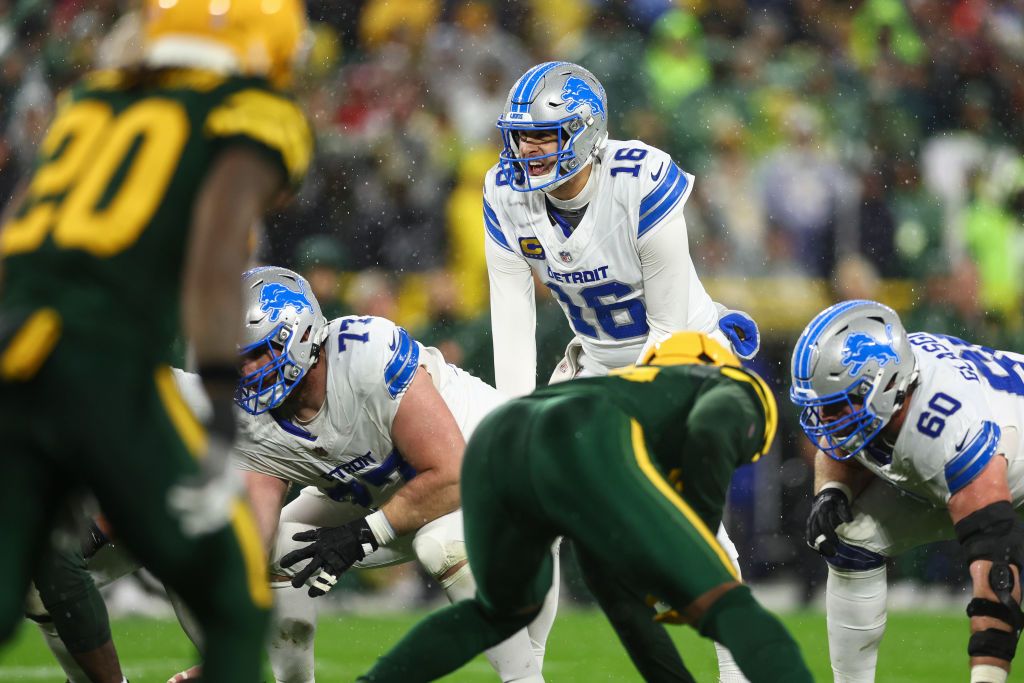
Jared Goff, as one of the more regularly cited examples of players who perform better in domes, averaged 17.90 fantasy points per game indoors between 2020 and 2024 — including rushing and receiving stats. In outdoor games, he averaged 14.19. There is a similar dichotomy with Jalen Hurts’ fantasy production, even though he is a mobile quarterback whose home stadium is outdoors. In domes and hybrid stadiums, Hurts averages 21.80 fantasy points per game, as opposed to his 18.39 fantasy points per game in the elements.
Where is there more rushing production?
NFL teams average 113.35 rushing yards and 0.86 rushing touchdowns per game outdoors, which comes out to 16.51 fantasy points per game on the ground. In indoor games, they average 118.96 rushing yards, 1.00 rushing touchdowns and 17.89 fantasy points per game.
Again, this does include the rushing production from quarterbacks and receivers, and it is team-wide rather than exclusive to a starting running back.
Christian McCaffrey, for example, averages 20.51 fantasy points per game outdoors over the past five years. He has a far smaller sample size of indoor games, thanks to the Carolina Panthers and San Francisco 49ers both playing home games outdoors, but it is worth noting that he averages 27.41 fantasy points per game between domes and hybrid stadiums.
Where are there more receptions?
The data used for passing and receiving splits is the same, so the receiving yards and touchdowns will line up one-to-one there. But looking at completions, those go from 21.60 per game outdoors to 22.57 per game indoors.
Using full PPR scoring, outdoor pass-catchers average 52.13 fantasy points per game while indoor pass-catchers average 55.68 fantasy points per game. That counts all receivers, tight ends and running backs who catch a pass, so the point total gets spread out between a handful of players.
The skew doesn’t impact all players universally, either. Just looking at the 2020 NFL Draft Class. Minnesota Vikings receiver Justin Jefferson averages 16.24 fantasy points per game outdoors and 21.09 indoors. Indianapolis Colts wideout Michael Pittman Jr., on the other hand, has reverse splits, averaging 13.88 fantasy points per game outdoors and 11.75 indoors. Dallas Cowboys receiver CeeDee Lamb and Cincinnati Bengals receiver Tee Higgins are relatively even, with the former averaging 17.77 fantasy points per game outdoors and 17.35 indoors and the latter averaging 14.18 outdoors and 14.43 indoors.
Final Verdict
Generally speaking, indoor games feature more offense than outdoor games — both through the air and on the ground. That makes domes and hybrid stadiums the more fantasy-friendly environment when all else is even.
Everything isn’t always even, though, so the environment of a game shouldn’t be the end all, be all when you are setting your fantasy football lineups each week. And on a player-by-player basis, outdoor elements seem to hinder receivers the least.
Just keep in mind that a running back facing the Lions defense in Detroit isn’t the same as when they face that same unit in Green Bay.