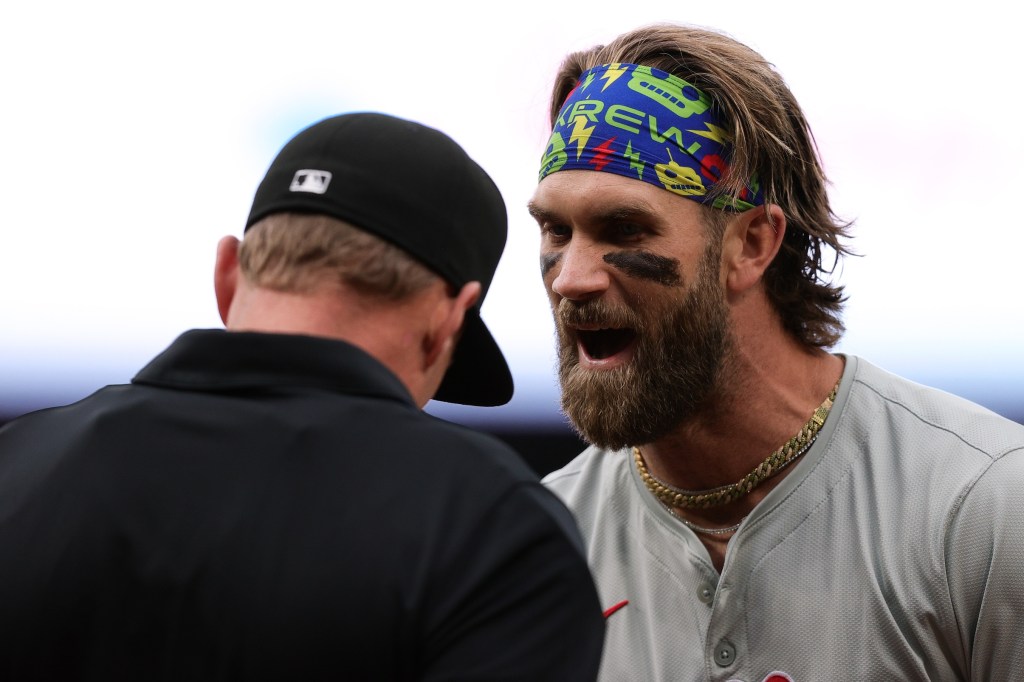
Tensions are high regarding the future of Major League Baseball. The current collective bargaining agreement is set to expire on December 1, 2026, and some big changes are expected with a potential salary cap being a controversial point of discussion.
Commissioner Rob Manfred has started meeting with every team to improve relations with this deadline in mind, but things did not go smoothly during his time with the Philadelphia Phillies. Per ESPN’s Jeff Passan, Manfred and Phillies star Bryce Harper went nose-to-nose in the clubhouse last week with Harper reportedly telling the commissioner to “get the f— out of our clubhouse” if he wanted to talk about the implementation of a salary cap.
Harper is one of the more influential players in professional baseball and the MLB Players Association has been openly against any idea of a salary cap, a controversial topic dating back decades. But there seems to be a greater internal push for the implementation of such a cap than ever before, especially with concern regarding the disparity between high and low-spending teams becoming more evident. Manfred is making the message clear that these types of meetings are not out of the norm, but the topic of discussion clearly hit a nerve with Harper and the Phillies.
There is still a full year and a half until the current CBA expires, so tensions may continue rising. Harper’s teammate Nick Castellanos also took issue with the MLB commissioner’s position and the way he is going about it. As Castellanos put it in the ESPN article:
“Rob seems to be in a pretty desperate place on how important it is to get this salary cap because he’s floating the word ‘lockout’ two years in advance of our collective bargaining agreement [expiration],” Castellanos said. “That’s nothing to throw around. That’s the same thing as me saying in a marriage, ‘I think divorce is a possibility. It’s probably going to happen.’ You don’t just say those things.”
There have been nine work stoppages in modern MLB history since the Players Association became a full union in 1960. The most recent was the lockout in 2021, which marked the first stoppage in nearly three decades. This lockout lasted 99 days before the club owners and Players’ Association were able to come to an agreement.
Baseball’s popularity has also been a popular discussion point in recent years. The MLB has taken some proactive steps to make the game more digestible to the average fan, such as the implementation of the pitch clock. There have been some encouraging signs of growth in interest, thus such a disruption to the sport would negatively impact all parties involved. A lockout should be something both sides look to avoid, and Castellanos brings up a valid point about this type of terminology being thrown out there so loosely this far away from the deadline.
There is still plenty to unfold with this story and the looming negotiations. Neither Manfred nor Harper elected to comment on the specifics of the altercation.
For the time being, the commissioner will likely continue meeting with the rest of the teams across the league. However, this is still a massive story that is worth monitoring as the deadline for a new CBA begins to inch closer, with tensions sure to spark back up in the future.