With a four-game late slate on the docket for tonight’s Major League Baseball action, there are plenty of star pitchers to choose from as you build your DFS lineups. That group includes Houston Astros ace Framber Valdez ($9,800), who will pitch at home against the hapless Chicago White Sox, as well as Milwaukee Brewers flamethrower Jacob Misiorowski ($8,000), who’s making his MLB debut.
Here are my five favorite pitchers from the slate.
Set your DraftKings fantasy baseball lineups here: MLB $150K Bat Flip [$50K to 1st].
1. Framber Valdez, Houston Astros ($9,800)
While Valdez is the most expensive option on the slate, it’s not completely impossible to work stars into your lineup while still starting him. He’s worth every penny, having given up two or fewer earned runs in five of his last six starts, and he’s also a workhorse, having pitched a combined 16 innings across his last two starts (37 FPTS per game across that span). Since a four-inning, seven-run (-5.6-FPT) blowup on April 14, Valdez has recorded a 2.43 ERA — that’s Cy Young-level pitching for two straight months. He has a 95th-percentile fastball, and while he’s prone to the occasional hard hit, 60.2% of those hits are grounders, thanks to his propensity to throw sinkers and 12-6 curves.
Looking at Valdez’s merits on their own without considering his opponent still makes him a worthy fantasy start, but his opponent tonight happens to be the White Sox, who have posted the league’s worst OPS this season. This season, Chicago has also posted the third-worst OBP against southpaws, because they’ve earned the fourth-fewest walks. Relatively speaking, control is one of Valdez’s weaknesses, since he only ranks in the 53rd percentile in walk rate.
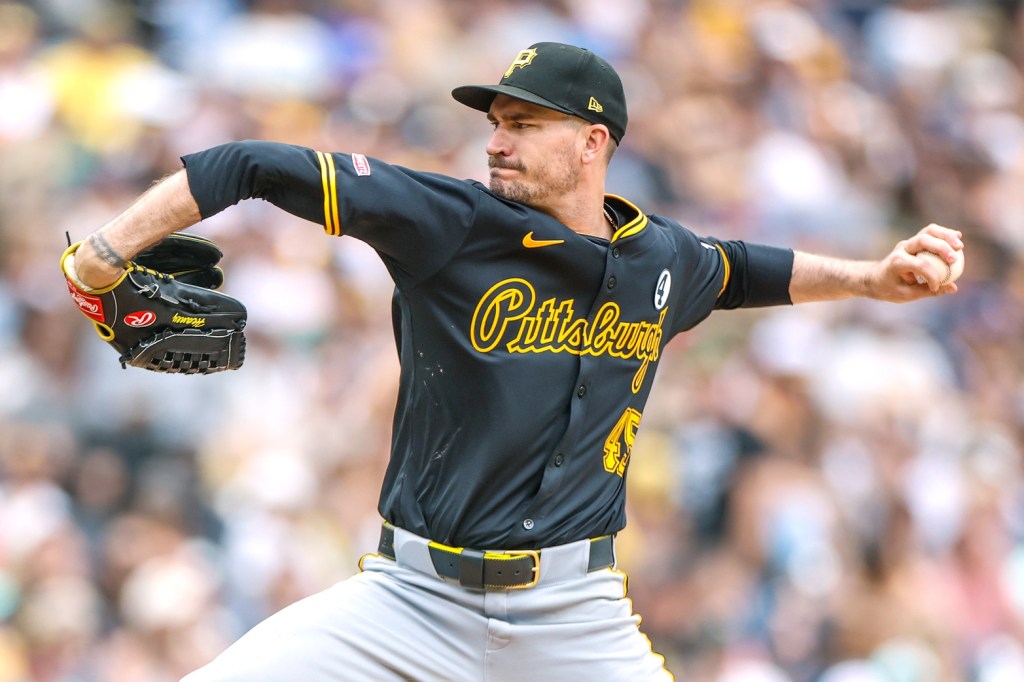
2. Andrew Heaney, Pittsburgh Pirates ($7,000)
Heaney is by far the most talented pitcher at his price point, as he has a cheaper salary than either Seth Lugo ($7,800) or Will Warren ($7,500), both of whom have higher ERA’s than he does. Of course, ERA isn’t everything, and the fact that Heaney is going against an extremely talented unit in the Chicago Cubs is a potential point of concern, but in his last start, he was elite (six innings, one run, no walks, five strikeouts, 19.1 FPTS) before leaving with what was eventually described as a calf cramp. Heaney was roughed up by the Cubs on April 29, but one bad start doesn’t necessarily mean he’ll have another. Chicago’s OPS is 24 points lower against lefties than against righties, and though the Cubs have elite plate discipline, Heaney ranks in the 63rd percentile in inducing chases, so he should be able to neutralize that strength.
3. Will Warren, New York Yankees ($7,500)
Warren has had two rough starts in a row, giving up six hits, four walks, and seven runs in 1.1 innings (-13 FPTS) against the Los Angeles Dodgers on May 31 and conceding four runs and four walks in 5.1 frames (15.8 FPTS) against the Boston Red Sox on June 6. Those two starts ballooned the 26-year-old’s ERA from 4.09 to 5.34, and they marked the second and third times this season in which he has issued four or more free passes. But to be fair to Warren, those two offenses rank second and sixth in OPS and third and 14th in walk rate, so it’s not a major cause for concern.
His average velocity has actually been higher his last two starts than his season average, his in-zone percentage rose, and the spin rates on his breaking pitches went up; he simply got unlucky. That’s been a theme this season for Warren, whose FIP figure has been a full two runs better than his ERA and whose expected ERA is also roughly around the median.
He should have no problem getting back on track against the Kansas City Royals, who rank sixth-to-last in OPS, dead last in homers, and dead last in walks. They do have the league’s fourth-highest contact percentage, but that doesn’t matter when most of that contact is soft. My bold prediction is that a more in-control Warren will pitch into the seventh inning for the second time this season.
4. Sonny Gray, St. Louis Cardinals ($9,200)
Gray has been arguably the league’s best pitcher if you take a two-start sample size, as across that span, he’s thrown 13.1 innings, given up 12 hits and no runs while walking one and striking out 15 (30.2 FPTS per game). It’s not like it was simply a byproduct of him facing terrible offenses; one of his shutouts came against the Dodgers, who have posted the league’s second-highest OPS this season. The 35-year-old very rarely walks anybody, ranking in the 93rd percentile in walk rate, and he also compensates for his below-average velocity with above-average spin. He also has an eclectic pitch mix, throwing five different pitches more than 13% of the time.
Milwaukee, meanwhile, has struggled mightily at the plate this season, posting the fifth-lowest OPS, the lowest barrel rate and average exit velocity, and the seventh-lowest homer percentage. That should neutralize one of Gray’s weaknesses; his barrel rate is below the league median. The Brewers also combine the league’s highest in-zone percentage with its second-lowest swing percentage, so they end up taking a lot of called strikes. That’s good for Gray, who only has a 62nd-percentile whiff percentage. Plus, he’s a good bet to pick up a win, with Milwaukee in poor form and starting a walk-prone rookie.
5. Jameson Taillon, Chicago Cubs ($8,200)
This last spot came down to Taillon and Misiorowski. I ultimately decided that while Misiorowski certainly has the tools to be great — a 2.13 ERA in Triple-A and 100-MPH fastballs helps — I at least know what I’m getting in Taillon, and he’s quietly been very good over the last few starts, giving up one earned run in three of his last four appearances. The veteran is always a workhorse — he’s lasted six or more innings in each of his past five starts — and he’s recorded 15 or more FPTS nine times in his 13 starts. He also has just a 2.70 ERA in his six home starts this season (18.6 FPTS per game), so he’s on friendly turf.
There are some causes for concern with Taillon — he’s given up the most home runs in the National League and his FIP figure is more than a full point worse than his ERA — but he has a lot going for him. He ranks in or near the top quartile in hard-hit percentage, walk percentage, and average exit velocity, and while he struggles to induce whiffs, the Pirates have had the league’s sixth-highest whiff percentage this season. They’ve also recorded the second-lowest OPS and have been 61 points worse on the road than at home.