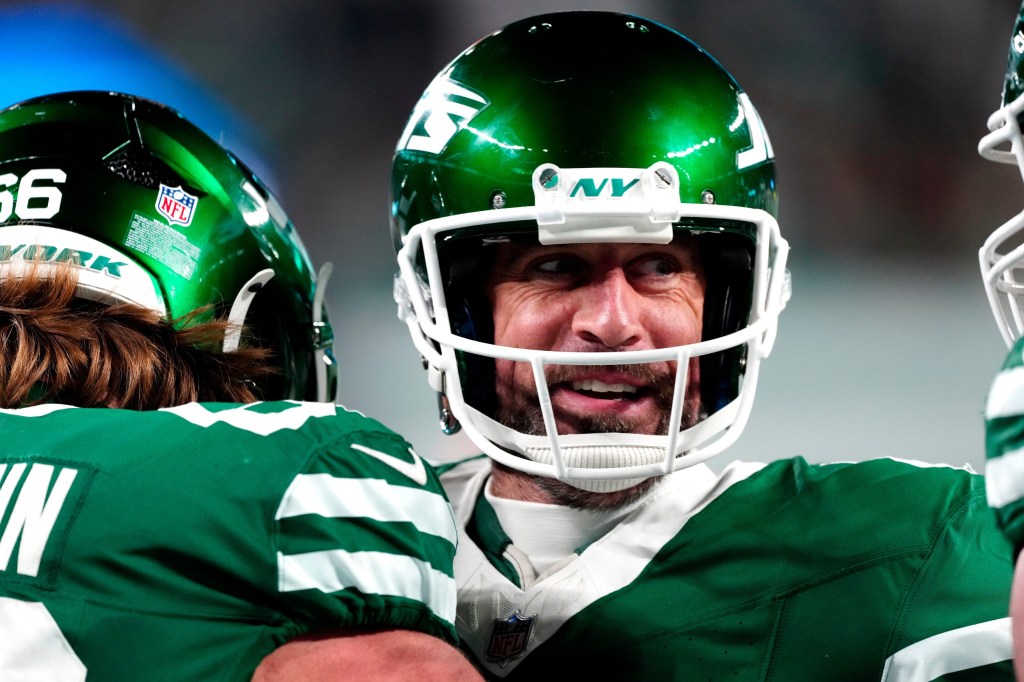
UPDATE: Rodgers has agreed to a one-year contract, pending a physical.
Aha! The long winter of our discontent—or was it?—has finally come to its close. FA and future Hall-of-Fame quarterback Aaron Rodgers is expected to sign with the Pittsburgh Steelers, per NFL Network Insiders Tom Pelissero, Ian Rapaport, and Mike Garofolo.
This had long been on the horizon, dating back to the NFL draft, when the Steelers notably passed on many of the first-round-talent quarterbacks that could have started in Rodgers’ rumored stead.
Analysis: How Rodgers and the Steelers arrived here
Rodgers’ Road
The Jets released Rodgers soon after the end of the 2024-2025 season. As quarterback dominoes fell through free agency and franchise-tagging, it became clear that Rodgers really had only two destinations available: the Minnesota Vikings and the Pittsburgh Steelers.
The Vikings route fell through pretty quickly, which left only Pittsburgh. Details as to why there was so drawn-out a song-and-dance between Rodgers and the Steelers are surely to come in future days, but it’s safe to say Rodgers hasn’t established a pedigree of being an open or flexible negotiator. The Steelers are notoriously obdurate when it comes to the personnel decisions they make based on the locker room culture the foster each year. They’re a mission-statement-oriented franchise who just signed Aaron Rodgers, whose compass with regards to what guides him—what fuels his force of purpose—is famously enigmatic. It’s an interesting marriage!
The Steelers care not for Rodgers’ stint with the Jets, but let’s go through it anyways. It was a disappointment, marked by inconsistency and struggles in key moments. Despite throwing for 3,897 yards and 28 touchdowns, he also threw 11 interceptions, resulting in a passer rating of 90.5 and a QBR of 48.0, ranking him 25th among quarterbacks. In clutch situations, Rodgers struggled significantly, completing just 59.1% of his passes with no touchdowns and two interceptions, leading to a low 55.9 passer rating in close games. The Jets finished 5-12, plagued by a 3-7 record in one-score games, and Rodgers’ inability to elevate the team in critical moments ultimately led to his release in February 2025, signaling the end of his short-lived tenure with New York.
The Steelers believe they have a roster more readymade for Rodgers than the Jets did last year, and thus are satisfied to slot his veteran skillset in as a starter, presumably in Week 1 of the 2025-2026 season.
What this means for the Steelers
The Pittsburgh Steelers’ 2024-2025 season saw them falter in key moments, particularly in their passing game, where they struggled with consistency and lacked explosive plays. Despite a strong defense and solid running game, the offense often failed to capitalize on scoring opportunities, finishing in the lower half of the league in passing yards per game.
By signing Aaron Rodgers, the Pittsburgh Steelers are hoping to secure a veteran quarterback who can elevate their offense and bring a proven winning pedigree to the team. Despite that rocky 2024, Rodgers still boasts a career full of elite production, including over 4,000 passing yards and 30+ touchdowns in 10 of his 16 seasons. Rodgers’ precision and deep-ball accuracy should complement Pittsburgh’s strong receiving corps, headlined by new acquisition DK Metcalf, while also capitalizing on the Steelers’ powerful offensive line and solid run game. His leadership and ability to make quick, smart decisions could also provide the stability and clutch playmaking Pittsburgh lacked in crucial moments. We’ll need to see more of that out of him this year than he showed almost every snap on the Jets.
With a T.J.-Watt-led defense that ranked among the top five in points allowed last season, Pittsburgh believes Rodgers’ experience in high-pressure situations can help them compete in tight games, much like his past ability to lead fourth-quarter comebacks. The Steelers are banking on Rodgers’ veteran presence and elite football IQ to optimize their young talent and push for playoff contention in the highly competitive AFC North.