

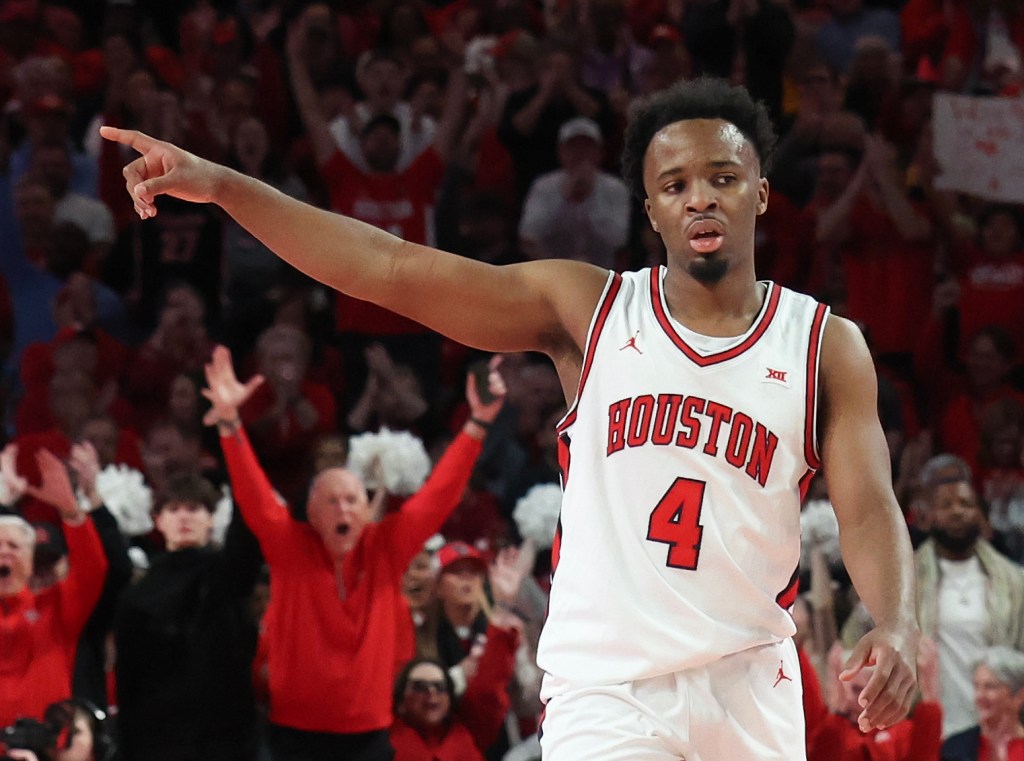
Do you smell that? March is one day away.
March Eve presents an apt point in the schedule to zoom out on the college basketball season and view the bigger picture. The Tournament being around the corner indicates there now exists enough of a sample size to properly assess the best, and worst, team futures available.
No reason to make this more complicated than it needs to be. Below is one team I like, one I love and another I “hate” (hate is a strong word, but it fits nicely into this simple theme) when looking forward to the Tourney.
Like: Wisconsin Badgers
Record: 22-6 (12-5 in Big Ten)
AP Poll Rank: 11
KenPom Rank: 8
Bart Torvik Rank: 10
NCAA Tournament Winner Odds: +3500
To Reach Final Four Odds: +650
Normally, I would be fully out on the Badgers, but statistics aside, this iteration of Wisconsin simply looks different. With Greg Gard at the helm, Wisconsin has made the second weekend of the Tournament just once since 2016-17, often losing to lower seeds.
Yet Gard’s 24-25 squad looks poised to make a deep run led by likely All-American guard John Tonje (19.5 ppg on 48% shooting). The Badgers are playing at a faster pace this season (187th in the nation as compared to 304th last year & 337th the year prior per KenPom) while still keeping turnovers down, and their offense has flourished. They take, and make, a boatload of threes while shooting a nation-best 83.3% from the charity stripe as a team. You could argue Wisconsin is too reliant on shots behind the arc, but heaving threes at the clip they do presents opportunities inside the perimeter that John Blackwell (55% on 2-pointers) and Nolan Winter (Big Ten best 70% from 2) can, and will, take advantage of.
On the defensive end, there are surely some question marks, but metrically speaking, there are no glaring holes. Wisconsin is trending up as we roll into March, ranking 7th in Bart Torvik’s power rating since Feb. 1. It would be hard to imagine another team out-gunning the Badgers early on, and their free throw prowess should provide a massive advantage late in close games when the competition rises. I would highly recommend adding a Wisconsin future to your portfolio.
Love: Houston Cougars
Record: 24-4 (16-1 in Big 12)
AP Poll Rank: 4
KenPom Rank: 3
Bart Torvik Rank: 1
NCAA Tournament Winner Odds: +750
To Reach Final Four Odds: +150
For the last half-decade or so, Houston has existed as an analytics darling who has oft fallen short of prominent CBB models in the Big Dance outside of a Final Four run in the 2021 bubble Tournament. Kelvin Sampson’s uber-defensive, attack-the-glass style of play paid dividends in regular seasons but had proven to not be enough in win-or-go-home national settings. And, up until last season, the subpar competition in the AAC may have held the Cougars back from being as battle-tested as a championship-caliber team should be.
The same can’t be said for the last two seasons, however. Houston’s 2023-24 campaign was a massive success as a newcomer in the gauntlet that is the Big 12. After grabbing a 1-seed in the Tournament, the Cougs may very well have made it to the Final Four if not for a Jamal Shead injury in the Sweet 16 against Duke. This year’s version is much of the same, as Houston is an expected 1-seed as of Bracket Matrix’s current projections. Even still, it’s clear Coach Sampson’s play style has seen Houston further evolve into a well-rounded, clear-cut contender.
Highlighted by the sharpshooting duo of LJ Cryer (41.5% on 3-point field goals) and newcomer Milos Uzan (42.9%), the Cougars shoot the three ball as well as anyone (2nd nationally in 3-point percentage). This isn’t to say Houston is overly reliant on shots beyond the arc, either, as just 34.3% of field goal attempts are threes (298th nationally) per KenPom. Houston, with just one not-so-great loss on their resume (San Diego State on a neutral floor in November), is still a team that prioritizes attacking the paint as demonstrated by 53.1% of total points in conference play coming from 2-point territory. And, oh yeah, they still hit the glass hard if all else fails, grabbing offensive boards at the 12th-highest rate in the country (KenPom).
Yes, the Cougs play slower than you would hope, and I’m sure Sampson would like to see his team get to the free throw line more, but Houston is as balanced and versatile as they’ve been in recent seasons. That, combined with an always-dominant defense, makes Houston a tantalizing choice to reach San Antonio.
Hate: Texas A&M Aggies
Record: 20-8 (9-6 in SEC)
AP Poll Rank: 12
KenPom Rank: 21
Bart Torvik Rank: 25
NCAA Tournament Winner Odds: +3000
To Reach Final Four Odds: +800
I really hate to pour cold water over the outstanding work that the lovable Buzz Williams has done in College Station, but I just don’t see it with the Aggies. It is beyond impressive what Williams has accomplished this year in arguably the best conference in Men’s College Basketball history, but is it sustainable come March 20th? I think not.
In many ways, Texas A&M resembles the flawed Houston approach in past years I touched on above but to the most egregious degree. A&M is 1st in all of CBB in offensive rebounding rate (41.8% per KenPom) and, quite literally, one of the worst shooting teams in the land. 48.8% on 2s (268th), 30.6% on 3s (325th) and 69.5% from the free throw line (266th) can only work if you are consistently getting extra possessions, something the Aggies are dependent on. This isn’t the case of poor shooting luck early in the season either; Texas A&M ranks 326th in effective field goal percentage since the start of February per Bart Torvik. This isn’t even mentioning the fact that the Aggies don’t take care of the ball (18.2% turnover rate) and are LAST in the nation in getting blocked per KenPom.
Defensively, Texas A&M is without question stout, and in large part why it is a projected 3-seed in the Big Dance according to Bracket Matrix. But if the Aggies match up with a bigger team that can take care of the glass and limit fouling (A&M is 25th in total point percentage coming from free throws), I sense an upset coming early.