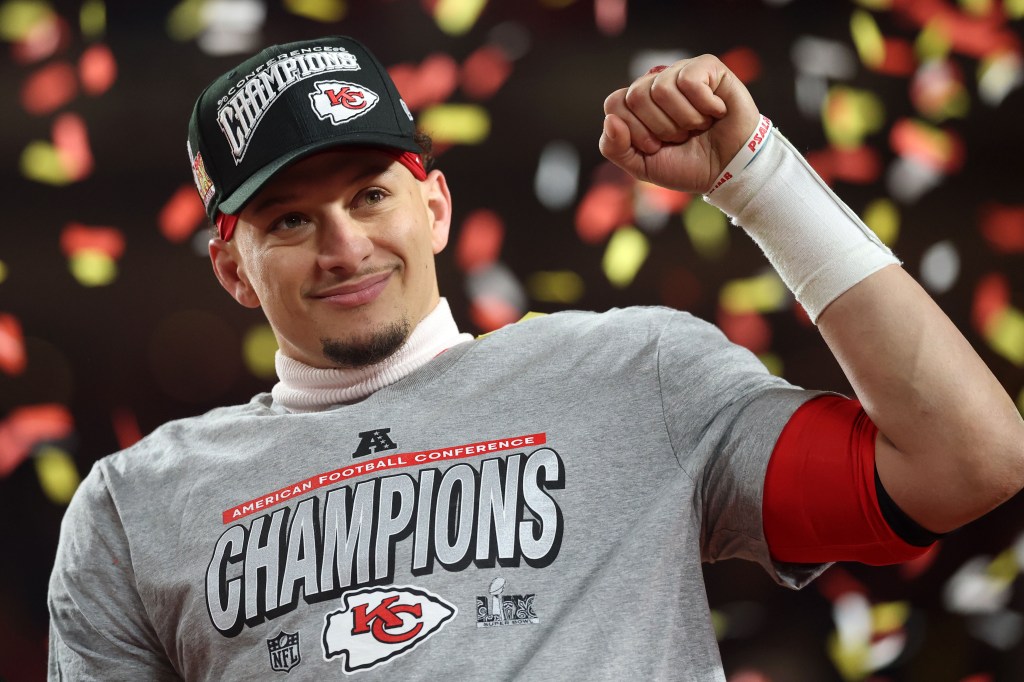
Over the past seven years, the Kansas City Chiefs have continually pushed the boundaries of what NFL fans thought was possible. On February 9, the Chiefs will have the chance to pull off their most impressive feat yet, as they seek to become the first team to win three consecutive Super Bowl titles.
Eight teams have won two consecutive Super Bowl titles, but before Kansas City, none had ever made the big game in the following year.
Let’s go through the eight, in order from newest to oldest:
2022-23 Kansas City Chiefs
When the Chiefs won Super Bowl LVII in a 38-35 thriller over the Philadelphia Eagles in 2023, it was their second title and third Super Bowl appearance in the last four years, so Patrick Mahomes, Travis Kelce, and Andy Reid had already established themselves firmly on the national stage. But Kansas City’s 25-22 overtime win over the San Francisco 49ers a year later truly solidified its status as a dynasty and set the stage for its history-making quest this season.
If the Chiefs want to raise the Lombardi Trophy for the third consecutive year, they’ll have to battle past a tough Eagles team that returned most of the same roster from that 2022-23 squad and added running back Saquon Barkley, who posted the eighth 2000-yard rushing regular season in NFL history and has been virtually unstoppable in the postseason. Kansas City is a 1.5-point favorite at DraftKings Sportsbook.
2003-04 New England Patriots
Of course, Bill Belichick and Tom Brady’s dynastic Patriots won six Super Bowls together, so it’s no surprise that New England had a stretch of two in a row. The first was an epic 32-29 victory over the Carolina Panthers in which kicker Adam Vinatieri made a 41-yard field goal to take the lead in the game’s waning moments, after Brady drove 37 yards in just 63 minutes to put the Patriots in position for victory. New England followed it up the following year in equally dramatic fashion, holding off Philadelphia, 24-21, for the team’s third title in four seasons.
The following season, the Patriots won their third consecutive AFC East title, finishing with a 10-6 record and earning the fourth seed in the AFC. Although New England won its Wild Card Round matchup over the Jacksonville Jaguars, 28-3, it fell to the Denver Broncos in the Divisional Round, 27-13, in which Brady threw two interceptions — the first postseason loss of Belichick’s Patriots career.
1996-97 Denver Broncos
John Elway’s Broncos were the sixth team to win two straight Super Bowls, accomplishing the feat in 1996-97 and 1997-98, which were their first two league titles in franchise history. In Super Bowl XXXII, a five-play, 49-yard drive with one minute, 45 minutes remaining in the game lifted Denver to a 31-24 victory over the Green Bay Packers, denying the Packers a repeat bid of their own. The next season, the Broncos dispatched the Atlanta Falcons with relative ease, taking a 31-6 lead early in the fourth quarter and holding on for a 34-19 win.
Denver’s quest for a third straight title ended quickly, though, as Elway retired following the season. In his absence, Brian Griese completed only 57.7% of his passes and threw as many interceptions as touchdowns as the Broncos lost each of their first four games, going just 6-10 and finishing last in the AFC West. Denver’s 6-10 record in 1999 is the third-worst by any defending champion in the Super Bowl era.
1992-93 Dallas Cowboys
Under the tutelage of legendary head coach Jimmy Johnson, the Cowboys won two consecutive titles in 1992-93 and 1993-94, which, along with a third title in 1996, are its most recent championships in franchise history. Both of Dallas’ wins were relatively comfortable, as three fourth-quarter touchdowns secured a 52-17 drubbing over the Buffalo Bills in Super Bowl XXVII and 24 unanswered second-half points led them to a 30-13 win in the rematch a year later.
The following season, despite Johnson’s resignation prior to the season, the Cowboys went 12-4 and earned the NFC East title and the second seed in the playoffs, and their quest for a third consecutive title looked good when they destroyed Green Bay, 35-9, in the Divisional Round. However, in the NFC Championship, the San Francisco 49ers raced out to an early lead that they never relinquished in a 38-28 victory before winning a Super Bowl of their own two weeks later.
1988-89 San Francisco 49ers
Behind the legendary partnership of Joe Montana and Jerry Rice, the 49ers emerged victorious in both Super Bowl XXIII and XXIV. The first of their victories was significantly tighter, as an 11-play, 92-yard drive gave San Francisco its first lead of the second half with only 34 seconds to play, allowing it to see out a 20-16 victory over the Cincinnati Bengals. The 49ers were far more convincing a year later, demolishing the Broncos, 55-10, in what is still the largest margin of victory in Super Bowl history.
In 1990-91, San Francisco had an incredible regular season, going 14-2 to earn the first seed in the NFC Playoffs. The 49ers handily beat the Washington franchise during the Divisional Round, 28-10, but seven weeks after losing to them on Monday Night Football in Week 13, the New York Giants got their revenge in the NFC Championship Game, winning 15-13 on a 42-yard Matt Bahr walk-off field goal.
1978-79 Pittsburgh Steelers
This is the first of two iterations of Steelers teams on this list. Under the leadership of quarterback Terry Bradshaw and the vaunted Steel Curtain defense, Pittsburgh capped a 17-2 season with a dramatic 35-31 victory in Super Bowl XIII, withstanding two Dallas touchdowns in the last three minutes of the game. The following season, the Steelers closed out the Lombardi Trophy in much stronger fashion, winning 31-19 over the hometown Los Angeles Rams after two fourth-quarter touchdowns, improving their record to 4-0 in Super Bowls.
But Super Bowl XIV was the last run of the Steel Curtain, which had clearly aged badly. In the 1980 regular season, Pittsburgh finished just 9-7 and finished third place in the AFC Central and failed to qualify for the postseason for the first time since 1971. The Steelers had just a 5-4 record in one-score games and several members of their core retired after the season.
1974-75 Pittsburgh Steelers
Just a few seasons earlier, Pittsburgh had become the second team ever to win two consecutive Super Bowls, when it accomplished the feat in the 1974-75 and 1975-76 seasons. The Steelers’ first title in franchise history came in Super Bowl IX, when they notched a 16-6 victory over the Minnesota Vikings’ famous Purple People Eaters defense in a low-scoring battle decided on two second-half touchdowns. A season later, Pittsburgh left it late again, needing a safety, two field goals, and a touchdown in the fourth quarter to win its second straight title.
The Steelers came close to repeating during the 1976-77 season, going 10-4 and earning the third seed in the AFC Playoffs. Pittsburgh upset the Baltimore Colts on the road in the Divisional Round to put itself within one game of its third straight Super Bowl appearance, but John Madden’s Oakland Raiders, who went 13-1 in the regular season, battered the Steelers, 24-7, in the AFC Championship Game.
1966-67 Green Bay Packers
The last team on this list is the winner of the first two Super Bowls. Led by legendary quarterback Bart Starr and head coach Vince Lombardi — who the trophy is named after — the Packers drubbed the Chiefs, 35-10, in the inaugural battle between the NFL champion and that of the upstart American Football League. The next year, the Raiders weren’t much more of a challenge, falling 33-14 as Green Bay extended its dynasty.
In 1968-69, the Packers went just 6-7-1 after Lombardi resigned in the offseason and handed the reins to Phil Bengtson, and Green Bay wouldn’t win a title again until Super Bowl XXXI in the 1996-97 season. The New York Jets went on to win Super Bowl III, becoming the first AFL team to win the big game.