

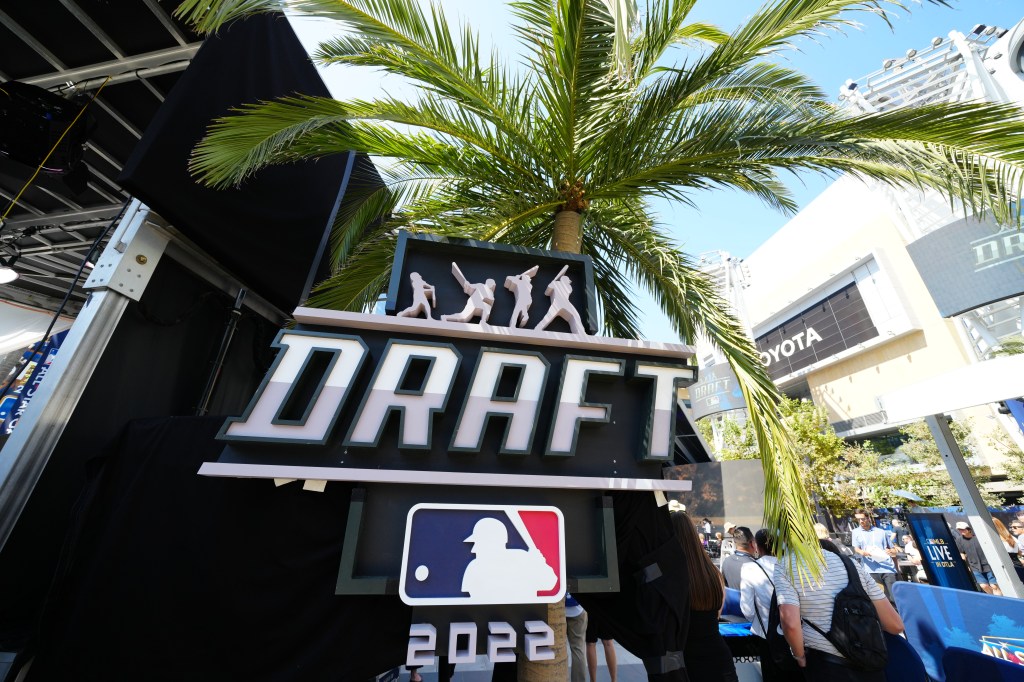
The time has finally come: For the next three days, beginning tonight at 7 p.m. ET, the 2023 MLB Draft will descend on Seattle. With a class absolutely chock full of high-end, franchise-altering talent, this draft promises to be one of the most significant in recent memory.
But it also promises to be … somewhat confusing. Unlike the other major North American sports, where teams for the most part draft the best players available and then sign those players to contracts that have been collectively bargained, the MLB Draft works a bit differently, governed by its own set of rules and its own internal logic. Comp rounds? Bonus pools? Slot value? Draft boards determined by who someone’s agent is? It can all seem a little inscrutable from the outside.
Which is why we’re here to help, with a handy explainer full of everything you need to know about how the MLB Draft actually works. Let’s dig in.
MLB Draft format and rules, explained
The draft order
First thing’s first. For years, MLB set its draft order like the NFL does: the team with the worst record the previous season picks first, the second-worst picks second, and so on and so forth. But the league instituted a draft lottery for 2023, in which the three worst teams by record in 2022 — the Oakland Athletics, Pittsburgh Pirates and Washington Nationals — were given the highest percentage chance of landing the No. 1 pick (16.5%, to be exact). The Pirates won said lottery, and so they’ll be picking first on Sunday night for the second time in three years. (They can only hope their selection looks as good as 2021’s top pick, Henry Davis, who’s already made it to the Majors.)
After the first round, the non-postseason teams will choose in reverse order of winning percentage, while the teams who made it to October will choose in reverse order of their postseason finish — with revenue-sharing status and then reverse order of winning percentage used as tiebreakers.
But wait, there’s more. Starting in 2012, MLB also instituted two competitive balance rounds. The first of those, Competitive Balance Round A, falls between the first and second rounds and features the 10 lowest-revenue teams. The second, Competitive Balance Round B, features the teams from the 10 smallest markets. (Fewer than 20 teams are in the mix each year, as some teams qualify under both criteria.) There’s also a new prospect promotion incentive — the Seattle Mariners have been awarded an extra pick between the first round and Competitive Balance Round A as a reward for promoting Julio Rodriguez at the start of the 2022 season, and for Rodriguez winning AL Rookie of the Year.
One more note: Much like in the NFL draft, there are also compensatory picks, given to teams who lose players in free agency. Those picks can fall between Competitive Balance Round B and round three, round three and round four or round four and round five, depending on the new salary of the departing player.
That’s a lot of mumbo-jumbo. How does it all shake out? The first two rounds, including Competitive Balance rounds and compensatory rounds, are below.
MLB Draft order, rounds 1-2
| Round 1 |
|---|
| Round 1 |
| Pick |
| 1 |
| 2 |
| 3 |
| 4 |
| 5 |
| 6 |
| 7 |
| 8 |
| 9 |
| 10 |
| 11 |
| 12 |
| 13 |
| 14 |
| 15 |
| 16 |
| 17 |
| 18 |
| 19 |
| 20 |
| 21 |
| 22 |
| 23 |
| 24 |
| 25 |
| 26 |
| 27 |
| 28 |
| Prospect promotion incentive picks |
| Pick |
| 29 |
| Competitive Balance Round A |
| Pick |
| 30 |
| 31 |
| 32 |
| 33 |
| 34 |
| 35 |
| 36 |
| 37 |
| 38 |
| 39 |
| Round 2 |
| Pick |
| 40 |
| 41 |
| 42 |
| 43 |
| 44 |
| 45 |
| 46 |
| 47 |
| 48 |
| 49 |
| 50 |
| 51 |
| 52 |
| 53 |
| 54 |
| 55 |
| 56 |
| 57 |
| 58 |
| 59 |
| 60 |
| 61 |
| Competitive Balance Round B |
| Pick |
| 62 |
| 63 |
| 64 |
| 65 |
| 66 |
| 67 |
| Compensation picks |
| Pick |
| 68 |
| 69 |
| 70 |
| Round 3 |
| Pick |
| 71 |
| 72 |
| 73 |
| 74 |
| 75 |
| 76 |
| 77 |
| 78 |
| 79 |
| 80 |
| 81 |
| 82 |
| 83 |
| 84 |
| 85 |
| 86 |
| 87 |
| 88 |
| 89 |
| 90 |
| 91 |
| 92 |
| 93 |
| 94 |
| 95 |
| 96 |
| 97 |
| 98 |
| 99 |
| 100 |
| 101 |
| Round 4 |
| Pick |
| 102 |
| 103 |
| 104 |
| 105 |
| 106 |
| 107 |
| 108 |
| 109 |
| 110 |
| 111 |
| 112 |
| 113 |
| 114 |
| 115 |
| 116 |
| 117 |
| 118 |
| 119 |
| 120 |
| 121 |
| 122 |
| 123 |
| 124 |
| 125 |
| 126 |
| 127 |
| 128 |
| 129 |
| 130 |
| 131 |
| Compensation picks |
| Pick |
| 132 |
| 133 |
| 134 |
| 135 |
| 136 |
| 137 |
| Round 5 |
| Pick |
| 138 |
| 139 |
| 140 |
| 141 |
| 142 |
| 143 |
| 144 |
| 145 |
| 146 |
| 147 |
| 148 |
| 149 |
| 150 |
| 151 |
| 152 |
| 153 |
| 154 |
| 155 |
| 156 |
| 157 |
| 158 |
| 159 |
| 160 |
| 161 |
| 162 |
| 163 |
| 164 |
Bonus pool and slot values
By virtue of their lottery win, the Pirates also secured the highest assigned pick value in Draft history and the third-highest bonus pool ever.
Wait a minute … what?
Each choice in the first 10 rounds of the draft comes with an assigned value. Add the values of each team’s picks together, and you get that team’s bonus pool — i.e., what it can spend over those first 10 rounds without incurring a penalty. (If a player taken in the top 10 rounds doesn’t sign, his pick’s value gets subtracted from his team’s pool.) This will often lead to some game theory maneuvering, as teams near the top of the draft may opt to pick a player who they know they can sign for less than that pick’s assigned value — often referred to as “under slot” — which allows them to then use those savings to offer more money to later selections. (For example: a team might sign a high school player earlier in the first round than expected so that they can offer more than slot value later on to, say, a player who needs to be bought out of a college commitment.)
Teams that exceed their bonus pool face a penalty. Go over by 0-5 percent and you have to pay a 75 percent tax on every dollar over. At higher thresholds, clubs lose future picks: a first-rounder and a 75 percent tax for surpassing their pool by more than five and up to 10 percent; a first- and a second-rounder and a 100 percent tax for more than 10 and up to 15 percent; and two first-rounders and a 100 percent tax for more than 15 percent.
If you’re wondering whether anyone ever goes over their pool amount anyway, you must be new to capitalism. In 11 Drafts with the bonus pool rules in place, teams have outspent their allotments a total of 195 times, although never by more than five percent. Unsurprisingly, the bigger teams — read: the ones who can afford to pay the price — do it the most: The Cardinals, Cubs, Dodgers and Giants have gone over every year, while the Rockies and Twins never have.
Bonus pools by club:
Pirates: $16,185,700
Tigers: $15,747,200
Nationals: $14,502,400
Twins: $14,345,600
Athletics: $14,255,600
Reds: $13,785,200
Mariners: $13,170,900
Marlins: $12,829,600
Royals: $12,313,500
Rockies: $11,909,800
D-backs: $11,084,300
Brewers: $10,950,600
Rays: $10,872,100
Orioles: $10,534,800
Red Sox: $10,295,100
Rangers: $9,925,300
Giants: $9,916,900
White Sox: $9,072,800
Cubs: $8,962,000
Guardians: $8,736,700
Mets: $8,440,400
Braves: $8,341,700
Angels: $8,328,900
Dodgers: $7,274,600
Astros: $6,747,900
Blue Jays: $6,529,700
Cardinals: $6,375,100
Padres: $5,416,000
Yankees: $5,299,400
Phillies: $5,185,500